
Tack basics
Reading the parts of an English saddle
Knowing the names makes a conversation with a saddle fitter much easier. Start with the visible parts, then look underneath.
Read the article →Home / Tack basics
Get to know the parts, materials and purposes of everyday horse equipment.
Knowing the names makes a conversation with a saddle fitter much easier. Start with the visible parts, then look underneath.
Read the article →
Follow the straps from the poll to the reins to understand how a conventional bridle is assembled.
Read the article →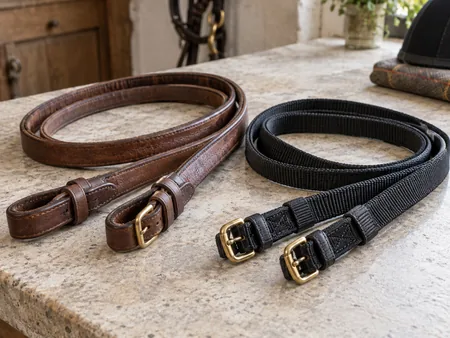
The useful comparison is how each material behaves in your routine, including the parts hidden beneath the surface.
Read the article →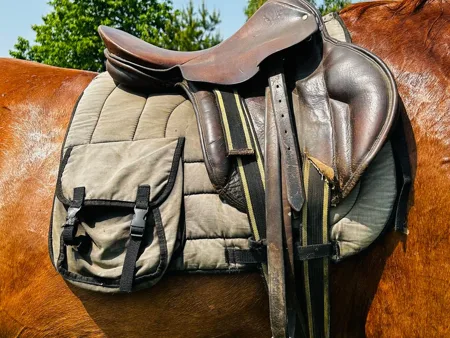
A saddle's seat and flap reflect an intended riding position, but the label alone cannot settle the choice.
Read the article →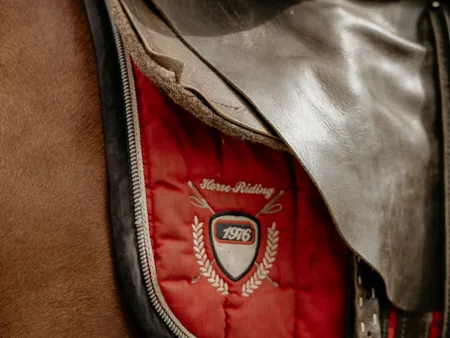
The outline changes, but either style still needs to sit neatly with the saddle and the horse.
Read the article →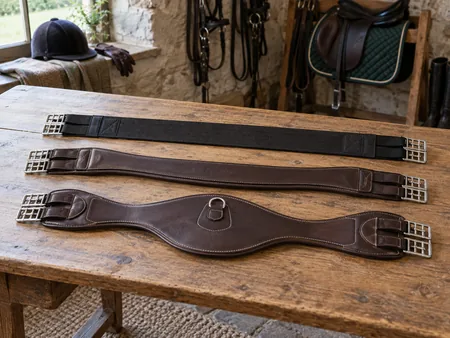
Curves and cutaways describe a design; their position on an individual horse determines whether they are useful.
Read the article →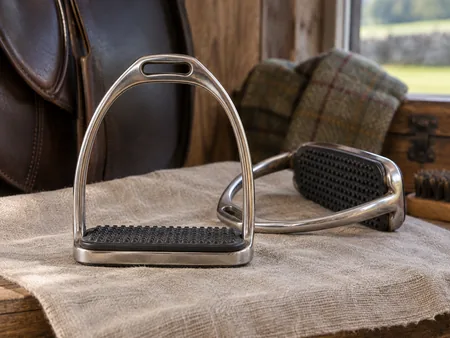
Look at the tread, sides and leather attachment before comparing unfamiliar stirrup designs.
Read the article →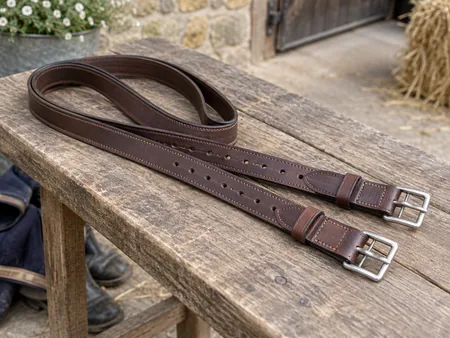
The name includes several constructions, from traditional folded leather to reinforced and single-strap designs.
Read the article →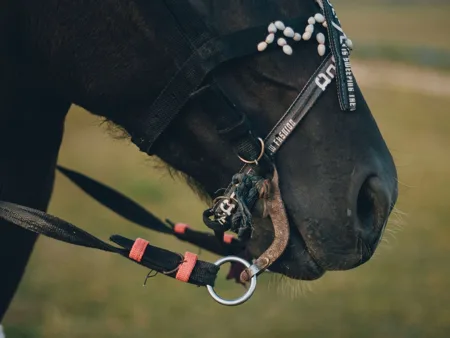
Grip, thickness and maintenance differ across reins that may otherwise look much the same.
Read the article →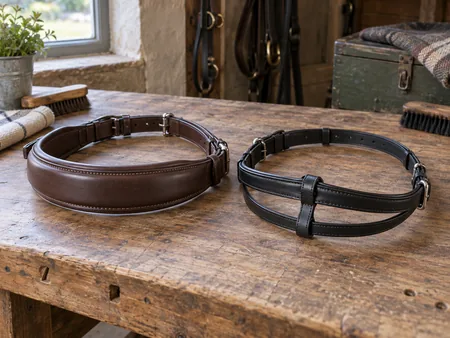
Recognising the shape helps you describe a noseband, without treating the shape as a solution to a riding problem.
Read the article →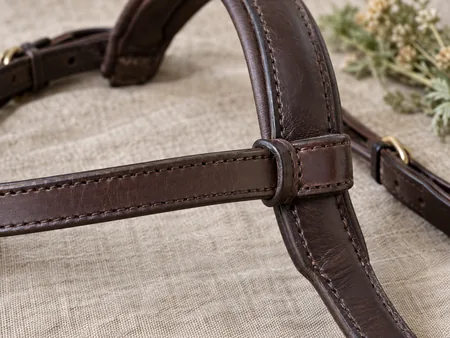
A small change at the forehead can alter where the top of the bridle sits behind the ears.
Read the article →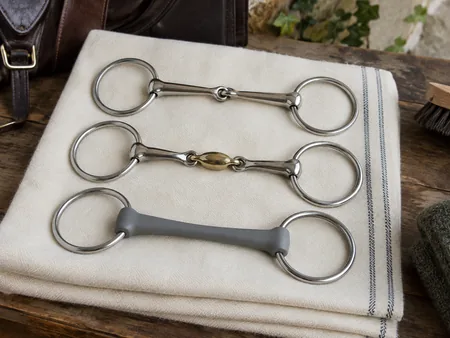
Learn the descriptive terms before trying to interpret what a particular bit might do.
Read the article →