A first look at bit mouthpieces
Learn the descriptive terms before trying to interpret what a particular bit might do.
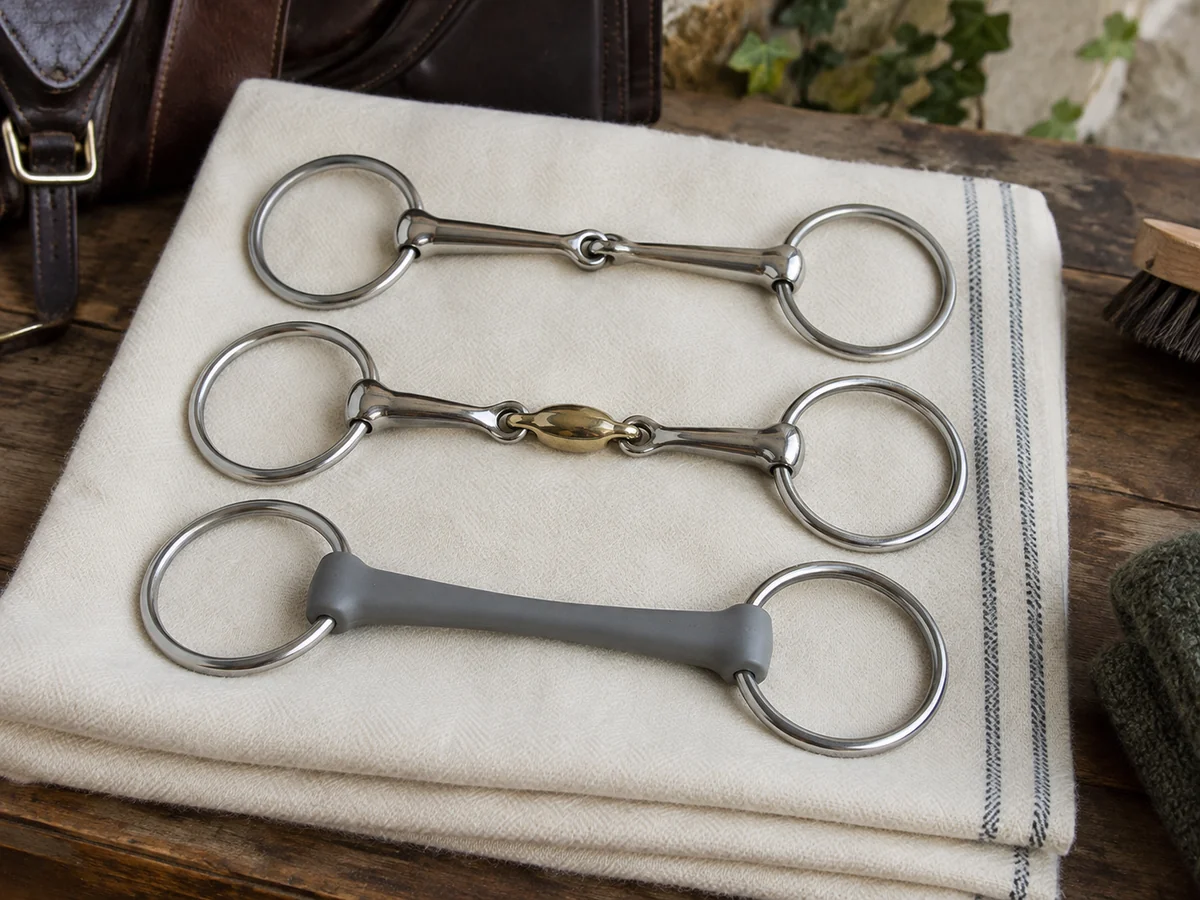
Count the joints, then keep looking
A single-jointed mouthpiece has one central joint. A double-jointed version has two joints with a centre piece between them. An unjointed mouthpiece may be straight or curved, and some designs allow a degree of flexibility. These names describe visible construction. They do not rank the bits from kindest to strongest or tell you which one suits a horse's mouth.
Look at the centre piece of a double-jointed bit. Its shape, length and orientation matter, and apparently similar designs may sit differently. Sprenger, for example, provides orientation information for some of its designs. Do not reverse an unfamiliar bit because its photograph looks symmetrical. Keep the manufacturer's instructions with the exact model rather than relying on a general diagram of a double-jointed mouthpiece.
Thickness is not a comfort score
Mouthpieces vary in thickness as well as width. A thicker design occupies more space; it is not automatically more comfortable for a horse with limited room in the mouth. The tongue, palate, lips and other anatomy need considering by someone competent to assess them. Measuring across a product on a table cannot provide that assessment.
Materials also vary. Metal alloys, rubber-covered designs and synthetic mouthpieces have different care and inspection requirements. Check for roughness, sharp damage, corrosion where relevant, and deterioration of any covering. A damaged coating should not be sanded, wrapped or otherwise repaired at home for continued use in the mouth. Ask the manufacturer or an appropriate professional about replacement.
Bring a question rather than a shopping list
If the horse seems uncomfortable, write down when the signs appear and arrange appropriate dental, veterinary or bitting advice. Avoid changing several pieces of equipment simultaneously in the hope of finding a quick answer. An unfamiliar mouthpiece can change more than its appearance, and behaviour cannot be reliably diagnosed from a product description.
For a fitting appointment, bring the existing bridle and bit and note the exact model if known. Explain the horse's work and any changes you have observed. A recommendation should consider the complete arrangement, including cheek design, bridle fit and the rider's use of the reins. Learning mouthpiece vocabulary helps you follow that discussion; it should not turn a catalogue into a prescription.