Recognising common noseband types
Recognising the shape helps you describe a noseband, without treating the shape as a solution to a riding problem.
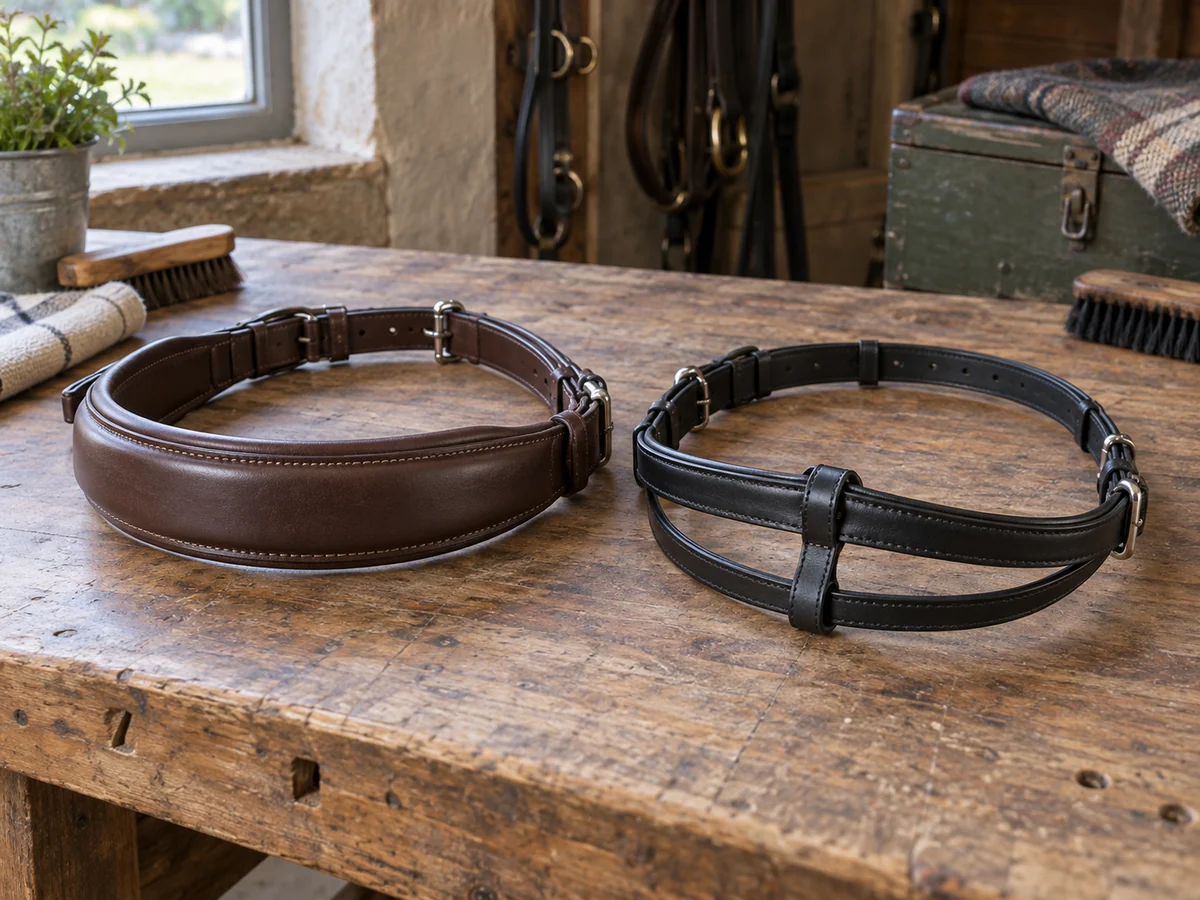
Recognise the main arrangement
A cavesson is the familiar band encircling the nose above the bit. A flash arrangement adds a lower strap, while a drop noseband has a different, lower route. A grackle has crossing straps over the nose. These descriptions identify broad families; modern versions can differ substantially in padding, attachment points and the way the straps pass around the head.
The word 'crank' usually refers to a fastening arrangement rather than a wholly separate location on the face. Its mechanical advantage is not an invitation to tighten more firmly. A noseband must leave the horse comfortable and able to move its jaw appropriately. The British Horse Society specifically warns against using one to keep the mouth shut.
Shape does not establish suitability
A lower strap needs particular care around the soft nostril region. Horses breathe through their noses, so a badly positioned design can have serious consequences. A written description is not enough to assess the bones, soft tissues and other equipment on an individual head. Ask a qualified bridle fitter to check the complete bridle rather than fitting from a photograph alone.
Padding can make a noseband appear generous while reducing the usable space inside. Buckles and strap junctions can also land against sensitive areas. Check the arrangement from both sides and underneath with appropriate handling help. Do not focus only on whether the front looks central; a twisted lower section or awkward buckle can be easy to miss.
When you are considering a change
Describe why you want to change the noseband. Mouth opening, head movement or resistance needs investigation, not automatic restraint. The horse may need dental, veterinary, fitting or training assessment depending on the concern. Choosing a style because it is commonly seen in a discipline does not establish that it is needed by your horse.
Bring the current bridle to a fitting discussion and record the exact make and size of any proposed replacement. Component lengths are not standard across brands, and a new noseband may affect how other straps lie. If you compete, check the current rules for the activity as well. Permission under a rulebook and suitability for the individual horse are separate questions, and both need answering before use.
Reading & references