Why saddle styles feel different
A saddle's seat and flap reflect an intended riding position, but the label alone cannot settle the choice.
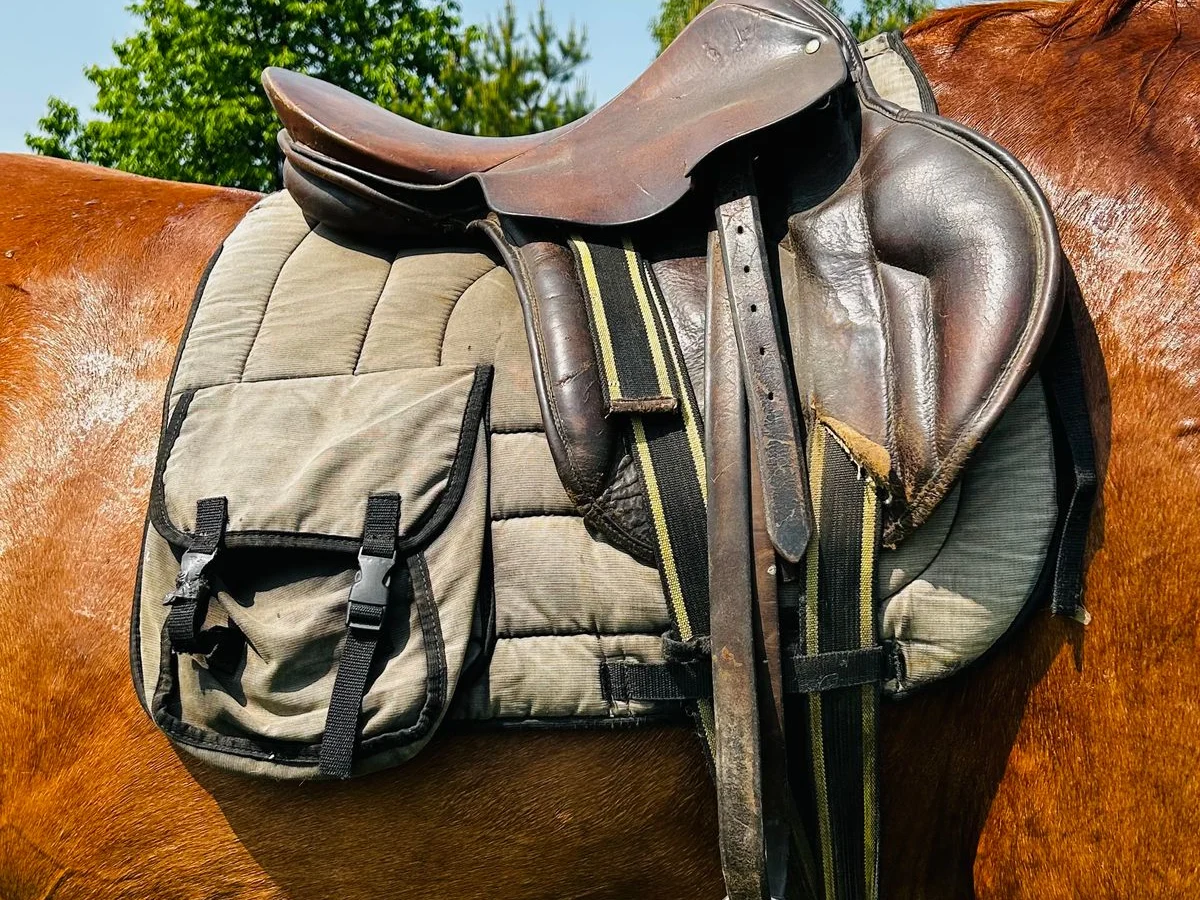
Begin with the riding you do
A dressage saddle commonly has a relatively straight flap to accommodate a longer leg position. A jumping saddle generally has a more forward flap to make room for a bent knee with shorter stirrups. General-purpose saddles occupy varied ground between them. These are useful descriptions when starting a conversation, but there is considerable variation within each group.
Look at a side view and notice where the flap sits relative to the seat. A rider with a long thigh may meet a knee block differently from another rider in the same nominal seat size. Changing the stirrup length also changes where the knee arrives. That is why a saddle should be assessed with the rider's actual position and usual work in mind.
The seat is only part of the feel
Seat depth, twist, block shape and flap length all contribute to how a saddle feels. The twist is the narrower area beneath the rider near the front of the seat; it is not the same measurement as the width needed for the horse. Descriptions such as 'narrow feel' should therefore be clarified rather than used to infer the horse's fitting requirements.
A large block can feel reassuring while standing in the shop yet interfere with movement in use. Equally, a flatter seat does not automatically mean a rider will be insecure. Discuss what you are trying to do with the saddle fitter and instructor. Useful observations include feeling pushed forward, struggling to let the leg hang, or meeting a block with the knee rather than sitting comfortably behind it.
Try the complete arrangement
Bring your normal riding boots and tell the fitter which disciplines you actually practise. A trial should consider the horse's movement as well as the rider's comfort, with the appropriate pad and girth included. Do not choose a style solely because an accomplished rider uses it; their horse, proportions and work may be quite different.
If one saddle is intended for several activities, explain the compromises you are prepared to make. Occasional poles and regular jumping are different requirements, just as an introductory dressage lesson differs from a specialised programme. The best starting point is a clear account of your routine, followed by a professional assessment of suitable saddles. A discipline name narrows the conversation; it does not finish it.
Reading & references