Where the browband meets the headpiece
A small change at the forehead can alter where the top of the bridle sits behind the ears.
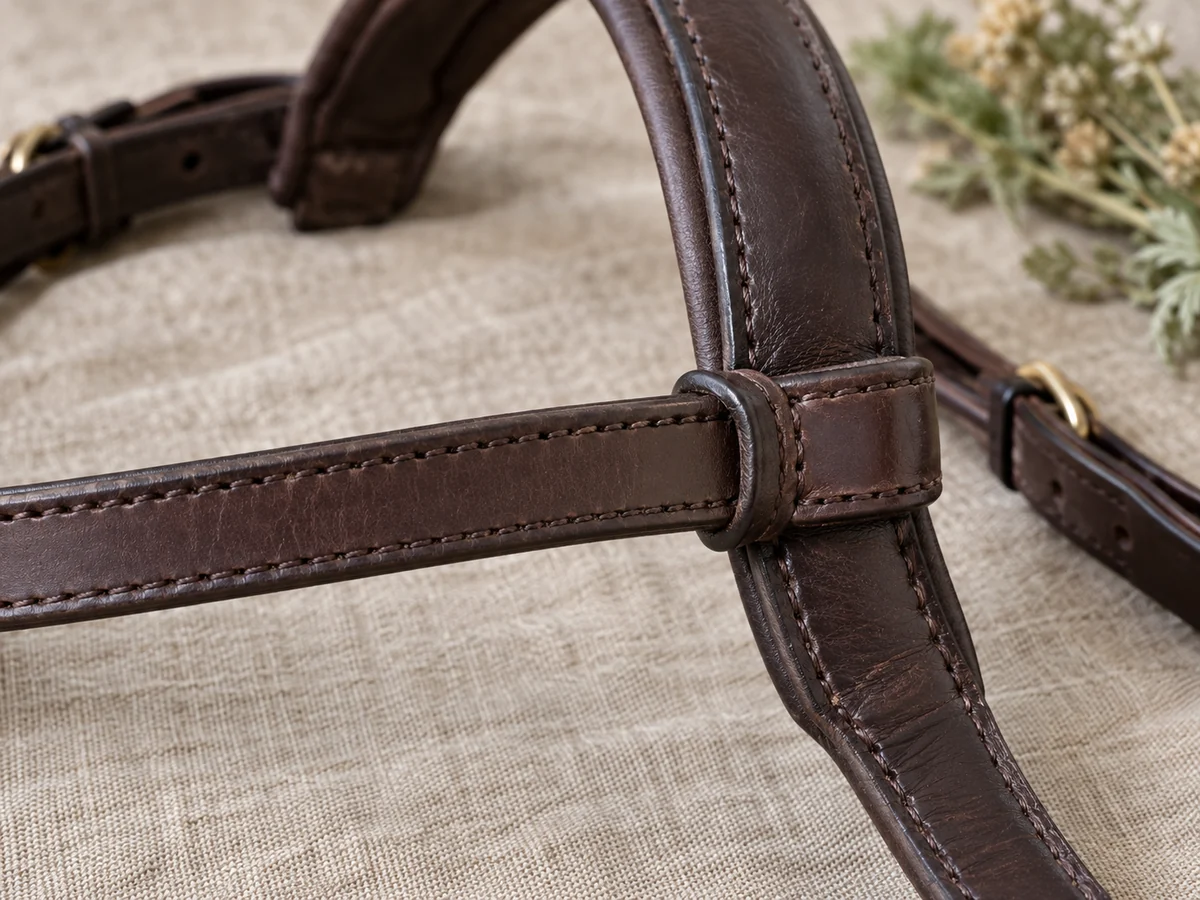
Look at the junction
The browband connects the sides of the bridle across the forehead, usually through loops around parts of the headpiece assembly. Those loops are easy to overlook when choosing a replacement. A browband can have enough length across the front but loops that are too tight for a broad, padded headpiece. Forcing the connection can bunch the leather or change the route of neighbouring straps.
Check how the original pieces fit together before ordering. Some bridles have separate straps passing through the browband loops; others integrate components into a wider crown. Photograph the arrangement from both sides and note the dimensions requested by the manufacturer. The familiar labels cob and full do not describe every relevant measurement.
Length affects more than appearance
A short browband can draw the headpiece forwards towards the ears. An excessively long one can gape or move. A curved or decorative shape still needs assessing where it meets the side of the head. Its lowest point in a product photograph tells you little about the position of its junctions on a particular horse.
The headpiece itself may be shaped or padded around the ears and poll. That shaping must match the individual anatomy. A cutaway is not beneficial simply because it is called anatomical; if it lands in the wrong place, it may create an awkward edge. A qualified bridle fitter can assess the relationship between the browband, crown, cheeks and other components together.
Make replacement parts a complete check
Before fitting a new browband, inspect its loops, stitching and underside for hard joins or rough decoration fittings. Decorations should not leave projections against the horse. Check that any detachable fastening is fully secured according to the maker's instructions. Do not rely on a decorative front panel to conceal a damaged structural strap behind it.
After changing the piece, have the bridle checked on the horse rather than assuming the old buckle settings remain correct. Notice any new rubbing, sensitivity around the ears or reluctance during bridling and seek advice. When cleaning, allow the junctions to dry properly before reassembly. Dampness and dirt can remain trapped where several layers overlap, even when the visible forehead section looks immaculate.
Reading & references