Saddle pad or numnah?
The outline changes, but either style still needs to sit neatly with the saddle and the horse.
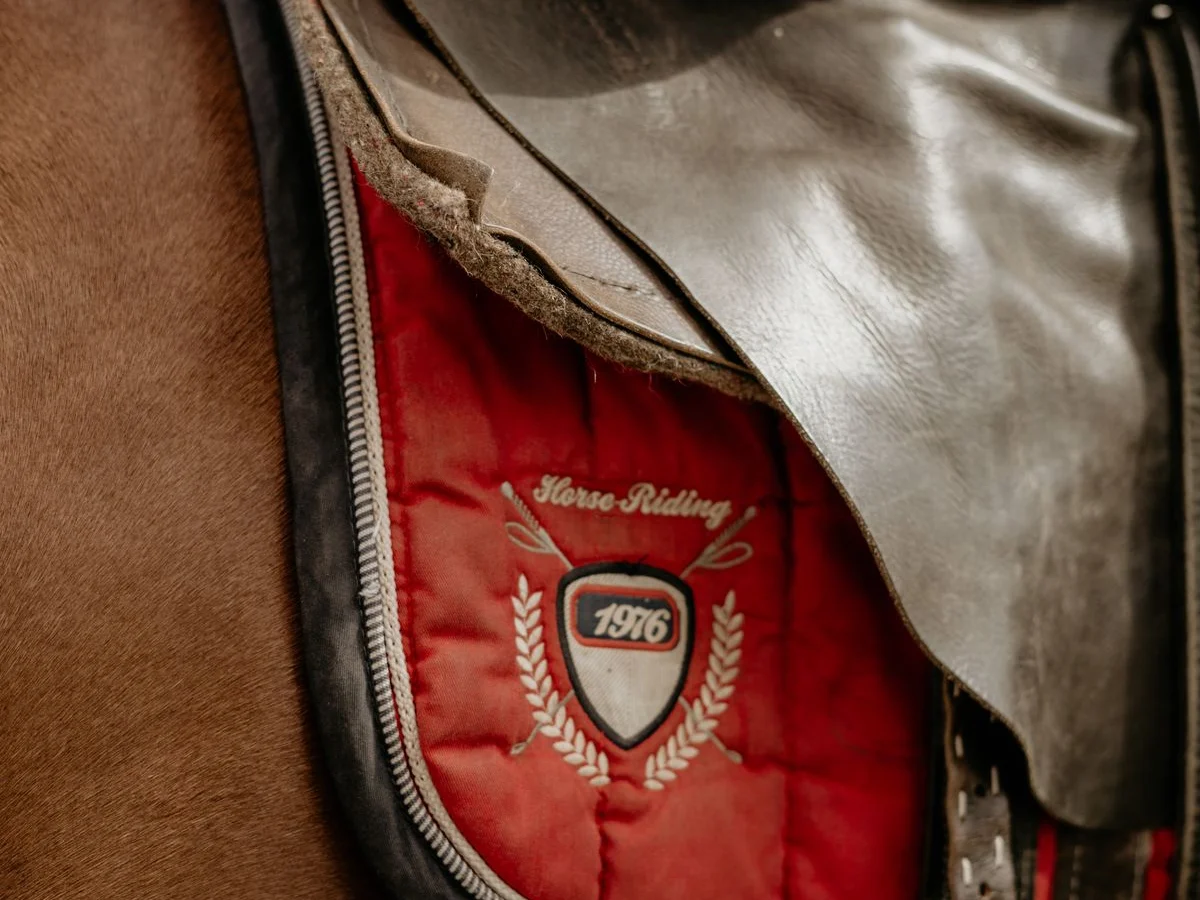
Two familiar outlines
A numnah follows the outline of the saddle more closely, while a saddle pad is often a more rectangular or square shape with fabric extending below the flap. Shops do not always use the words consistently. Look at the product photograph and dimensions rather than relying on the name, particularly when ordering a replacement for something you already use.
The visible outline is mainly a starting point for comparing coverage. The underside, seam positions, thickness and shape over the withers also matter. A decorative square pad and a plain shaped numnah can have very different constructions. Turn each over and inspect the surfaces that will sit against the horse, where grit, hard seams or a wrinkled lining can cause trouble.
Match the saddle rather than the colour set
The pad needs to be appropriate for the saddle's length and flap shape. A dressage pad can extend a long way below a compact general-purpose saddle, while a small shaped numnah may not give sufficient coverage under a more forward flap. Check the manufacturer's measurements and discuss the combination with the saddle fitter. Nominal pony, cob and full labels are not universal dimensions.
Look closely at the straps and girth loops. They should be suitable for the way that saddle is designed to accept them. Do not pull straps across an awkward route simply to use every available loop. A strap secured to the wrong place can distort the pad, and a neat appearance from the side does not prove that the material remains smooth underneath.
Thickness changes the combination
Replacing a thin pad with a thick padded or lined version changes what lies between saddle and horse. Include that change in a fitting discussion. Extra cushioning should not be used to cover up a saddle that moves, pinches or leaves the horse uncomfortable. A corrective pad, where advised, has a specific purpose and needs reviewing as part of the complete fit.
After use, remove the pad and inspect both sides. Brush away loose hair and let moisture escape before storage. Washing instructions depend on the filling, fabric and trim, so keep the label details. Choose a second pad if needed to allow proper drying between rides. A clean, dry replacement is more useful than several attractive pads that remain damp in a heap.
Reading & references