The parts of a stirrup worth knowing
Look at the tread, sides and leather attachment before comparing unfamiliar stirrup designs.
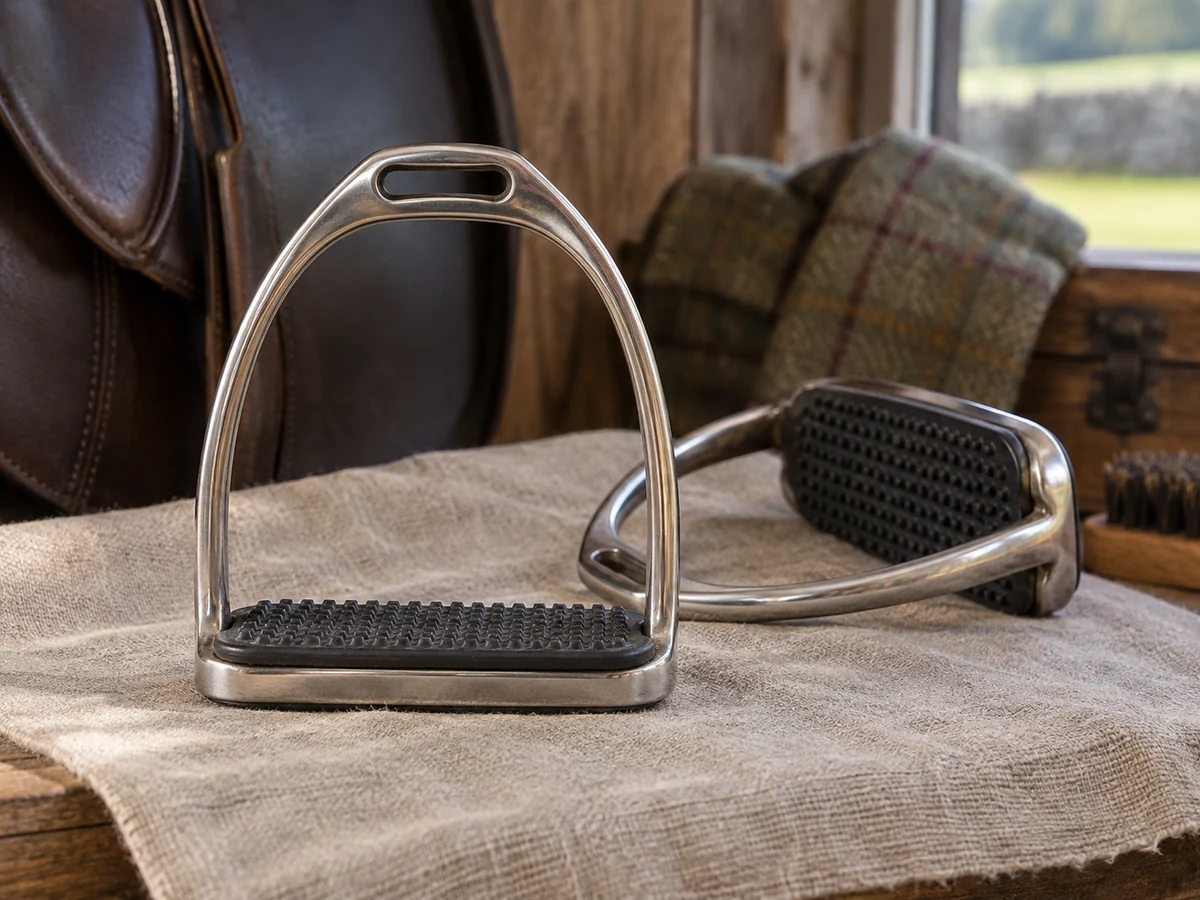
More than a place for the foot
The tread is the platform beneath the boot, and the sides connect it to the upper slot or eye where the stirrup leather passes through. Traditional irons have a fixed shape; other designs include moving or opening parts. These differences need understanding before use, particularly when the equipment is borrowed or has arrived without its instructions.
A wider tread may feel different under the foot, but tread width is not the only measurement that matters. The space around the boot must suit the boot actually worn. A bulky winter riding boot can change the relationship even if the rider's shoe size is unchanged. Have the combination checked rather than assuming an iron that worked with one pair suits every pair.
An opening side needs its own instructions
Some stirrups have a release feature intended to help the foot come free in certain circumstances. The mechanism, orientation, rider limits and compatible footwear can be model-specific. Read the manual and ask the retailer to demonstrate the design. The description 'safety stirrup' is not a promise that a foot cannot become trapped in any fall.
Do not test a mechanism with improvised force or modify a part to make it release more easily. A replacement rubber, pin or tread should be the component specified for that model. If a moving side is stiff, damaged or has operated during an incident, follow the maker's inspection or replacement advice before using it again. An outwardly tidy finish does not establish internal condition.
Before the next ride
Check that each iron hangs in its intended orientation and that the leather is threaded correctly. Remove mud and grit from the tread and inspect for damaged edges, loose inserts or cracks. Consult the maker before applying lubricant to any mechanism; a product that frees a household hinge may be unsuitable around a riding boot's contact surface.
Keep the instructions and exact model name, especially when two pairs look similar in a shared tack room. If equipment is handed to another rider, explain any specific requirements rather than merely saying the irons are adjustable or quick-release. A clear identification label on the storage bag can preserve information that otherwise disappears once the packaging is thrown away.
Reading & references