Leather and synthetic tack in everyday use
The useful comparison is how each material behaves in your routine, including the parts hidden beneath the surface.
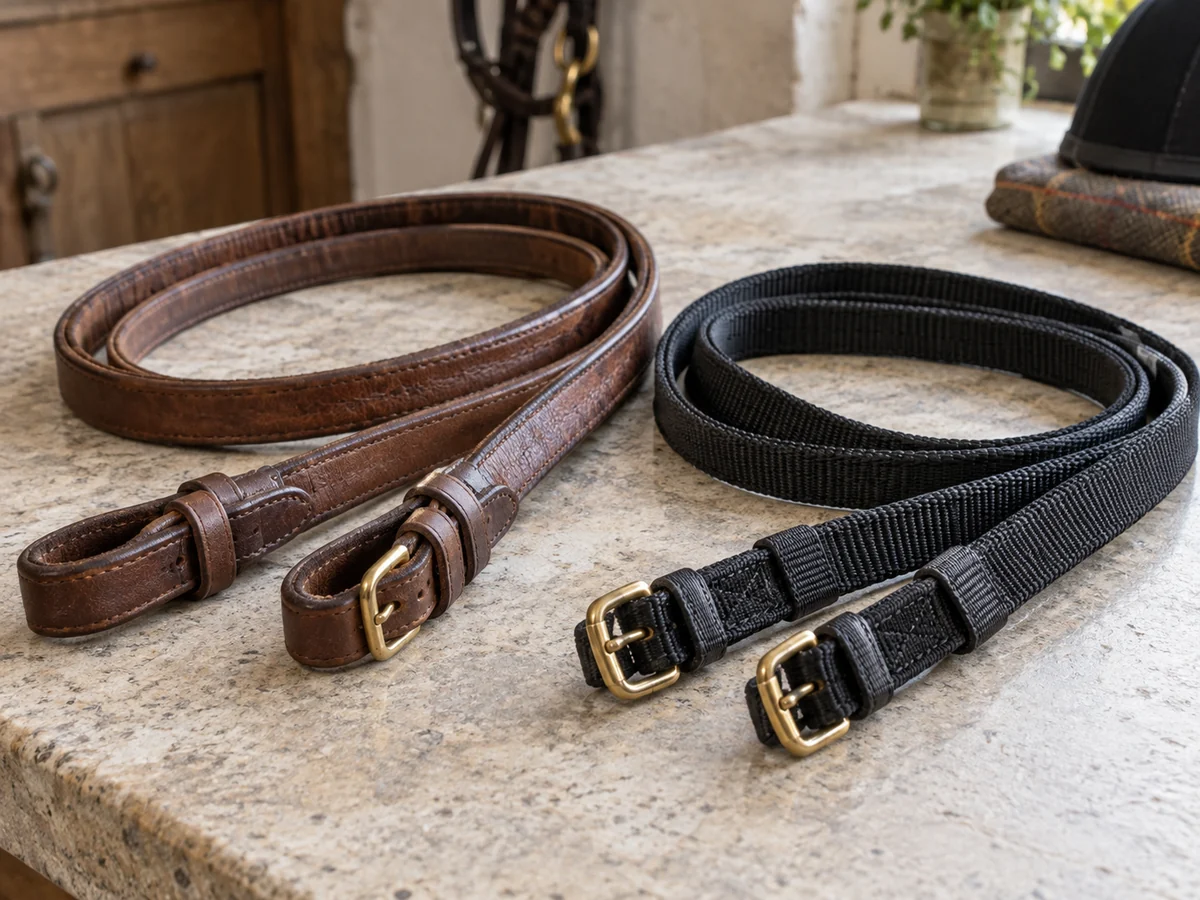
Look beyond the outside finish
Leather tack and synthetic tack are broad descriptions, not grades of quality. A synthetic saddle may still contain leather components, while a leather item may include webbing reinforcement or non-leather linings. Read the construction details before deciding what cleaning products to buy. The underside and load-bearing straps matter as much as the surface visible in a photograph.
Leather can acquire small changes in colour and feel with use. Those changes are not all harmless patina: cracking around holes, damaged stitching or a separating layer still needs attention. Synthetic material can also deteriorate, including worn coatings and damaged joins. Neither material removes the need for regular inspection of the parts that carry weight or connect equipment.
What happens after a wet ride
Some synthetic surfaces are straightforward to wipe clean, which can suit a busy lesson schedule or muddy winter. Wintec, for example, specifies that its synthetic saddle sections do not need oiling or waxing. That is an instruction for those materials, not permission to soak every component of every synthetic saddle. Check the maker's directions for straps, stitching and any mixed materials.
Leather usually calls for a compatible cleaning and conditioning routine. More product is not necessarily better, and soaking the leather is not a shortcut. Consider whether you have somewhere suitable to dry and store the item, and whether its care instructions are manageable after the riding you actually do. A finish that requires care you consistently skip is a poor match for your routine.
Compare the whole purchase
Handle the equipment if possible. Notice the flexibility of a rein, the bulk around a buckle or the feel of a saddle flap. Those differences can matter more in use than whether the label says natural or synthetic. Do not assume that a familiar colour will produce the same grip or that all synthetic versions will feel alike in cold weather.
Ask about repairs and replacement components before buying. A saddler may be able to repair certain leather parts, but the answer depends on the damage and construction; synthetic repairs are similarly product-specific. Fit remains a separate question. A material preference cannot make the wrong saddle tree shape or an unsuitable bridle component work for the horse. Choose construction, fit and maintenance as connected decisions.
Reading & references