Help boot and bag zips move freely
A reluctant zip is easier to investigate before it is forced shut around a boot or an overfilled bag.
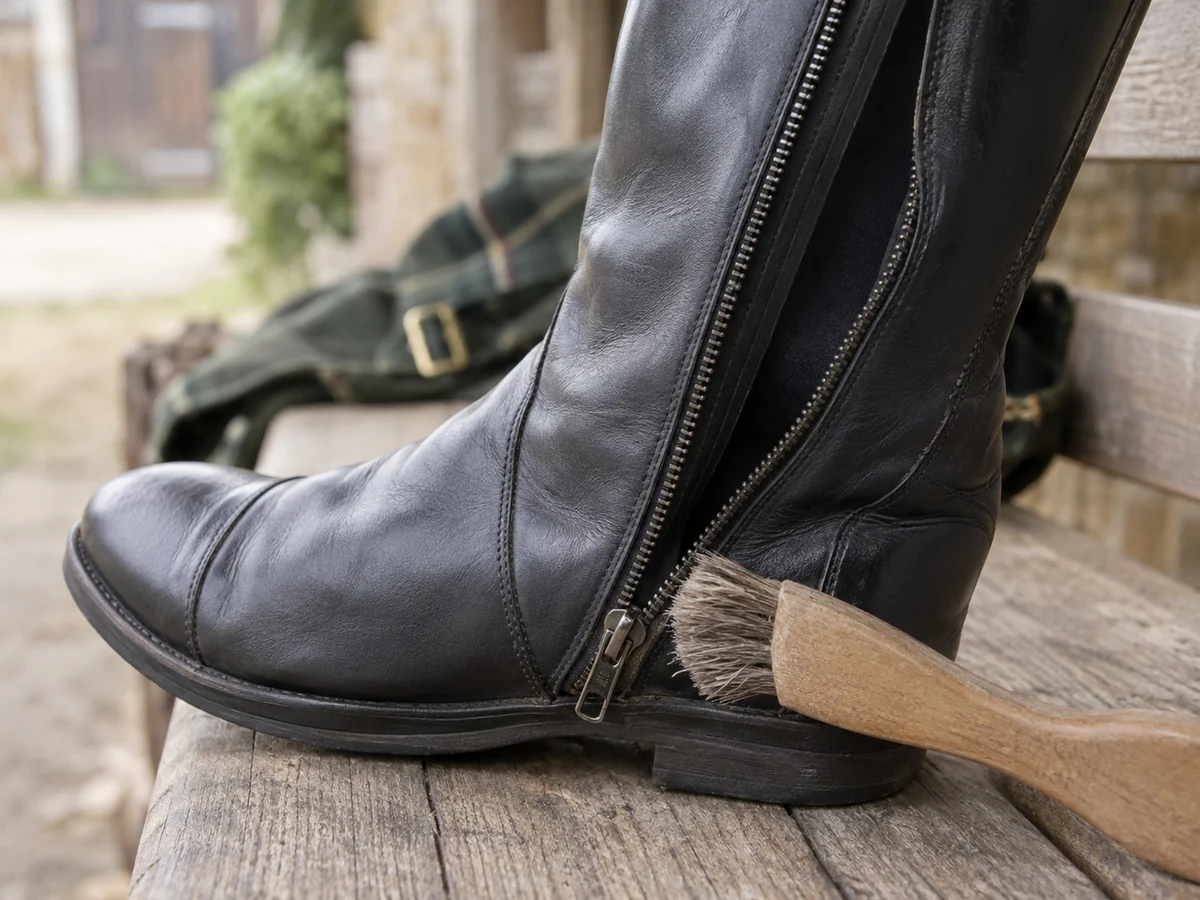
Stop when the movement changes
If a zip becomes stiff, check for trapped fabric, mud or tension before pulling harder. Open the bag or remove the boot as appropriate so that the zip is not being asked to overcome an awkward load. A strap, lining edge or overfilled compartment may be pulling the two sides out of line. Freeing that obstruction can be a different task from repairing the zip itself.
Look along the teeth and at the slider in good light. Note missing or distorted teeth, separation behind the slider and a pull that no longer sits normally. Do not use pliers to force the mechanism back into service on an assumption about the fault. Describe the problem to the maker or a suitable repairer, with photographs if they request them.
Clean according to the item
Remove loose dirt gently using the method recommended for the boot or bag. Keep grit from being dragged along the teeth, and take care not to push it deeper into a fabric lining. Check whether the maker recommends a particular zip treatment. General-purpose oil can mark surrounding materials or attract dirt. If the item has a waterproof membrane, check treatment compatibility with that construction as well as the visible outer fabric.
Allow wet equipment to dry by its own care instructions before storing it. A zip may appear clean while the seam and backing remain muddy or damp. On tall boots, support the boot appropriately during care rather than bending the shaft sharply to reach the closure. On bags, empty the relevant compartment so that its lining can be inspected as well as the outside.
Reduce the strain next time
Fasten boots in the sequence their maker recommends, without using the pull as a handle to haul a tight boot into place. A persistent fit problem needs attention rather than stronger pulling. With a kit bag, reduce the contents if the zip closes only while someone compresses the entire bag. Moving a bulky item to a suitable separate carrier can make the closure usable again.
Arrange a repair before a failed zip interrupts a lesson or trip. Check whether the repair affects waterproofing, fit or other features of the item, and allow time to try it afterwards. Keep the repaired area under observation during normal use. A smooth-moving zip should be the result of sound parts and sensible loading, not a temporary victory over a stubborn mechanism.
Reading & references