Build winter layers that still let you move
Build warmth around the movements and protective equipment you need, then leave room to adjust before mounting.
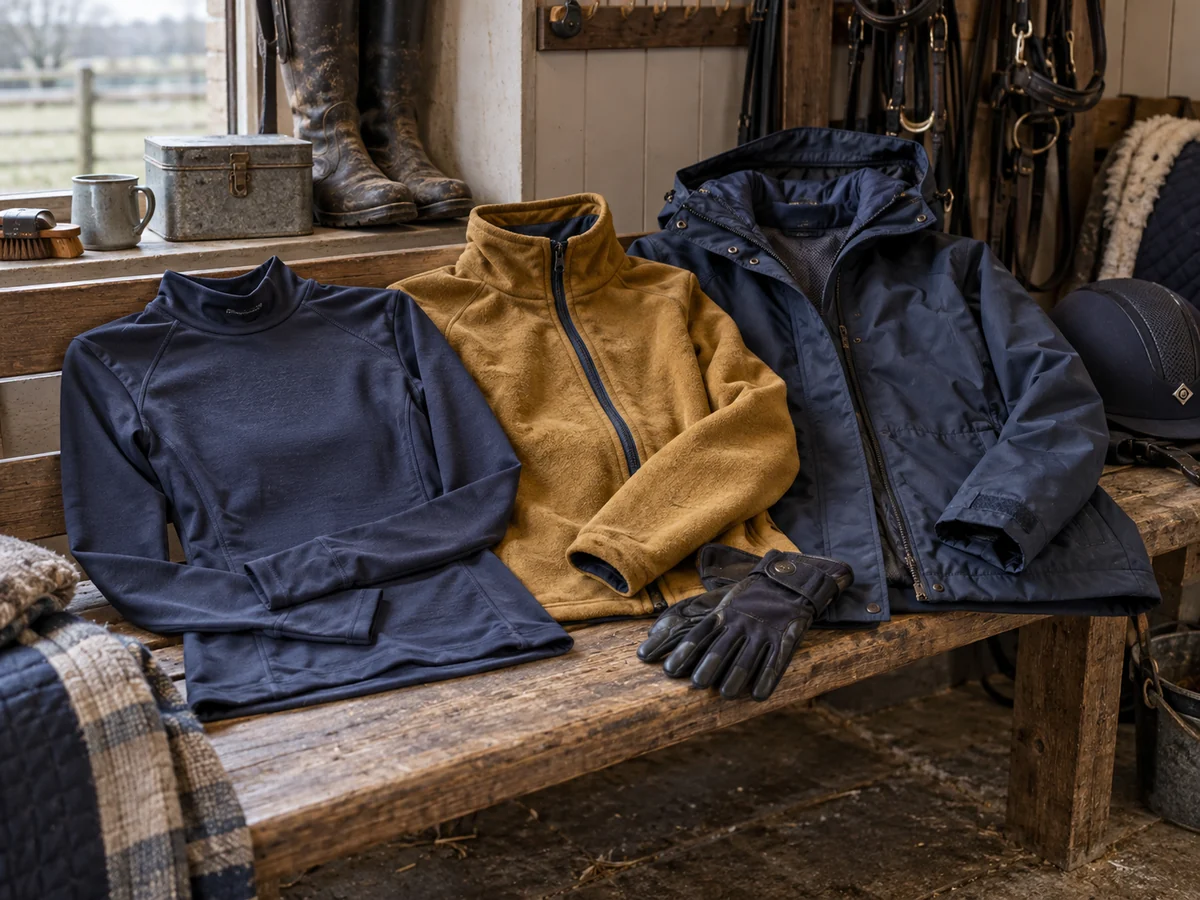
Start with the full outfit
A winter layer system needs to work while bending, reaching and sitting in the saddle. Try the base layer, mid-layer and outer together rather than approving each one separately. Fabric can gather at the elbows, waist and wrists when several comfortable garments are combined. Reach forwards as though holding the reins and check that the sleeves do not pull tight.
Include any body protector or air jacket in the fitting discussion. Their instructions determine how clothing should sit around them. A coat that closes comfortably over an uninflated air jacket may still be unsuitable for inflation. Do not change the arrangement simply to squeeze in a thicker fleece; ask the fitter or manufacturer about appropriate combinations.
Warmth should not change safety fit
Extra socks can make riding boots tighter, reducing comfort and altering how they sit in the stirrup. Try an appropriate warmer sock within the existing fit rather than automatically adding a second pair. Gloves also need enough room for finger movement. Check that a liner does not turn a manageable riding glove into a cramped or bulky one.
Do not put an ordinary hat or thick band beneath a riding helmet without approved fitting advice. Helmet fit is too important to improvise for warmth. Ask the hat retailer about suitable options for the model, and follow the riding school's rules about scarves, hoods and loose ends around horses.
Separate waiting from riding
Standing beside an arena can feel colder than active riding. An extra coat for waiting may be useful, but remove or adjust layers safely before mounting. Plan somewhere to leave spare clothing so that it does not hang from rails or sit where horses can reach it. Avoid relying on changes that require awkward handling of loose garments once aboard.
After riding or yard work, replace damp layers if needed and allow kit to dry properly before packing it away. A breathable garment still needs care, and a wet cuff can remain uncomfortable long after the rest feels dry. Use the next outing to refine the combination: note exactly where bulk, dampness or cold was a problem, then change the relevant layer rather than adding thickness everywhere.