What to do with a rain-soaked saddle
A saddle that comes back wet needs space, support and time before it is put away.
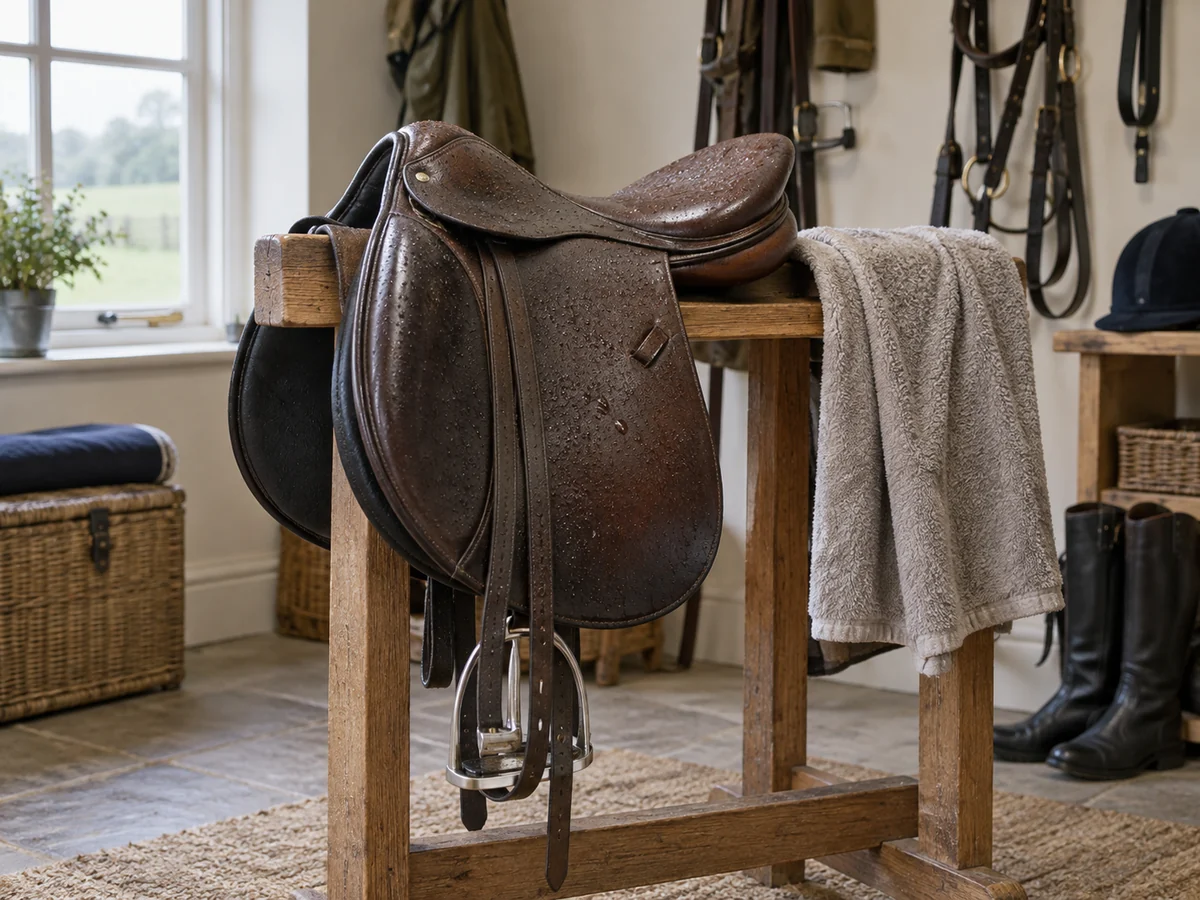
Deal with the wet layers separately
After a rainy ride, take off the pad and any removable cover so they can dry separately from the saddle. Support the saddle on a suitable rack and look at the flaps, panels and straps. Water can remain in places that are hidden when everything is stacked together. Keep the wet pad out of the clean, dry equipment pile.
Follow the saddle maker's advice for removing surface moisture and dirt. A clean cloth can be useful, but avoid rubbing grit across the leather or treating the whole item as if it were washable fabric. If it has been soaked in dirty water, or water appears to have reached areas you cannot assess, contact the maker or a saddler before returning it to use.
Choose a sensible drying place
Use an appropriate indoor space with ordinary ventilation, away from direct heat. A radiator, heater or a hot vehicle can be tempting when tomorrow's ride is already planned, but rapid drying is not a sound substitute for the maker's process. Do not cover damp leather with plastic to keep the tack room tidy while it dries.
Give the accessories their own attention. A saturated girth, stirrup leather or saddle cover may need different care from the saddle itself. Set them out without blocking a walkway or leaving straps where someone can catch a foot. If the only rack is already occupied, arrange another suitable support rather than balancing the saddle on a narrow edge or placing it on the floor.
Check again before the next ride
Once the equipment has dried as required, inspect it in good light. Look for changes in the finish, unusual stiffness, loose stitching or areas that do not seem to have dried properly. Ask for advice if anything concerns you. Conditioning should follow the model's instructions, not an assumption that every wet saddle needs a large dose of oil afterwards.
Allow the timetable to follow the equipment's condition. If it is not ready, arrange suitable alternative tack with the people responsible for the horse rather than using damp or suspect equipment to preserve a plan. For future wet days, keep a drying space and clean cloth available before you leave. That modest preparation is often more useful than searching for a quick rescue method after the saddle is already soaked.
Reading & references