Clean protective boots before putting them away
Clean the inside as carefully as the outside, then keep the pair together while it dries.
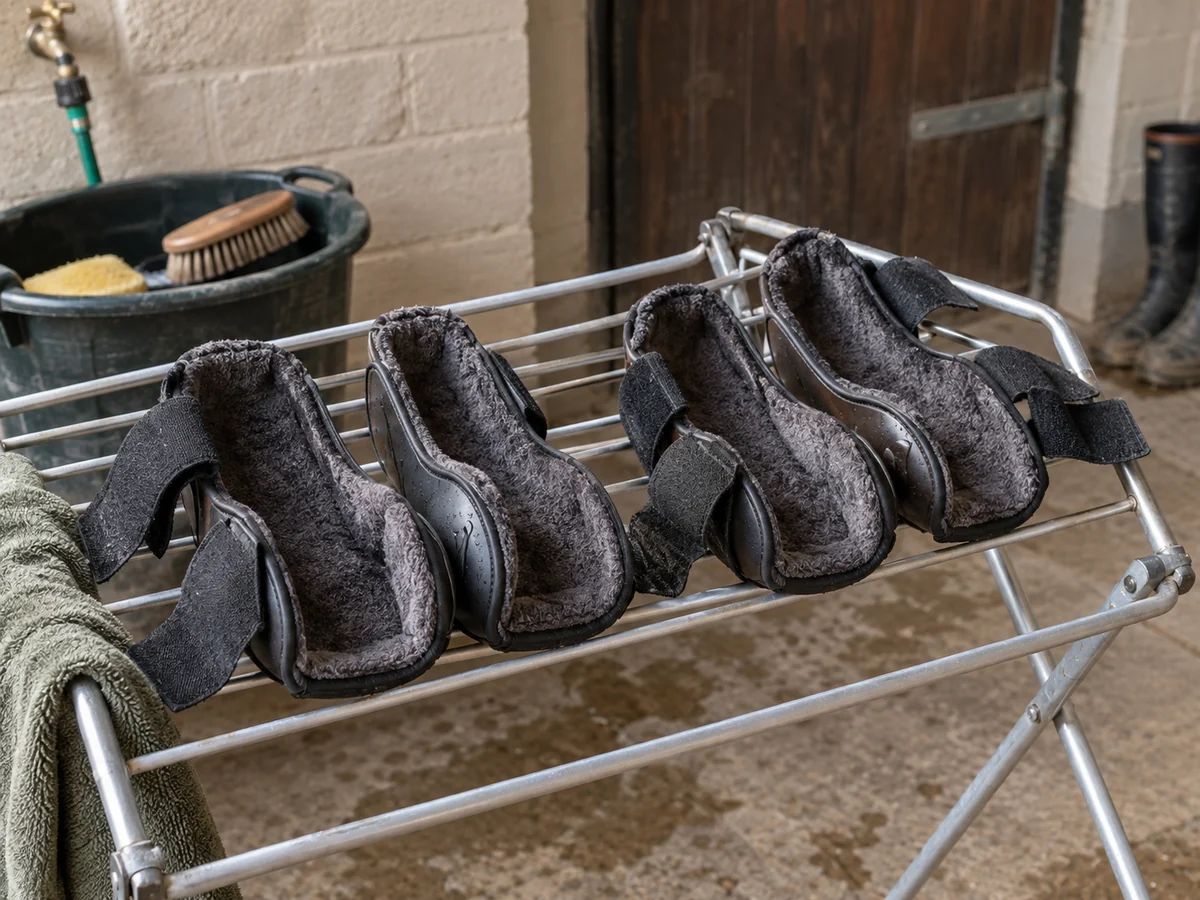
Remove the dirt before it travels
Take protective boots to a suitable cleaning area and open their fastenings. Remove loose mud and hair gently, paying attention to the lining rather than only the outer shell. Work without damaging soft edges or pushing grit further into the material. Keep dirty boots away from freshly washed pads and other equipment that contacts the horse.
Identify the model and read its care instructions. Some parts may be removable or washable while others require a different method. Do not assume that all boots can be soaked, machine washed or dried with heat. Keep detachable pieces in order and note left, right, front or hind markings where the design uses them. A photograph can help preserve the arrangement during cleaning.
Check the surfaces that touch the leg
Look along the lining for hardened patches, trapped grit and damaged seams. Check the edges and fastening areas for wear as well. Cleaning may reveal something that was hidden beneath mud, such as a split or a section that has changed shape. Put questionable boots aside for assessment rather than returning them to the usual box because the outside now looks presentable.
Use the approved cleaning method and rinse or wipe away residue as directed. Hook-and-loop fasteners often collect hair and debris; clear them carefully without tearing the surrounding fabric. Notice whether they still engage normally afterwards. A closure that looks clean but no longer holds as intended is a functional problem, not merely a cosmetic one.
Dry both the lining and the shell
Arrange the boots so air can reach the inner surfaces, following the manufacturer's drying guidance. Avoid folding damp linings against one another or shutting the pair in a bag. Thick sections can take longer than the outer shell. Keep the drying area tidy enough that a boot does not end up on the floor or become mixed with another horse's equipment.
Once dry, reassemble any removable parts correctly and store the complete pair together. Before use, confirm the boots are suitable for the horse and activity and that any fitting uncertainty has been resolved with knowledgeable help. Keep a suspect pair clearly separated from usable equipment. A useful cleaning routine ends with equipment ready to assess and use appropriately, rather than simply dry enough to put out of sight.
Reading & references