Wash a fly veil gently and let it dry fully
Soft ears, crochet and decorative trim may need different care, even on one small item.
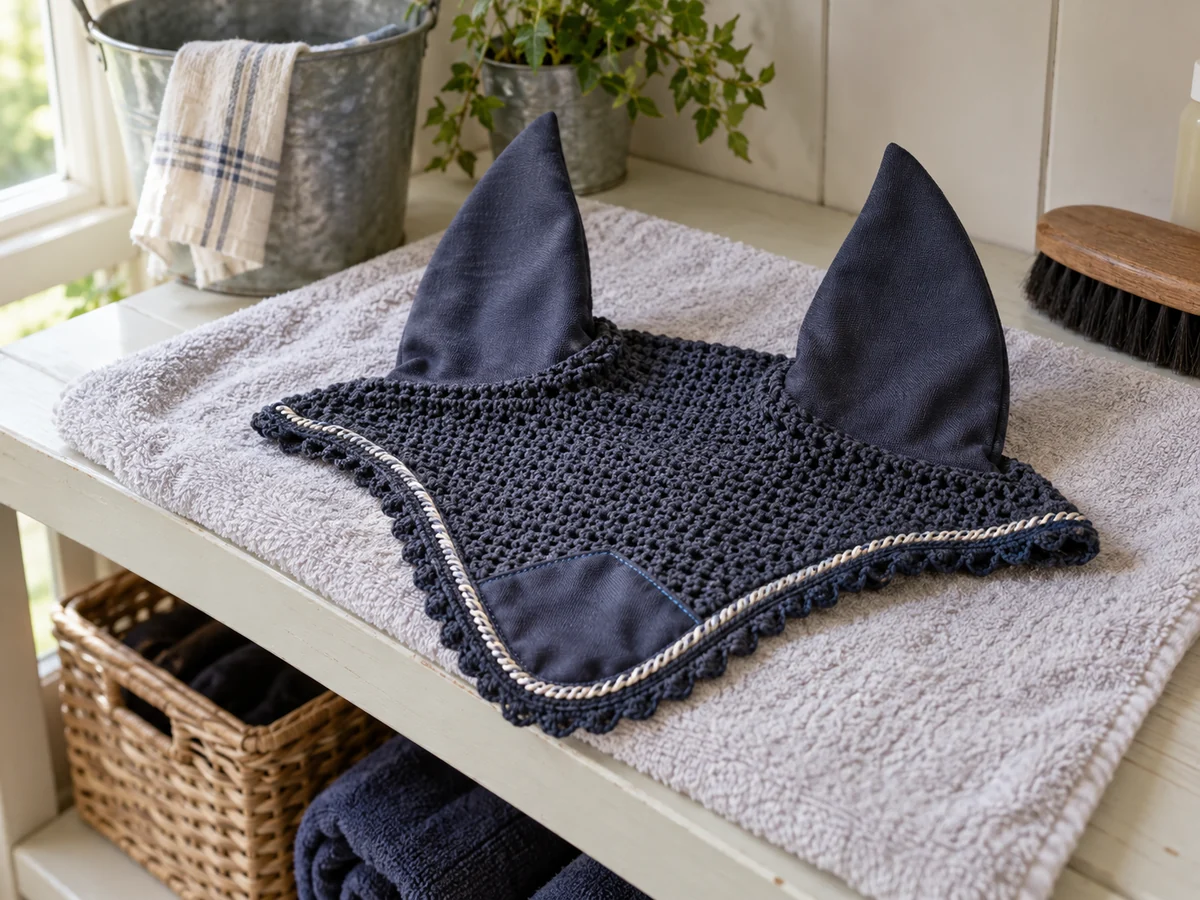
Read the label before soaking
A fly veil can look simple enough to wash with any small textile, but its parts may include different fabrics, stretch panels and decoration. Check the manufacturer's instructions for the specific model. If the care label is missing, look up the product or ask the supplier before choosing a machine cycle. Treat a lined or specialist design according to its own guidance rather than a plain veil's instructions.
Remove loose hair and dirt gently, paying attention to the ear sections and the edge that sits beneath the bridle. Avoid pulling at crochet or scraping a decorative seam. Check for damaged stitching, loose trim and material that has lost its shape. A wash may make these problems easier to see, but it will not repair them. Put a questionable item aside until you know whether it can be restored appropriately.
Follow the approved washing method, including detergent, temperature and any advice about protecting the item in a laundry bag. Keep it away from open hook-and-loop fastenings that could snag the fabric. Do not combine it with heavily muddy equipment simply because both belong to the same horse. A small delicate item can be difficult to find and inspect in a large load of yard laundry.
Dry the ears as well as the visible panel
Remove excess water only in the manner the maker recommends. Avoid twisting the ears or stretching the edge to make the veil look symmetrical. Reshape it gently if instructed and allow air to reach all parts, away from unsuitable heat. The main panel may dry before a lined ear section, so check the whole item before returning it to a drawer or bag.
Once dry, inspect the veil again in good light. Check that the fabric and trim remain secure and that no rough or hardened area has been left where it contacts the horse. Revisit its fit with knowledgeable help if it has changed shape or is being used with a different bridle. Cleanliness alone does not make a poorly fitting veil suitable.
Store it where buckles, boot fastenings and loose brushes will not catch the fabric. A dedicated clean compartment is often easier to manage than leaving it wrapped around the bridle. Before the next use, confirm you have the correct item and that it is permitted for the intended activity. Competition requirements can differ, so care instructions and event rules are separate things to check.
Reading & references