Buying used stirrups with their history in mind
An identifiable model, complete parts and a known condition matter more than a freshly polished pair of irons.
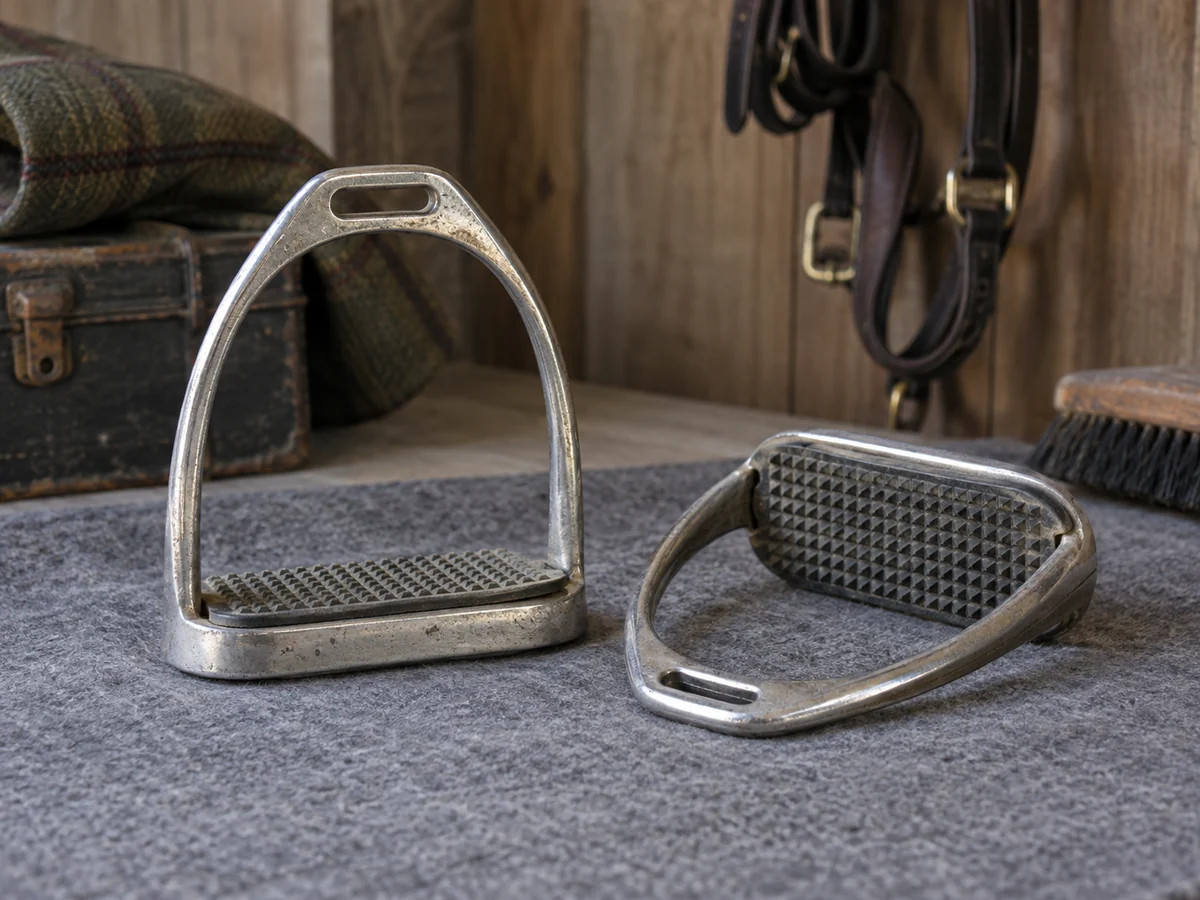
Find the model before assessing the deal
Ask for the make and exact model, along with photographs of any markings. This is particularly important when a stirrup has a moving or releasing component. A general description such as safety stirrup does not tell you how it should work, which parts it needs or whether the manufacturer still supports it. Locate the instructions before agreeing to buy.
Confirm that the two stirrups are a matching pair and establish their orientation where the design requires it. Ask whether treads, branches or other components have been replaced, and whether the replacements are the specified parts. Similar appearance is not enough to establish compatibility. An unbranded replacement can leave a product looking complete while its intended arrangement remains uncertain.
Condition includes more than the tread
Request close views of the eyes, frame, underside and any moving joint. Ask about falls, impacts, corrosion and repairs. Surface cleaning may improve appearance without revealing hidden damage, so do not interpret a shiny finish as evidence of soundness. Do not attempt bending, impact or improvised release tests to prove that a used pair is safe.
Contact the maker about inspection or servicing if the condition of a mechanism is uncertain. Some products have specific maintenance requirements, and missing instructions should not be replaced with guesses. If the history is unknown or the necessary parts cannot be identified, a low price may not be a useful saving. Choose equipment whose use and upkeep you can establish clearly.
Match the rider's equipment
Measure the internal tread width according to the maker and compare it with the actual riding boot. A used pair that is in acceptable condition may still be the wrong size. Check the connection with the leathers too. An eye that does not accommodate the intended leather should not be modified or forced simply because the rest of the stirrup seems suitable.
Include any approved replacement treads, servicing and delivery in the cost comparison. Ask whether those parts are readily available before committing to an older model. Once the pair is in use, retain the instructions and inspect it according to the maker's advice. A buying decision is not a lifetime condition check. Changes in footwear, wear or an impact can create a reason to review the equipment even when it has previously worked without an obvious problem.
Reading & references