Questions to ask about a used saddle
A used saddle needs both a condition assessment and a fitting assessment; neither is settled by an attractive listing.
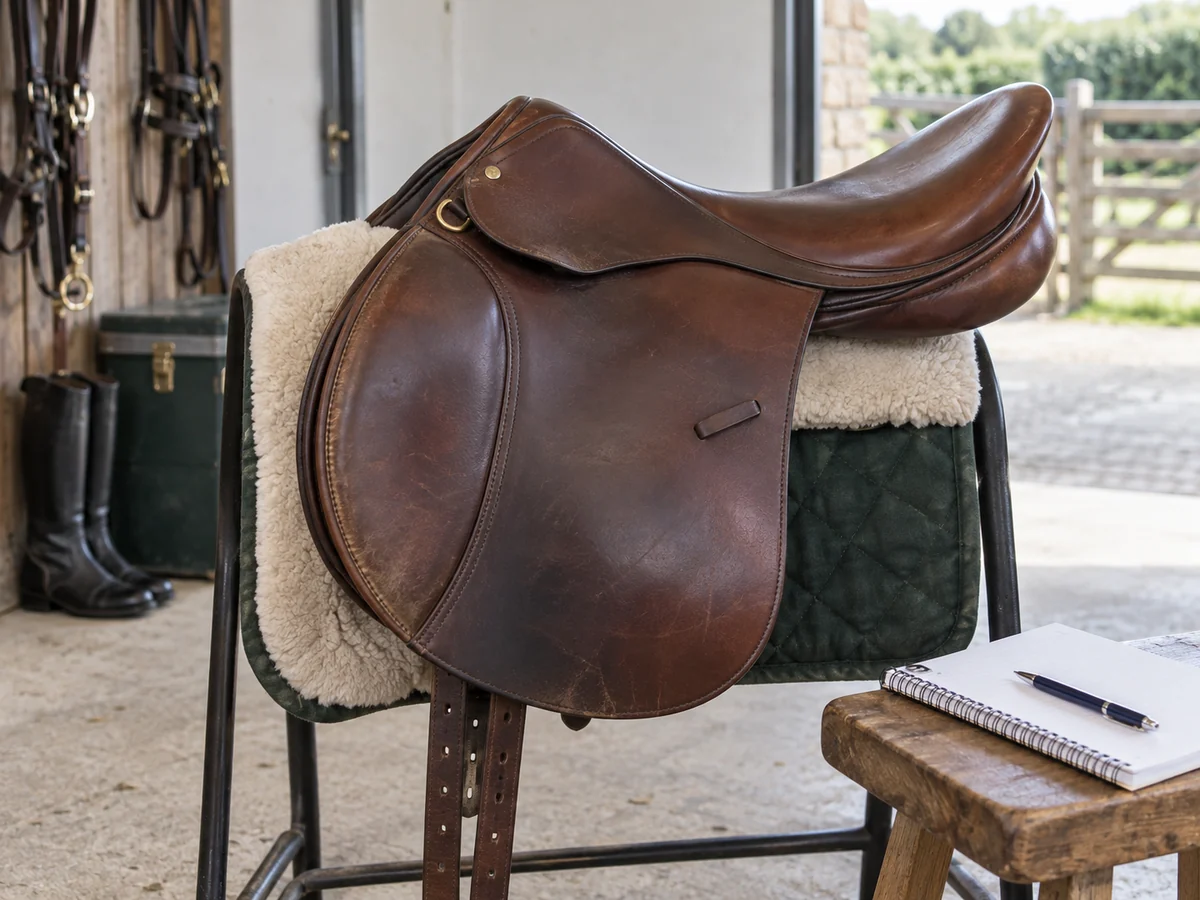
Establish its identity and history
Ask for the saddle's make, full model name, seat size and serial number before discussing whether it might suit your horse. Request clear photographs of identifying marks rather than relying on a typed number that could have been copied incorrectly. Manufacturer information can sometimes help interpret a serial number, but do not assume every brand uses the same system.
Ask about repairs, adjustments and any known fall, drop or other damage. Find out who carried out work and whether a record is available. The seller may not know everything, particularly if they also bought it used. Keep those gaps visible in your notes. A confident description such as barely used does not fill in an uncertain history.
Arrange assessment before committing
Discuss the candidate with your qualified saddle fitter and ask how its condition can be assessed by an appropriate saddler. These are related but distinct questions: an apparently sound saddle may not fit your horse, while a promising model may have a condition problem. Do not attempt forceful tree tests or dismantle someone else's saddle to certify it yourself.
Ask whether an assessment or trial can be arranged before the purchase becomes final, and put the terms in writing. Establish who pays for transport, what use is allowed and when the item must be returned if unsuitable. Leave enough time for the appointment rather than accepting a deadline that makes a proper assessment impossible.
Look past the polished surface
Request views of the panels, girth straps, under the flaps and any damaged or repaired area, as well as the seat. Photographs help identify questions; they cannot reveal every internal problem or prove fit. If an image is dark or cropped, ask for a clearer one instead of imagining that the hidden area resembles the tidy part of the saddle.
Include fitting, possible agreed work and delivery in the cost comparison. A low asking price is not useful if essential work makes the total unsuitable for your budget, or if the saddle cannot be made appropriate for the horse. Keep the exact specification and assessment record if you buy it. That information is valuable for future checks and prevents the saddle's history becoming a vague collection of assumptions with each new owner.
Reading & references