Check a used saddle pad on both sides
A clean top surface is not enough; inspect the underside, binding and shape before deciding a used pad is worth buying.
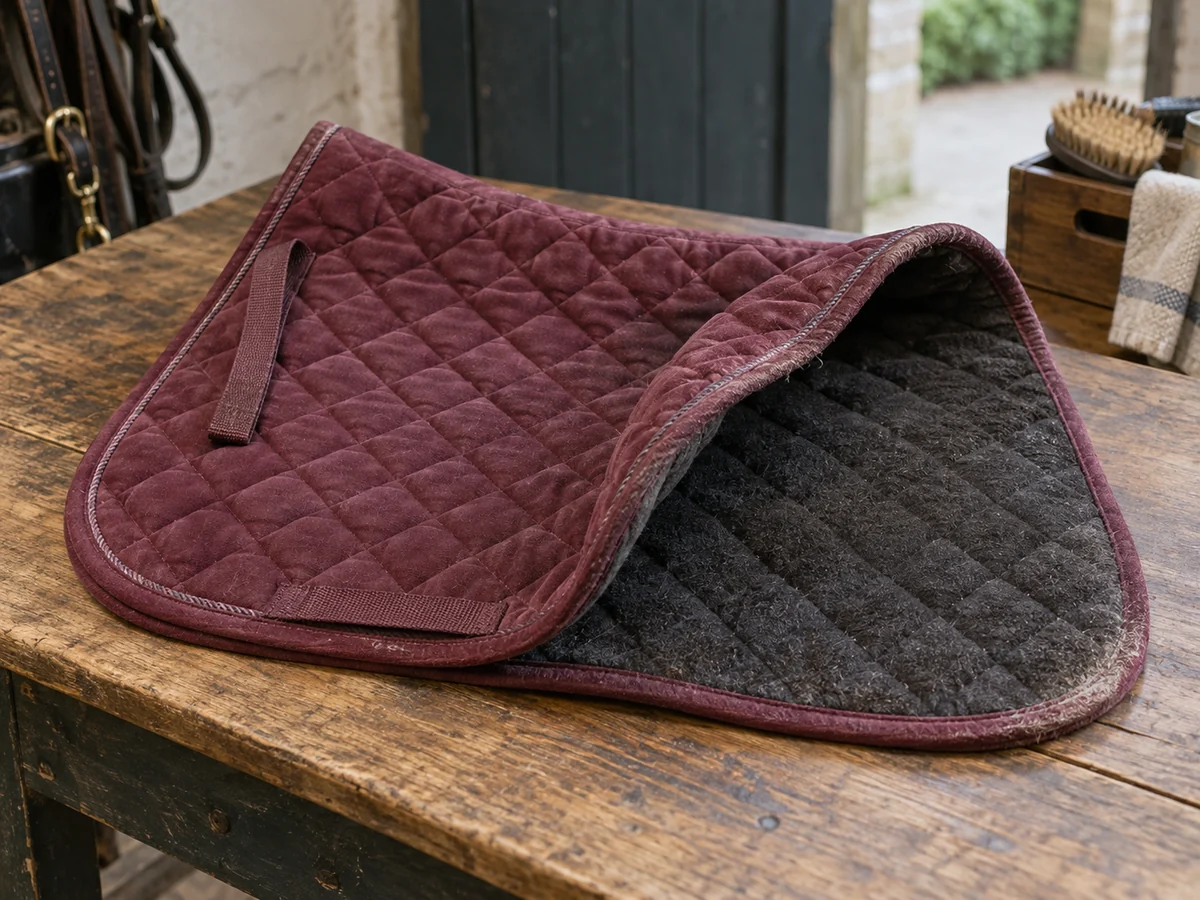
Open it out completely
Ask for the pad to be laid flat and photographed on both sides. A pad folded neatly on a rail can hide a torn lining, a distorted spine or worn girth loops. Identify the model and material so that the correct washing instructions can be found. If the seller only knows the colour and approximate age, there is less information on which to base the purchase.
Look at the quilting and edges for unevenness. Filling that has shifted, a rolled binding or a hard seam may affect how the pad sits. A small stain is a different issue from a change in structure, so ask the seller to distinguish them. Do not assume that every irregularity will disappear in the first wash, especially when the previous washing history is unknown.
Compare the outline, not just the size label
Check the actual length and depth using the maker's measurement method. A full-size pad can be too short or the wrong shape for a particular saddle, and a used pad may have changed through washing. Ask your fitter about the intended combination if you are uncertain. The pad needs to work with the saddle already fitted to the horse.
Look at where the loops and straps attach and whether they are complete. Missing straps do not always mean a pad is unusable, because designs differ, but a torn attachment should be described accurately. Avoid adding makeshift straps to pull a poor-fitting pad into place. A different outline may be the more appropriate answer.
Decide what the saving buys
Add the cost of suitable cleaning and delivery to the asking price. A plain new pad in the correct shape may compare favourably with a heavily used decorative one. If a specialist insert or removable component is required, confirm it is included and intended for that model. An attractive outer shell alone is not a complete purchase.
Before use, follow the material's care guidance and allow the pad to dry fully. Inspect it again after cleaning, since damage can become clearer once dirt is removed. Introduce it within the fitting advice you have been given and watch for movement or folds. A used pad should be chosen because its shape, condition and construction suit the job, not because it can be added beneath a saddle to compensate for an unexplained fitting concern.
Reading & references