Try second-hand riding boots carefully
The printed shoe size is only part of the purchase; wear, calf dimensions and the way the boot has settled all affect the result.
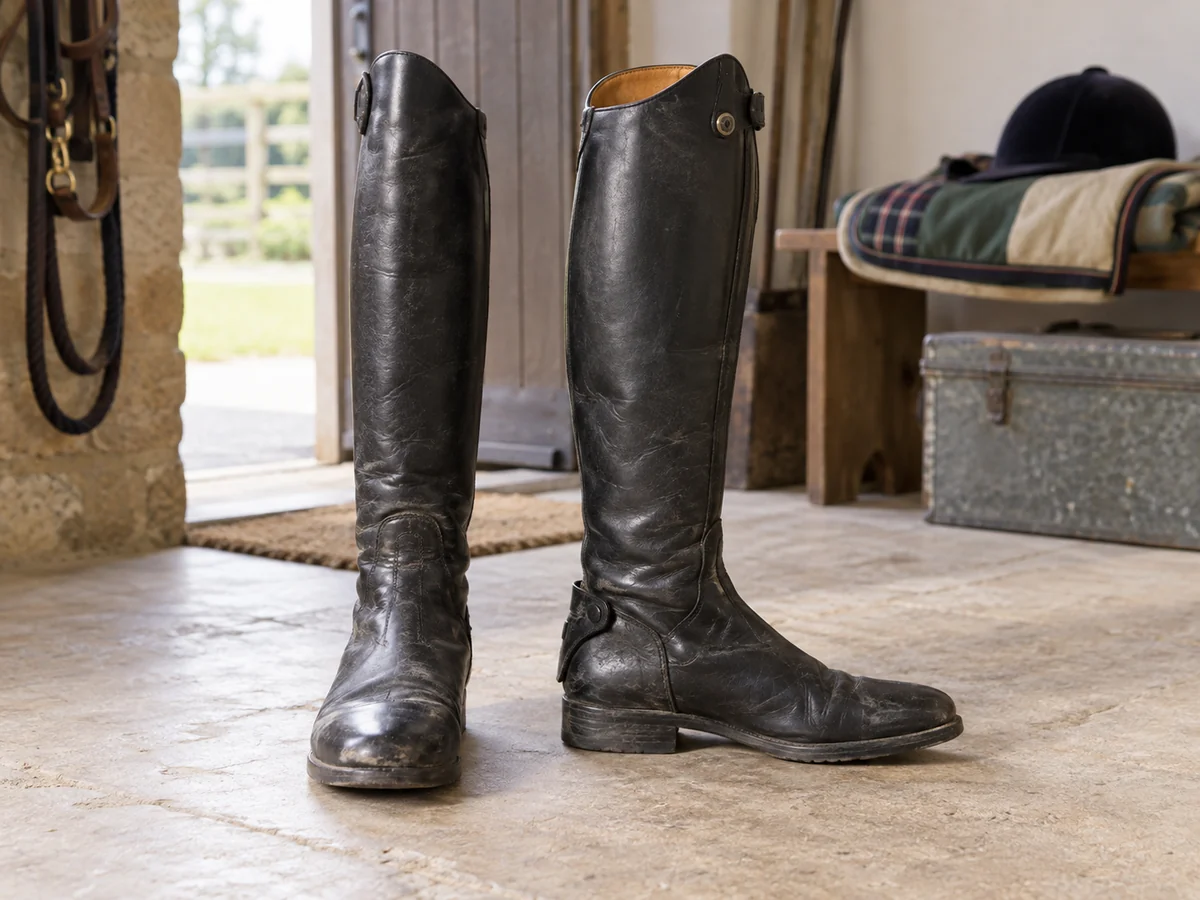
Look at the pair from the ground up
Turn the boots over before being persuaded by their polished uppers. Ask for photographs of both soles and heels, including any worn edges or repairs. Uneven wear can change the feel of a pair even when the leather above still looks tidy. Find out whether the soles have been replaced and by whom, rather than assuming every visible component is original.
Next, look at the area where the sole joins the upper, the ankle creases and the back seam. Ask about splitting, lifting or leaks. Dark photographs can hide these details, so request daylight pictures if necessary. A seller's description of broken in may mean pleasantly softened leather, or it may conceal a boot that has lost too much of its shape. The phrase needs an explanation.
Size has several dimensions
For tall boots, ask for the exact model and the calf and height specification as well as the foot size. Ariat's sizing guidance, for example, directs buyers to model-specific charts. Do not assume that one brand's regular calf corresponds to another's, or that a used boot retains precisely the dimensions of a new example.
Try the pair with the socks and breeches you intend to wear. Zip each boot carefully without forcing it and notice pressure around the calf, ankle and foot. The two sides deserve separate attention. A bargain is not improved by deciding in advance that painful tightness will disappear or that a slipping foot can be solved with several improvised layers.
Some tall boots settle in height during use. Ask an experienced retailer how that affects the particular pair and your requirements. A short walk on a clean indoor surface can reveal obvious discomfort, but arrange a proper fitting assessment if you are unsure about the riding suitability. Do not use an outdoor trial to discover the seller's return conditions after the event.
Check the parts that are expensive to repair
Run the zips gently and inspect their tapes, teeth and lower stops. Look at elastic panels and fastening tabs. A repair may be possible, but obtain a realistic quote before buying; boot repairs can involve more work than the small damaged area suggests. Check that the repair service can handle the material and construction rather than assuming any shoe repair will be suitable.
Finally, compare the total with a correctly fitted alternative, including cleaning, repair and delivery. Record the model if you buy the boots, but do not use the successful fit of this worn pair as proof that every new boot of the same size will feel identical. Condition, construction and your own fitting requirements remain part of the decision each time.
Reading & references