Ask for measurements you can compare
A number is useful only when both people know the units and exactly where the tape begins and ends.
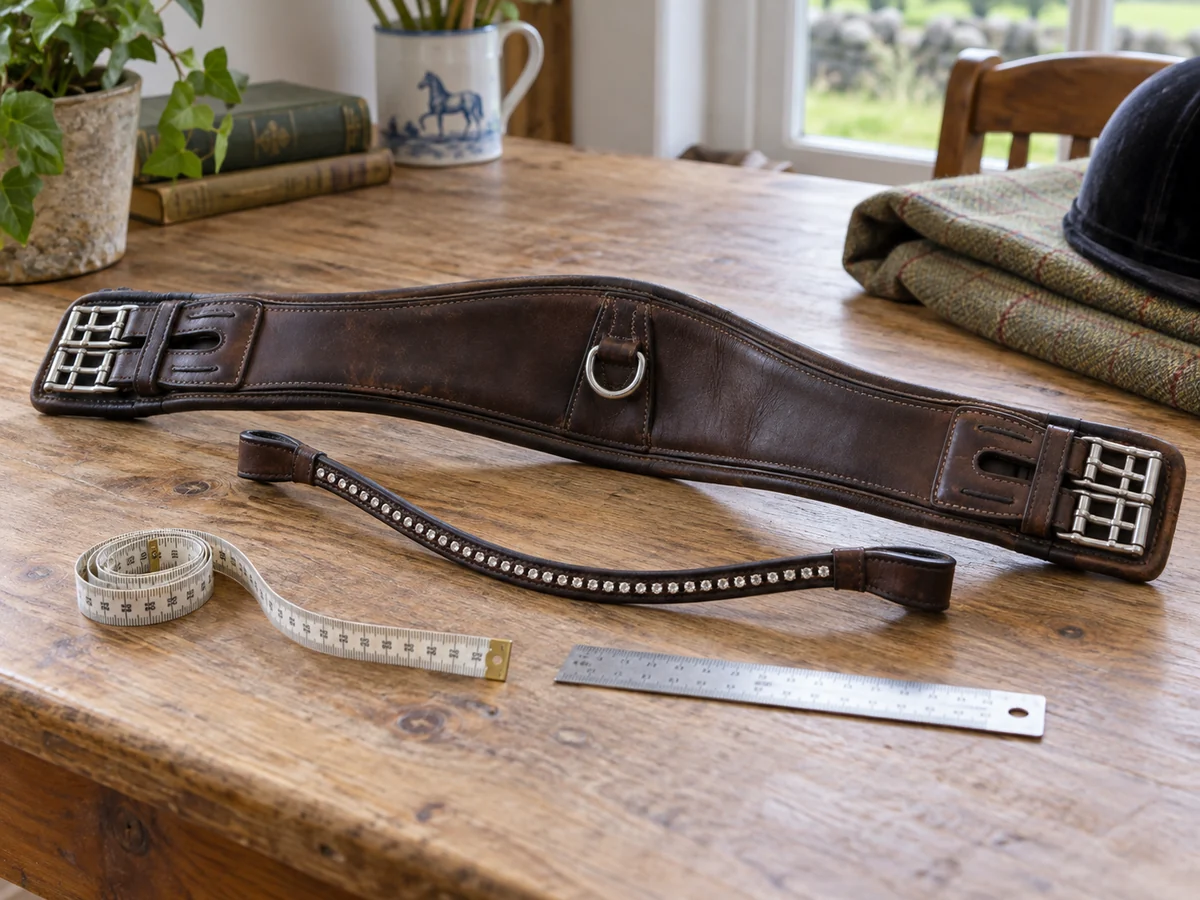
Agree the method before asking for the number
Please measure it can produce an answer that is precise but not comparable. A girth measured across its padded body is different from one measured between buckle ends. A rug measured along its back is different from one measured around its lower outline. Send the manufacturer's diagram or describe the required endpoints before asking a seller to reach for the tape.
Use one unit system in the conversation and write the unit beside every number. A bare figure such as 54 can mean inches, centimetres or a manufacturer's size code depending on the item. If converting, keep the original measurement too. This prevents a rounded conversion from becoming a supposedly exact specification further down the exchange.
A photograph showing the tape's full route can reveal a misunderstanding quickly. On a curved browband, for example, following the curve and measuring straight between the ends produce different results. Ask the seller to show how the measurement was taken rather than challenging the number without context. The goal is to compare the same dimension, not to prove that someone measured badly.
Have elastic items measured in the state the manufacturer specifies, usually requiring clarification about whether they are relaxed. Do not request a stretched measurement simply to see whether the item might reach. With a pair of leathers or boots, ask for both sides if wear may have changed them differently. A single measurement can hide an asymmetry that matters to the purchase.
Keep the label and actual dimensions together
Record the original marked size separately from the seller's measurements. They can disagree for several reasons, including a different measuring method, alteration or changes through use and washing. Resolve the discrepancy where possible rather than choosing the more convenient figure. If the item has been shortened or repaired, ask for that to be described explicitly.
Measurements narrow a search; they do not establish condition or fit. A saddle of the expected dimensions still needs professional assessment, and a rug with the right length can have an unsuitable cut. Use the figures to decide whether an item is worth considering and what to ask next. Keeping a simple note with item name, method, units and date is usually enough to stop several similar listings becoming an unreliable jumble of numbers.
Reading & references