Why a used riding hat is a difficult purchase
A riding hat can hide impact damage, and an unknown history cannot be settled by photographs or a reassuring seller description.
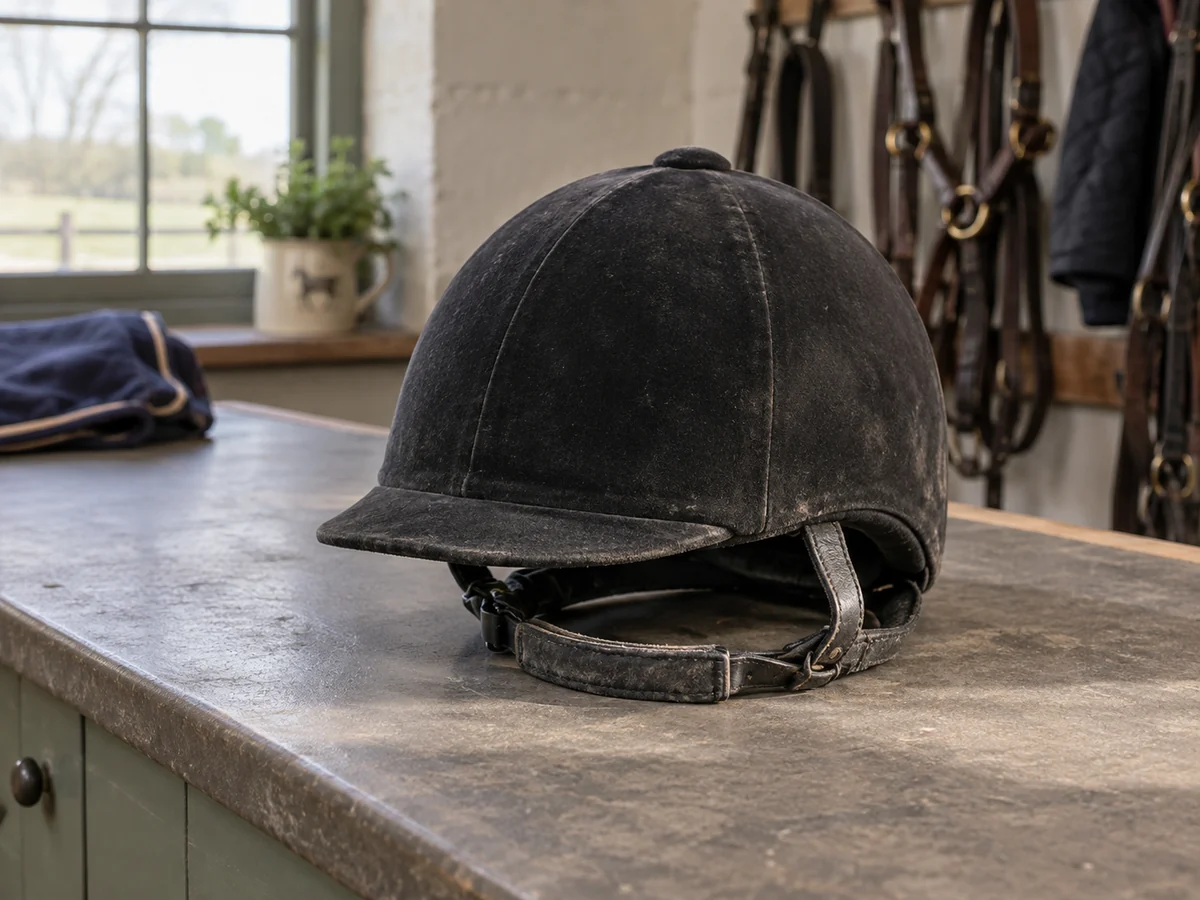
The difficult part is invisible
A second-hand riding hat may look almost new. The shell can be clean, the lining recently washed and the original box still present. None of those details establishes what has happened to the protective material inside. An impact history is not reliably visible from a listing, and a home inspection cannot certify that the hat will provide its intended protection.
The seller may genuinely believe the hat has never been involved in a fall, yet still be unable to account for its whole history. It may have belonged to someone else, been dropped or stored in unsuitable conditions. Treat unknown information as unknown. Do not convert a friendly assurance or a lack of visible marks into evidence that the hat is equivalent to a new one.
Fit is a separate reason to be cautious
Even a hat with a known history must fit the individual wearer. A matching centimetre size does not describe every head shape or the feel of a particular model. Arrange a fitting with a trained retailer and follow the manufacturer's guidance. Buying a used example online because a friend wears the same size skips that part of the decision.
Ask the fitter about affordable new options before assuming a used hat is the only way to stay within budget. Appearance and optional features can affect price without being the main reason a model is suitable. Bring the requirements of your riding school or activity, and check current rules with the relevant organisation where competition approval matters. Do not rely on an old listing's claim that a hat is approved everywhere.
Do not try to test it into certainty
Avoid improvised impact, squeezing or dismantling tests. They cannot establish the protective capability of a used hat and may damage it further. A fresh liner or decorative cover does not renew the underlying protective structure. If you already own a hat with a questionable history, stop treating it as a routine piece of riding equipment and ask the manufacturer or trained retailer for advice.
For a hat you buy new, keep the model information, purchase date and care instructions. Follow the maker's replacement advice and seek guidance after an impact or other concern. Those records will help you manage your own equipment, but they are not a reason to assume that another person's used hat can be made a sensible purchase through paperwork alone. The safer budget discussion starts with properly fitted new equipment from an identifiable source.
Reading & references