Check the whole of a second-hand girth
Turn the girth over and open the buckles: the horse-facing surface and attachment points deserve as much attention as the outside.
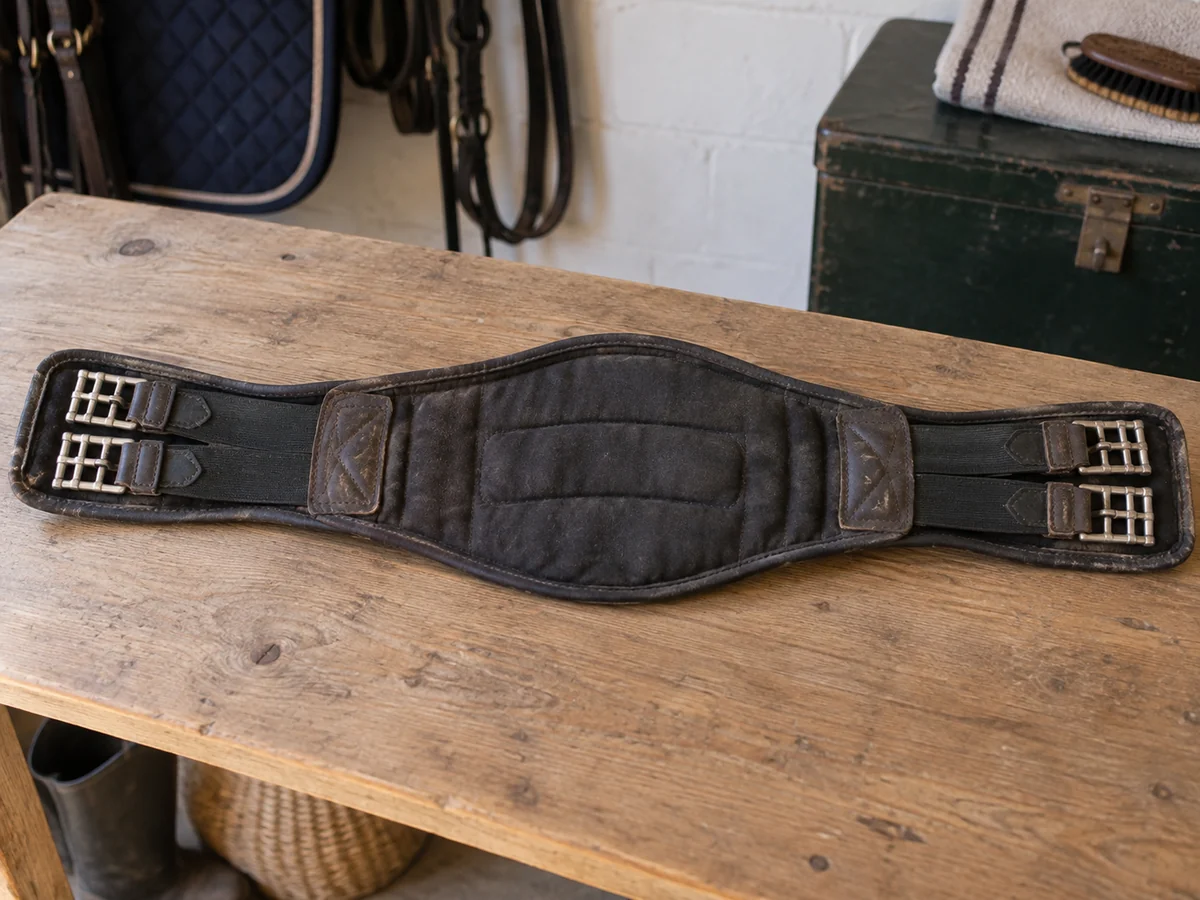
See the whole construction
A girth is often photographed from its smartest side, with the lining and buckle folds hidden. Ask for a view of the horse-facing surface, both ends and any removable cover. Identify the material and model so you can find the correct care and fitting instructions. Leather, textile and specialist mixed constructions should not be treated as if they all age or clean in the same way.
Check what is included. A detachable lining may appear in one photograph but be sold separately, or the seller may have replaced it with another model. Ask whether all components are intended to work together. An incomplete specialist girth can cost more to put into use than a complete alternative, even when the initial price looks attractive.
Examine the ends carefully
Request clear pictures of stitching, buckle attachments and elastic sections. Ask about stretched or uneven elastic, corrosion and repairs. Look at the girth relaxed rather than pulled tight for the photograph. A stretched end is not simply a convenient increase in length, and extra tightening is not an answer to a component that has lost its intended behaviour.
On the inner surface, look for hard deposits, worn edges, uneven padding or damaged seams. Some dirt may be removable, but a photograph cannot establish that cleaning will restore the material. Ask a saddler or the manufacturer about doubtful areas before buying. Do not rely on a promise that a generous application of conditioner will make damaged leather suitable again.
Recheck the stated length
Ask how the seller measured the girth and compare that method with the manufacturer's guide. Buckle-to-buckle measurements and measurements of the padded body alone give different figures. Record the actual method and units, including whether elastic was relaxed. If the listing and label disagree, resolve the discrepancy instead of choosing whichever number better suits your shopping list.
Finally, have the proposed girth considered with your saddle and horse. A sound second-hand item can still be the wrong shape or place its buckles poorly. Add cleaning, any confirmed replacement lining and professional advice to the total cost. If the purchase goes ahead, keep its model details and follow the appropriate care routine. The useful saving is on equipment that is both suitable and serviceable, not merely cheap enough to justify unanswered questions.
Reading & references