Check a second-hand bridle beyond its shine
Inspect the separate components and their connections; a polished bridle can still have worn holes or mismatched pieces.
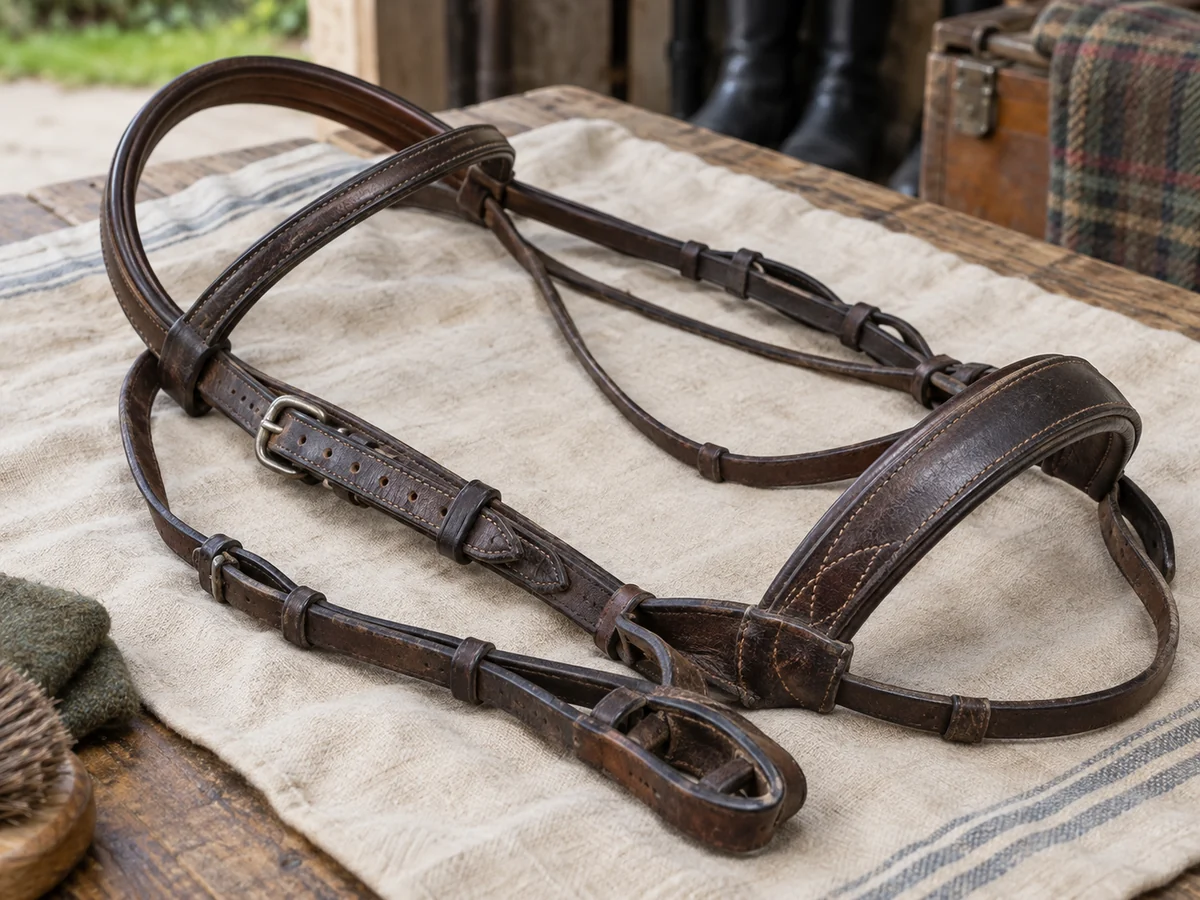
Ask to see it opened out
A bridle hanging neatly from a hook hides much of its working surface. Ask for photographs with the cheekpieces, noseband and throatlash visible, including the backs of the straps. Close views of buckle holes and the ends that connect to the bit are more useful than several pictures of the browband. They help you decide what needs closer assessment.
Establish whether all the pieces belong to the same original bridle. Mixed components are not automatically wrong, but their sizes, construction and compatibility need to be understood. Ask for the make and measurements of replacement parts rather than assuming a single brand label describes the whole assembly. A bridle sold as full size may contain a smaller noseband or a shortened strap.
Shine is a surface detail
Freshly treated leather can look appealing without telling you about its strength. Ask about cracks, stretched holes, loose stitching and repairs. Be particularly cautious around the fastenings that carry load. Do not accept extra softness as proof of quality or try to restore doubtful leather to riding condition with more oil. A saddler can advise whether a concern is repairable and whether the item remains suitable for use.
Look at the hardware and how it is attached. Missing keepers, distorted buckles or an improvised hook replacement can be easy to overlook in a complete-bridle photograph. Ask the seller to identify any alteration, including additional holes. If there is uncertainty about a safety-critical connection, resolve it before use rather than planning to see how it behaves during a ride.
Fit remains a separate question
Even a sound bridle needs to fit the individual horse. Compare its component dimensions with a qualified fitter's advice and the maker's measuring method. Do not assume that a successful fit on a similar-looking horse transfers to yours. Shaped headpieces and nosebands make the relationship between the parts particularly important to assess in person.
Add any replacement components, professional work and cleaning needs to the asking price. If the total approaches the cost of a suitable new option, reconsider what advantage the used purchase offers. Keep the seller's condition description and the details of any work carried out after purchase. When the bridle is cleaned and reassembled, check it on the horse again; familiar holes and a smart finish are not substitutes for a correct arrangement.
Reading & references