Choosing travel protection with your horse in mind
Travel protection needs to fit the horse and be familiar before loading day, with fastenings you can use correctly.
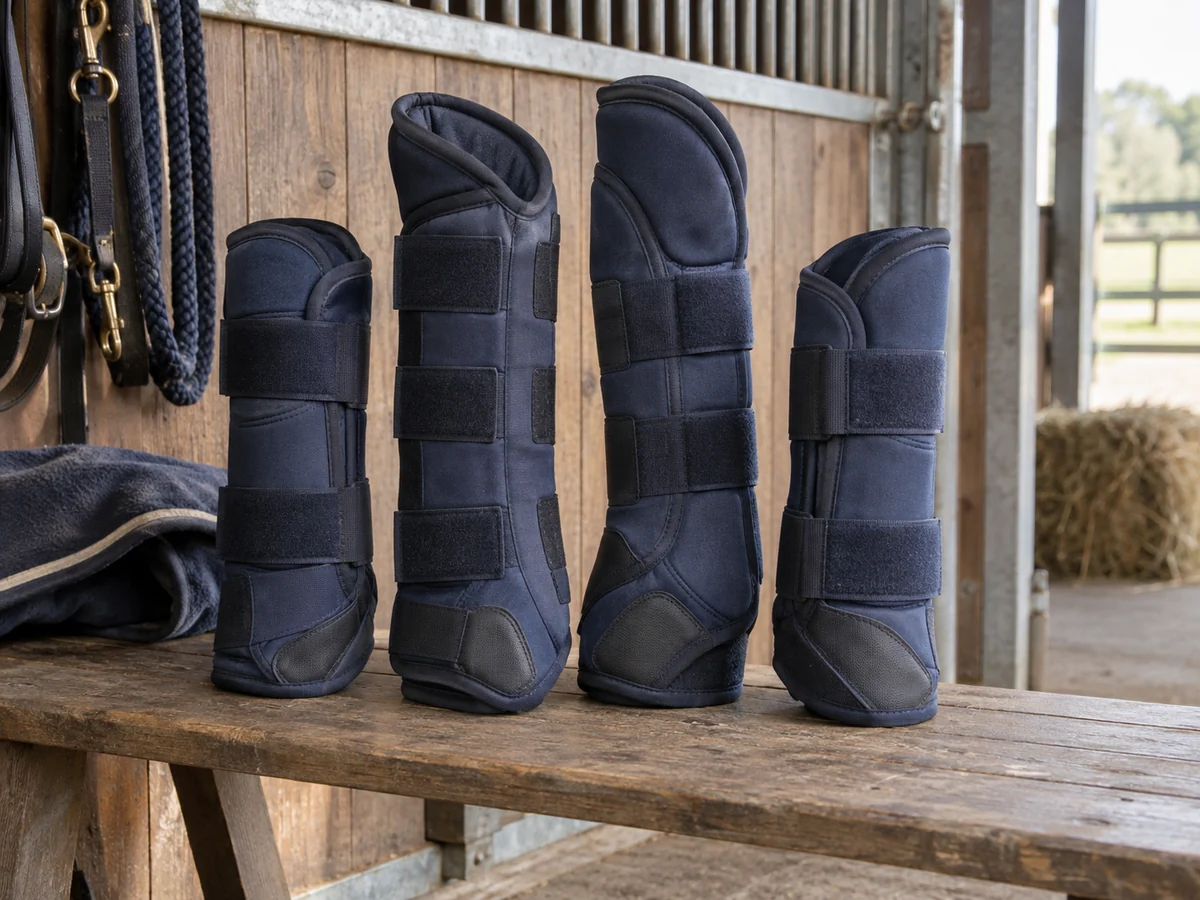
Make the decision before the journey
The first time a horse wears travel boots should not be the moment everyone is waiting to load. Discuss suitable protection with an experienced handler who knows the horse, and allow time for careful familiarisation. A boot that is well made but unfamiliar or poorly tolerated can create a different practical problem. Buying early leaves room to reconsider the choice without the pressure of a departure time.
Explain the horse's previous experience when asking for advice. Some horses are accustomed to particular protection; others have barely worn boots. Do not assume the tallest or most padded product is automatically the right one. Fit, movement, the horse's response and the intended journey all belong in the decision, alongside the manufacturer's guidance for the exact design.
Read beyond the outer fabric
Look at the shape, lining and fastening arrangement. Can the boots be clearly identified as front and hind, and are left and right distinctions explained? Ask for photographs of the inside as well as the outside. A broad strap may look simple in a listing but still require the correct overlap and positioning when fitted. Have someone demonstrate if the arrangement is unfamiliar.
Check the care label and drying requirements before purchase. Travel boots can collect mud and bedding, and a thick lining may take time to dry. LeMieux's instructions for one travel-boot range, for instance, specify natural air drying. Treat such directions as product-specific. The important shopping question is whether you can clean and dry the chosen boots properly between the journeys you actually make.
For used boots, ask whether the set is complete and whether all fastenings match. Request views of the lower guards, seams and lining, where damage may be less obvious than on the outer panels. A freshly brushed surface does not show whether the padding has become uneven or a strap has been repaired. Have doubts resolved before putting them on the horse.
Keep the first fitting quiet
Arrange the first fitting in a suitable environment with competent help, following the maker's instructions. Watch for shifting, restriction or an unhappy response and seek advice rather than tightening indiscriminately. Store the boots as a labelled set once the arrangement is established. That small step makes loading-day preparation easier and reduces the chance of hurriedly putting the wrong boot on the wrong leg.
Reading & references