Arrange a tack room around the daily route
Arrange the room around the equipment you take out, clean and put away each day, with a clear route through it.
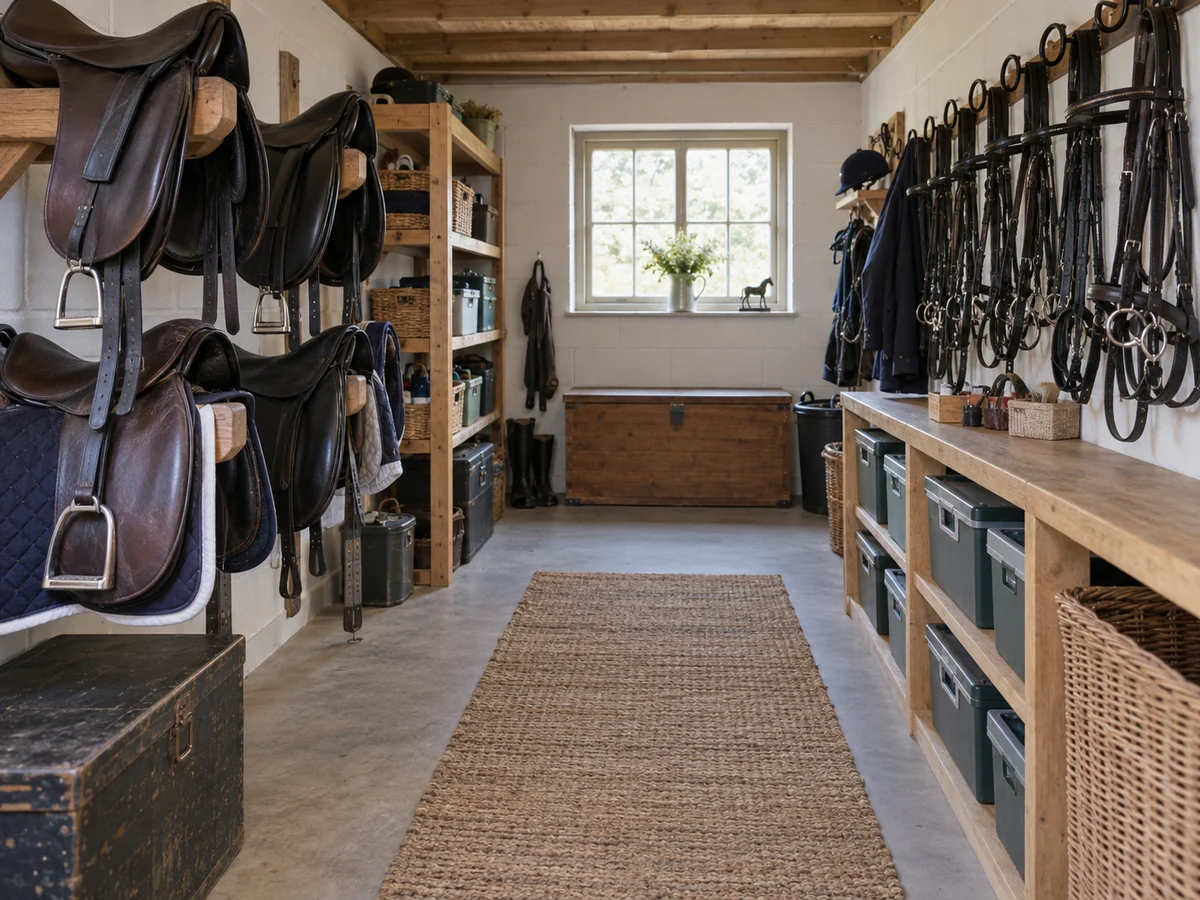
Watch one ordinary changeover
Before buying storage furniture, notice how the room is used during a normal morning. Where do people stand while lifting a saddle? Which door has to open fully? Where does wet equipment arrive? A sketch of those movements is more useful than a plan based only on how many hooks will fit along a wall. Storage should make the ordinary routine easier, not turn every visit into a sideways shuffle.
Keep frequently used equipment within comfortable reach and allow space to lift it without hitting another item. A row of tightly packed saddles may look efficient until someone has to remove the middle one. Think about the people who actually use the room, including shorter riders, and do not solve an access problem by expecting them to balance on an unsuitable box.
Give incoming kit somewhere to go
Choose a place for equipment awaiting cleaning or drying that does not overlap the clean storage area. This need not be elaborate. A clearly identified rail or tray can stop damp gloves and muddy boots being dropped on a clean pad. The important detail is that everyone knows what belongs there and that the space is emptied as part of the routine.
Keep floor space and doorways clear. Heavy or awkward boxes are easier to manage low down, while small labelled containers can hold compatible spare parts. Before fixing racks or shelves, check their intended load and have them installed appropriately for the wall. A convenient position is not useful if the support is unsuitable or the fittings are insecure.
Test the arrangement before adding more
Use temporary labels and try the layout for a few days. Notice where people continue to leave items outside their assigned place. That can indicate an inconvenient location or a missing step, rather than simple untidiness. Move a commonly used cleaning cloth closer to the cleaning area, for example, instead of expecting everyone to cross the room with dripping equipment.
Review the contents when the room feels full. Broken, unidentified or unused items should not silently occupy the best spaces. Separate equipment awaiting assessment from items ready for use, and give someone responsibility for following it up. The BHS riding-school criteria provide a useful reference for organised tack storage, but the layout itself should respond to your room and daily workload rather than imitate a photograph of a much larger yard.
Reading & references