Put the essentials first in a tack budget
Build the budget around fit, sound equipment and the cost of keeping it usable before adding matching extras.
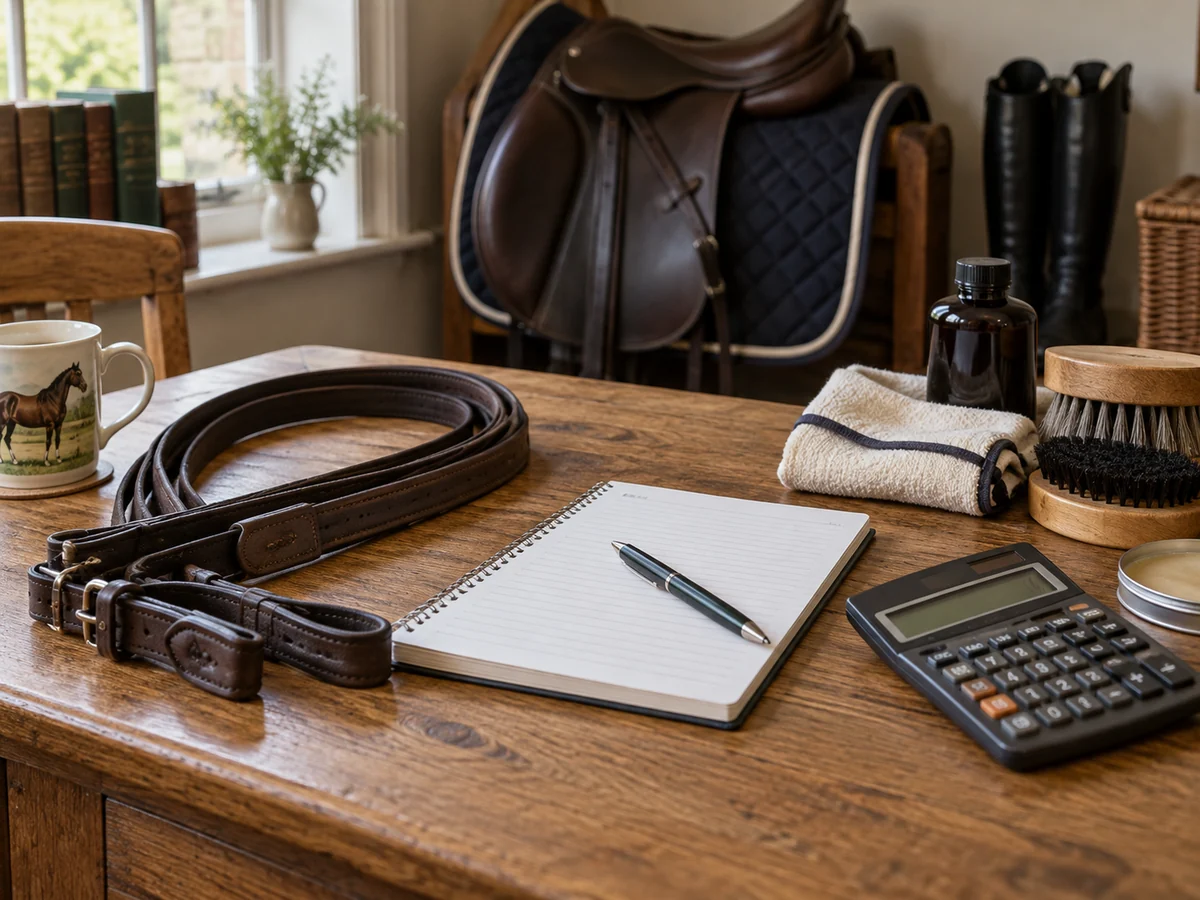
Separate a requirement from a preference
Start with the equipment your horse and riding arrangement actually require. Ask your instructor or fitter which items are necessary and which are optional for the work you do. A list made while browsing a sale tends to grow around attractive products; a list made from an ordinary week at the yard is more likely to reflect useful purchases.
Write three headings: needed now, replacement coming soon and optional. Put an explanation beside each item. A worn girth awaiting professional assessment belongs in a different place from a second colour of saddle pad. This is not about buying the cheapest version of everything. It is about keeping money available for the items whose condition or fit affects whether they can be used appropriately.
A saddle budget should include fitting and any agreed adjustment, not simply the amount printed in the advert. A used rug may need cleaning or repair before use. A specialist item may require a compatible pad, liner or replacement component that is not included. Ask for those costs before deciding how much is available for the main item.
For example, compare a hypothetical used purchase at £120 with £25 delivery and £35 of confirmed work against a £170 alternative that needs neither. The first total is £180 before any further uncertainty. The arithmetic does not tell you which item fits, but it stops the smaller headline price from deciding the question on its own.
Keep a reserve for unplanned replacement rather than spending the entire amount on one coordinated set. Tack is used outdoors, cleaned repeatedly and sometimes needs attention sooner than expected. A practical spare may be useful, but avoid buying a spare that is not itself correctly fitted and suitable. Duplication is only helpful when the second item can genuinely do the required job.
Review what you already own
Before ordering, sort the existing equipment and identify what is usable, what needs assessment and what no longer has a purpose. Do not sell doubtful safety-critical equipment as ready to use simply to recover money. Ask a saddler about repairability and describe any item offered for sale accurately. Sometimes the best saving is cancelling a duplicate purchase; sometimes it is paying for fitting advice before making an expensive mistake.
Reading & references