Match stirrups to the boot and the rider
Take the actual riding boots to the fitting discussion; a familiar stirrup size may behave differently with another sole.
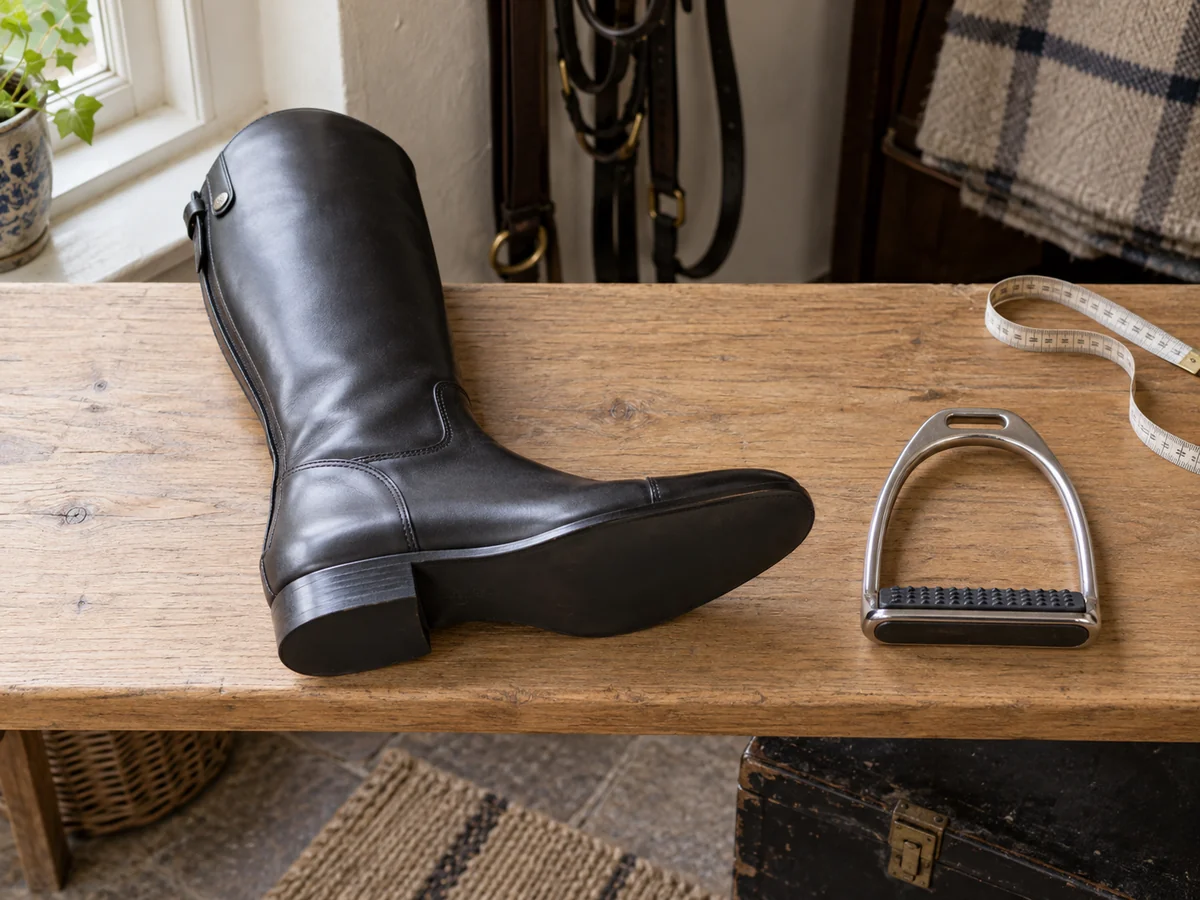
Bring the boot, not just the shoe size
A stirrup has to work with the boot being worn. Two boots labelled with the same shoe size can have different sole widths and shapes. When choosing stirrups, take the actual riding footwear and ask a knowledgeable retailer or instructor to assess the combination according to the stirrup maker's guidance. An everyday trainer is not a useful substitute for that comparison.
Look for the internal tread width in the specification rather than measuring the outside of the frame. Manufacturers may offer several sizes, and a photograph can make them appear almost identical. If ordering used equipment, request a clear measurement and model name. Do not assume an adult stirrup is a single standard size or that a wide platform automatically means a wide internal opening.
Read the instructions for the particular design
Some stirrups have moving branches, angled treads or other features that affect their orientation and use. Establish which side is which, how they attach and whether the maker specifies a rider weight range or other limitation. Ask for the instructions if they are missing. The word safety in a product name does not remove the need for correct compatibility and use.
Check how the leathers pass through the stirrup eyes. A very thick leather or an unsuitable eye shape may not work as intended. Do not force the parts together or modify a fitting to make them connect. If the saddle, leathers and stirrups are being changed at the same time, have the whole arrangement checked rather than judging each item in isolation.
Revisit the choice after a footwear change
Winter riding boots may be bulkier than the pair used in summer. Children's feet and footwear can also change quickly. Put a compatibility check on the list when boots are replaced, even if the stirrups themselves are familiar and apparently sound. Keep the product instructions available so that the original sizing guidance can be consulted again.
For second-hand stirrups, condition and history need separate attention. Correct width cannot compensate for damage, a missing component or a release mechanism of uncertain condition. Ask the manufacturer about inspection and replacement parts where appropriate. Choose equipment that can be identified and supported, then follow its maintenance instructions. A quick fit comparison at the counter answers only part of the question; it is not a guarantee about the stirrup's condition or performance.
Reading & references