Choosing a workable stirrup leather length
Choose a length that leaves useful adjustment, then check buckle position and compatibility with the saddle and irons.
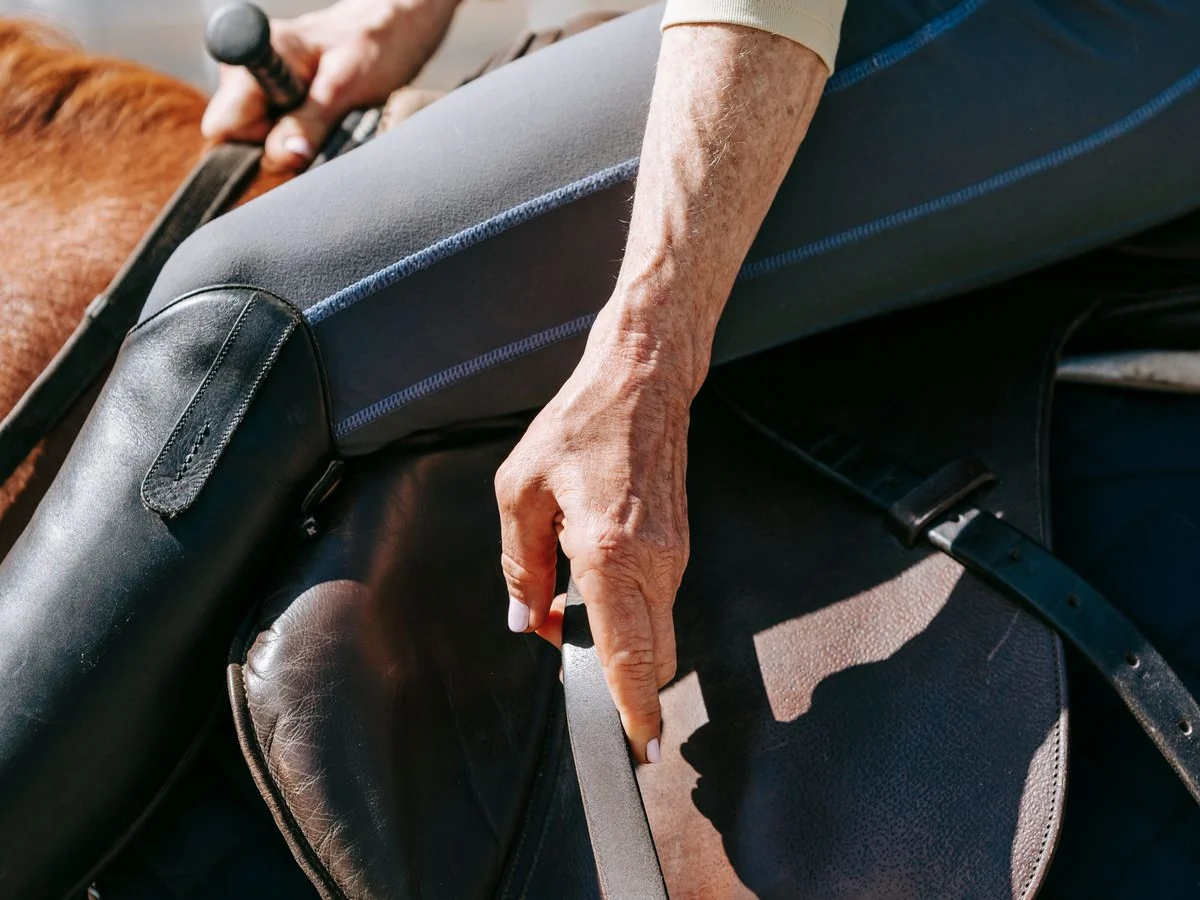
Start from a workable setting
If your present stirrup leathers suit you, note the overall length and the holes normally used for different work. Measure according to the new manufacturer's instructions, because the buckle may be included or excluded in the quoted figure. The number of a hole is less useful by itself: spacing and the total number of holes can vary between designs.
If the current pair leaves you at an extreme setting, ask your instructor or fitter what length would provide a better adjustment range. Do not choose solely from a rider-height chart. Leg proportions, saddle design, stirrup shape and the work being done can all affect the required arrangement. A chart may help begin the search, but it cannot settle every combination.
Consider what happens to the spare length
An excessively long tail can be awkward to manage beneath the flap, while a pair that is too short limits adjustment. Look at how the spare leather will be retained on the actual saddle. Ask the maker or fitter before cutting a strap or adding holes; an irreversible alteration can create a poor result and may affect the product's suitability for return.
Traditional doubled leathers and single-strap systems should not be compared as if their measurements describe the same thing. Their fittings and adjustment methods differ. Read the instructions and check compatibility with the saddle's stirrup bars and the chosen irons. A low-profile buckle is useful only when the complete assembly fits and operates as intended.
Compare both sides
When assessing a used pair, lay both leathers flat without pulling them tight. Compare the actual lengths, hole positions, edges and buckle attachments. Matching stamped sizes do not prove they have remained equal in use. If there is distortion, damage or uncertainty about the construction, have them assessed rather than trying to compensate by selecting different holes and hoping the problem disappears.
Once fitted, keep a note of the model and settings as a reference, not a substitute for checking before riding. Leathers may have been removed during cleaning or adjusted by another rider. Look at the complete pair each time and ask your instructor about the riding position if something feels uneven. A useful purchase offers the right range and compatible fittings; it does not need to be the longest or most adjustable option on the shelf.
Reading & references