The socks can change how riding boots fit
A different sock can change pressure at the toes, ankle and calf even when the boot size stays the same.
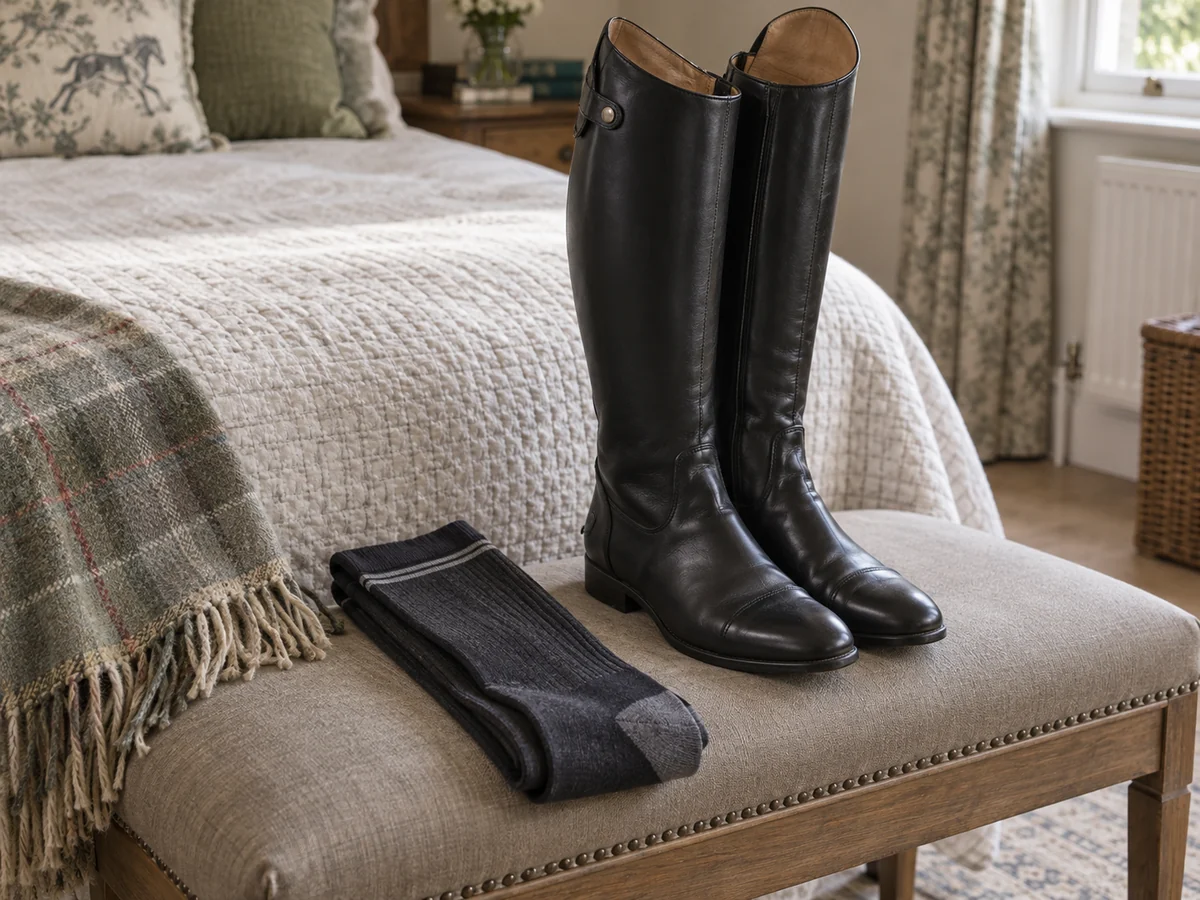
Bring the intended pair to a fitting
When trying riding boots or half chaps, wear the socks you expect to use. Manufacturers such as Ariat include this in their measuring guidance because fabric thickness changes the space available. A thin shop sock and a thick winter pair can produce different results in the same boot. The label on the boot has not changed, but the fit has.
Look at seams and reinforcement as well as overall thickness. A bulky toe seam may press in a close-fitting boot, and a reinforced heel can sit differently around the ankle. Smooth the sock into place before closing the boot. If it repeatedly twists or wrinkles, try another size or construction instead of tightening the boot around the fold.
Warmth needs room
Adding a second pair is not always a comfortable answer to cold feet. It can crowd the toes and create pressure, particularly in boots already fitted closely. Compare an appropriate warmer sock within the available space and ask for fitting advice if needed. Do not choose oversized riding boots merely to accommodate an unpredictable stack of winter layers.
The upper part matters too. A strong cuff can feel restrictive beneath a tall boot or chap, while loose fabric can slide down and gather. Check the full lower-leg arrangement with trousers included. Several small layers meeting at one point can create a ridge that was not noticeable when each garment was tried on separately.
Dry pairs make the routine easier
Keep a spare pair if yard work is likely to leave your feet damp before riding. Change in a suitable place and check that the boot lining is dry enough for use as well. Fresh socks cannot solve a soaked boot interior. Follow the boot maker's drying directions rather than putting the whole arrangement against fierce heat.
Wash socks according to their label and inspect them for thinning, hard seams or stretched cuffs. A hole at the heel can become uncomfortable long before the sock looks worn from above. When buying replacements, note the construction that worked with the boots rather than choosing solely by length or colour. If new socks suddenly make a familiar boot uncomfortable, return to the complete fit check before assuming the boot itself needs stretching or alteration.