Make shared equipment easier to identify
Clear storage labels and a simple record of changes help people select the correct equipment without relying on memory.
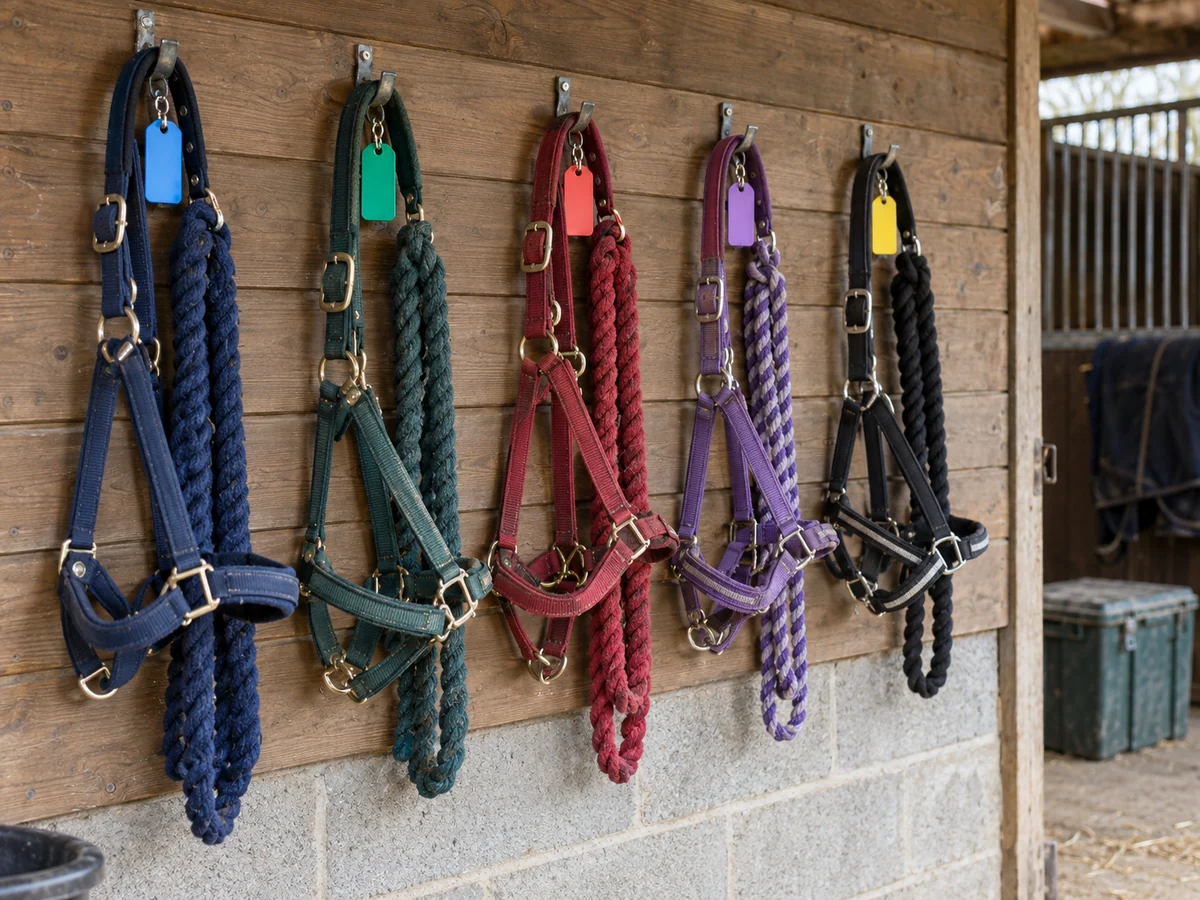
Label the equipment's place first
In a shared tack room, familiar-looking equipment can be mistaken for another horse's set. Give each working item a clear assigned position and use readable text labels. Colours are helpful as a second cue, but they should not be the only way to distinguish two similar bridles. Someone covering a shift needs to understand the system without already knowing every item by sight.
Keep labels where they aid selection without interfering with equipment in use. Avoid adding improvised ties, tags or adhesive to load-bearing parts or surfaces that contact the horse. Ask the maker before marking a product directly. A label on a rack or a suitable storage cover can provide the necessary information without altering the tack itself.
If a fitter changes the setup or a component is replaced, update the record and tell the people who use it. A note that only one rider has seen is easily missed. Include the date and the specific item rather than a vague message such as use the new one. Remove outdated instructions so two contradictory notes do not remain on the same hook.
Keep adjustment information clear, but do not treat a recorded hole number as proof that the tack is correctly fitted today. People still need to check the actual arrangement on the horse, especially after cleaning or shared use. If something seems different, stop and clarify it rather than copying the position from another bridle that looks similar.
Separate doubtful equipment decisively
An item awaiting inspection should have its own unmistakable location away from ready-to-use equipment. Write down the concern, who reported it and who is following it up. Do not leave it on the ordinary rack with a small loose note that can fall away. Clean appearance does not resolve a condition problem, and a busy person may otherwise assume the item has been returned to service.
Review the system when a horse leaves, a new horse arrives or equipment changes hands. Old names and spare parts can make a once-clear arrangement confusing. Keep only current working information on the main labels and store historical details separately where they can be found. A good shared system is brief enough to use every day and precise enough that a replacement handler can select the intended equipment without guessing.
Reading & references