Describe used tack with useful detail
Describe what you can observe and what you know about the item's history, with clear photographs of wear and repairs.
Replace vague praise with useful facts
Excellent condition means different things to different people. A more useful description identifies the item, states how it has been used and names any visible wear. For a saddle pad, that might mean faded binding and an intact lining; for a bridle, it may mean a replaced cheekpiece and marks near particular holes. The buyer can then ask about the details that affect their decision.
Separate known history from estimates. If you bought an item used, say that you do not know its manufacturing date or earlier use. Bought in 2023 is not the same statement as made in 2023. Avoid repeating a previous seller's claim as a fact unless you have evidence for it, particularly where repairs or alterations are concerned.
Show the awkward areas
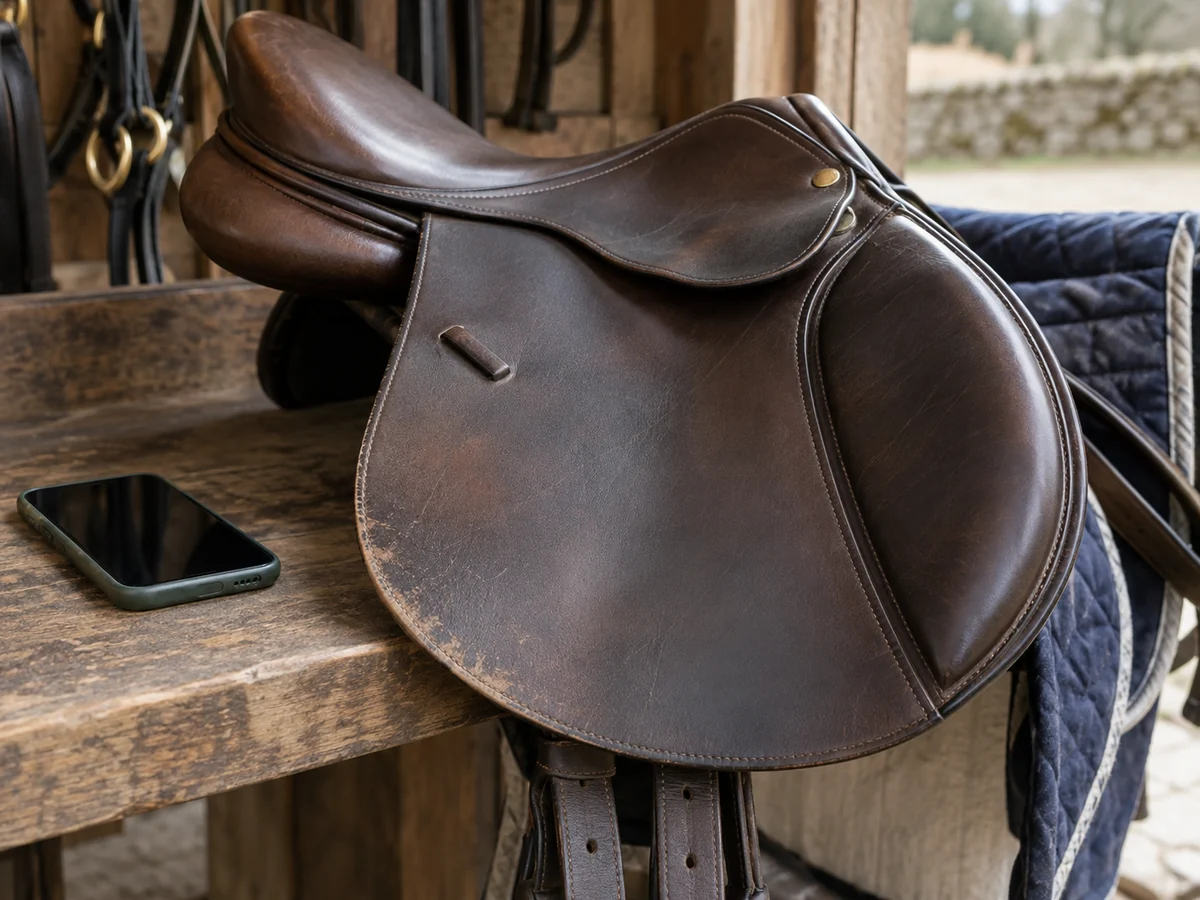
Photograph the underside, fastenings and any repair as well as the attractive overall view. Include enough surrounding area to show where a mark is. A tiny close-up without context can be as unhelpful as a distant photograph that hides everything. Keep lighting neutral and avoid filters that change colour or reduce the appearance of texture.
State whether the item has been shortened, had extra holes made, or contains replacement parts. Identify the repairer and the work if you have a record. Do not describe a repaired item as unaltered merely because the work is neat. If you are unsure what a repair affects, ask an appropriate professional before deciding how the equipment should be offered.
Be clear about limits and included parts
Do not promise that a saddle will fit a certain type of horse or that equipment is safe solely because it looks sound to you. Explain what inspection has actually occurred, by whom and when, without extending that assessment beyond its scope. If there is a known concern about load-bearing parts or protective equipment, do not market it as ready for riding.
List the components included in the price and remove unrelated accessories from the main photograph where possible. Give the measurement method, collection or delivery arrangements and any trial conditions in plain language. Keep a copy of the listing and the buyer's agreed details. An accurate description may attract fewer speculative enquiries, but it gives a suitable buyer something concrete to assess and reduces the chance that both people leave the transaction with different ideas about what was sold.
Reading & references