Why saddle width labels are not universal
Medium and wide are useful labels within a range, but they do not make two different saddles equivalent.
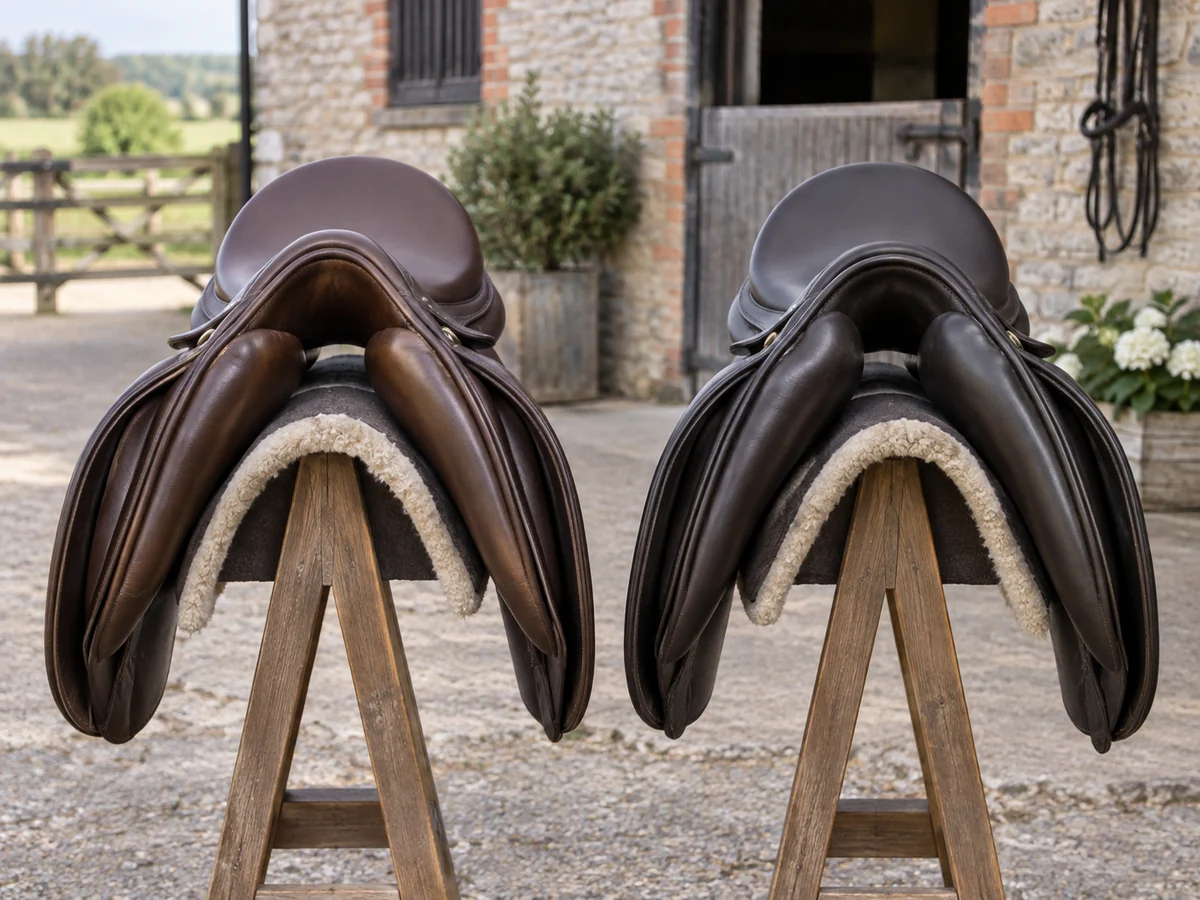
A label is the beginning of a description
Two adverts can both say medium-wide and still describe quite different saddles. A width label belongs to a maker's system, and sometimes to a particular model within that system. It does not describe every part of the tree, the panels or the way the saddle will sit. Treat the label as information to pass to your fitter, not as a shortcut around fitting.
Ask for the full model name, seat size, serial number and any known adjustments. If a saddle has a changeable gullet system, establish which component is currently fitted rather than relying on the specification of a new example. A seller may be repeating an old receipt or describing the setting it had when purchased. The present condition is what matters for the assessment.
Photographs of the pommel can make a saddle look wider or narrower depending on the camera position. A tape held across a convenient opening is equally limited if nobody agrees where the measurement begins and ends. Ask the fitter which information they need before asking the seller to produce a series of measurements that may not be meaningful.
Avoid transferring a recommendation from one model to another simply because the labels match. A fitter who suggested a particular saddle has considered more than an adjective on its tag. If that model is unavailable, send the proposed alternative's details back for advice. This is particularly useful when browsing used equipment, where a discontinued model can look similar to a current one but have different construction.
Keep adjustment claims specific
The word adjustable needs a follow-up question. Ask what can be adjusted, who should do it, whether the correct components are available and what the work costs. Do not assume that a change at the front can make any saddle suitable for any horse. Likewise, a claim that a saddle was widened professionally should come with an explanation of when and by whom.
Build a shortlist around verified model information and an opportunity for assessment, rather than around width labels alone. Keep screenshots of the description and any clarification from the seller so that the fitter can see the same information. If important details remain unknown, leave that uncertainty in your notes. It is more useful than converting an incomplete description into a confident guess about fit.
Reading & references