Wash saddle pads without losing their shape
Hair removal and a little space in the drum make a better start than a hotter wash.
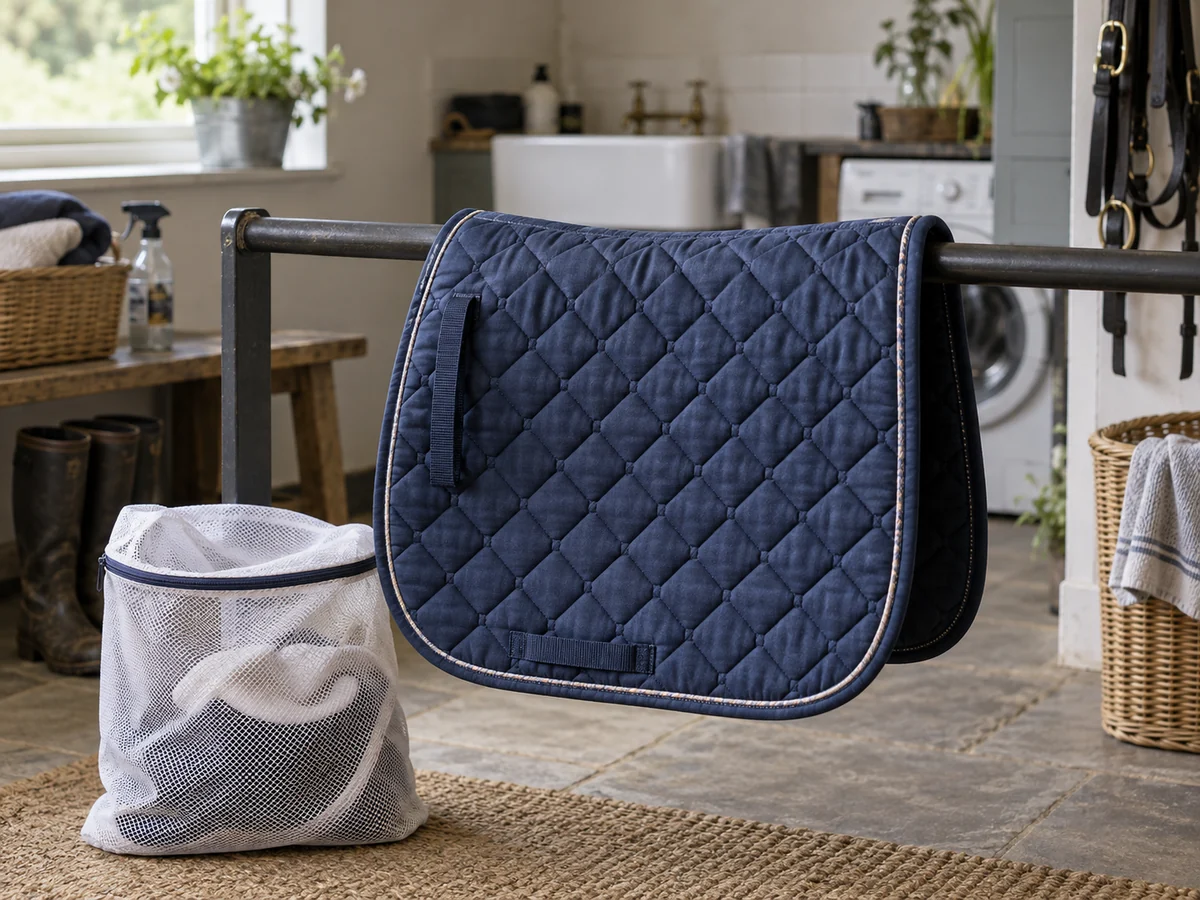
Before the pad reaches the machine
A saddle pad often carries a surprising amount of loose hair on its underside. Remove that before washing, using a tool suitable for the fabric and working without pulling the weave. Shake out grit where it can be collected rather than spreading it over clean equipment. A heavily soiled pad may need separate preparation according to its care label; putting it straight into an overloaded machine rarely helps.
Read the instructions for this particular pad. Cotton, synthetic fleece, real wool, foam and decorative panels can require different treatment. A detachable insert may have its own instructions. Take it out only if the design allows, and keep track of how it belongs. Do not transfer a familiar wash setting from one brand's plain cotton pad to every other pad in the cupboard. Fasten hook-and-loop tabs as directed so that they do not catch the fabric. Check the machine's capacity and the pad's bulk, not simply whether the door will close. A pad wedged tightly into the drum has little room to move or rinse. Keep muddy rugs and delicate riding clothing out of the same load, even when combining everything looks like an efficient use of the machine.
Use the recommended detergent and cycle, then check the result before putting the pad away. Hardened sweat, trapped hair or an uneven area of filling needs attention. Extra fragrance is not evidence of cleanliness, and a strong scent should not be used to disguise a pad that still holds dirt. Follow the maker's advice if residue remains after the wash.
Give the shape time to settle
Reshape the pad gently while damp if its instructions call for it. Dry it with enough support and airflow for both sides, away from unsuitable heat. Thick corners and seams can remain damp after the main panel feels dry. Avoid folding it into a tight stack at that stage, where the remaining moisture becomes harder to notice.
Once dry, lay the pad out and look along its edges. Check straps, seams and the underside before returning it to the horse's equipment. Store it where another item will not crush or crease it. A clean spare can make this routine less hurried, but it still needs to be an appropriate pad for the saddle and horse; availability alone is not a reason to substitute it.
Reading & references