A cover for the saddle between rides
A cover keeps surface dirt away, provided the saddle is ready to be covered in the first place.
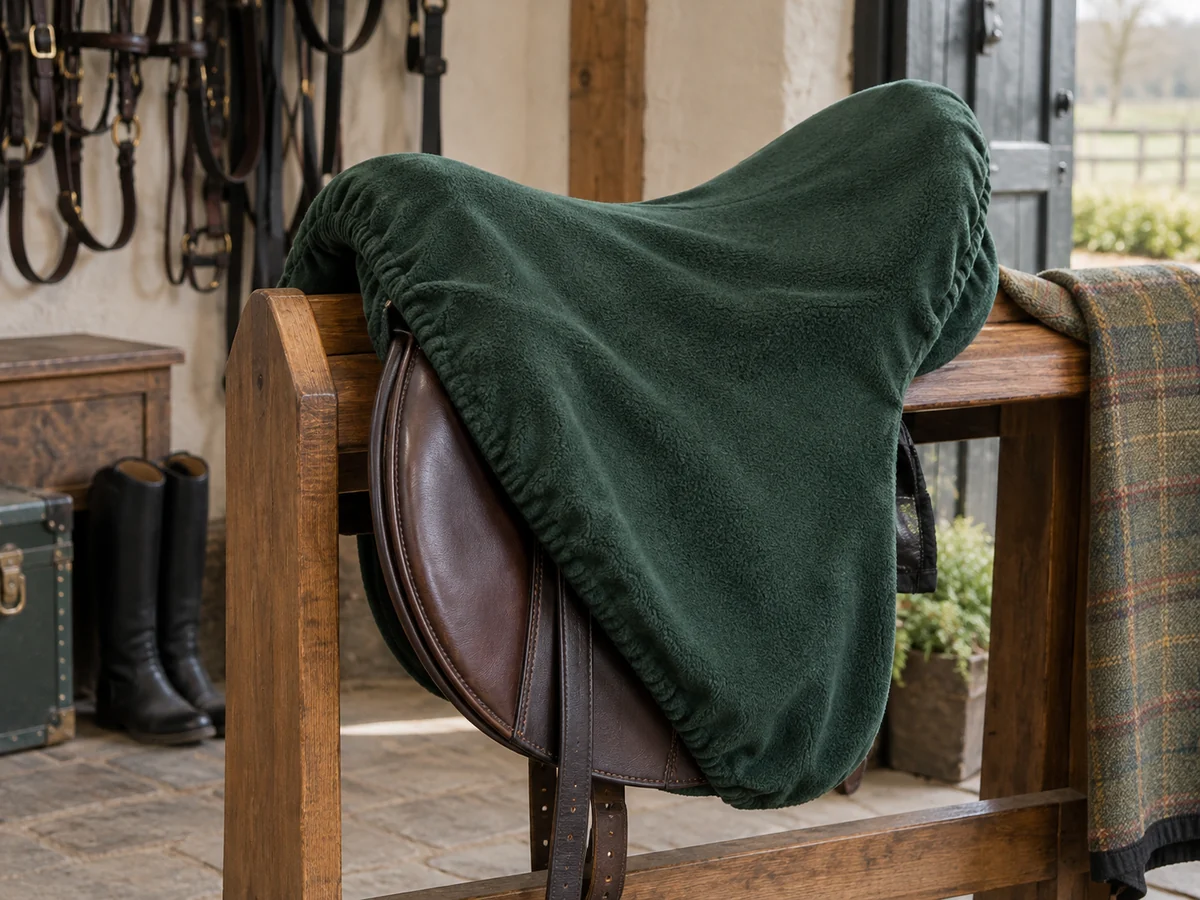
Choose coverage for the actual saddle
A saddle cover should suit the saddle's outline, including the cantle and flaps. A compact cover may strain across a larger saddle or leave the lower edges exposed. Look at the maker's intended saddle types and dimensions rather than assuming a cover described as full will accommodate every English design. Elastic edging should hold it in place without distorting it.
Some covers have a soft lining, storage pockets or extra weather-resistant layers. Each feature changes how the cover is used and cleaned. A pocket full of hard objects can press against the saddle when it is carried or stored. Keep sharp buckles, tools and loose metal fittings out of places where they can mark the seat beneath the fabric.
Dry first, cover afterwards
Putting a cover over a damp saddle can trap moisture. Follow the saddle maker's cleaning and drying directions before closing it away. A cover is not a substitute for a dry, ventilated storage space, and waterproof-looking fabric does not make a damp tack room suitable. Check beneath covers regularly rather than assuming the protected surface needs no attention.
The inside of the cover needs to remain clean too. Grit collected during transport can scratch or rub when the cover is pulled across the seat. Shake out loose debris away from clean tack and wash according to the label. If the lining holds moisture after the outer feels dry, give it more time before putting it back on the saddle.
Transport needs more than fabric
A thin dust cover provides limited protection against knocks. When carrying or transporting the saddle, support it appropriately and protect it from shifting loads. A stirrup cover can help keep dirty irons away from the saddle, but it does not make a heavy iron harmless if pressed into the leather. Arrange accessories according to the saddle maker's advice.
Keep the cover identified in a shared tack room, especially where saddles of different sizes are stored together. If a cover is damp, torn or gritty, leave it out of use until it has been cleaned or repaired. The purpose is straightforward: protect a clean, properly stored saddle from everyday dust and incidental marks, without creating a hidden pocket of dirt and moisture around it.
Reading & references