Spotting corrosion on tack hardware
Cleaning can reveal corrosion; it should not conceal damage beneath a brighter finish.
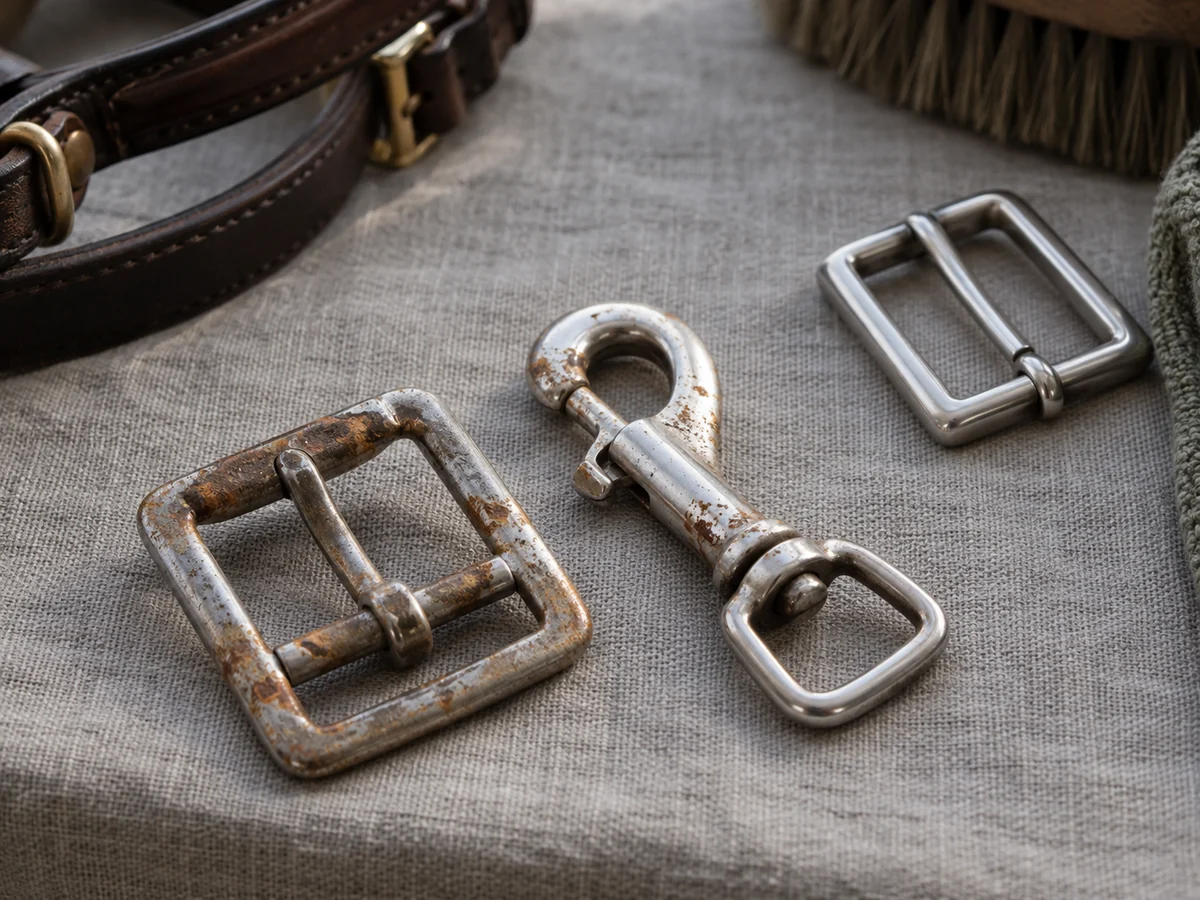
Find out what the fitting is made from
Tack hardware may be stainless steel, plated metal, an alloy or a combination of materials. A brown mark does not automatically tell you which metal is underneath or how far a problem extends. Look for the manufacturer's description and care advice before selecting a polish. A product intended for a household metal surface may be unsuitable beside leather, rubber or a horse's mouth.
Remove ordinary dirt by the approved method and examine the fitting in good light. Pay attention to joins, bends and places where moving parts meet. Keep cleaning fluid away from materials that the instructions exclude. If the maker gives no clear method, ask rather than experimenting with abrasive pads or an acidic household mixture that could change the surface further. Notice pitting, roughness, flaking coating, deformation and a fastener that no longer moves as expected. These observations are more useful than a simple description of the fitting as rusty. A smooth photograph can hide a rough edge, while a stain may look dramatic without explaining its cause. Record both the location and what has changed in normal handling.
Remove questionable equipment from use and seek advice, especially where the fitting carries load or contacts the horse. Do not file a damaged bit smooth, bend a buckle back into shape or coat a suspect area to make it look better. Replacement parts must suit the specific design; matching the colour and approximate size is not sufficient evidence of compatibility.
Review the storage routine
After routine cleaning, allow equipment to dry as its maker directs before covering or boxing it. Wet straps folded around metal can leave hidden damp areas. A bag that protects tack from dust is less useful when it also holds yesterday's moisture. Check the underside of stored pieces as well as the surfaces facing the room.
If corrosion keeps returning, look at the storage environment and the cleaning products in use. Note whether only one item is affected or whether several fittings stored together show changes. Share that pattern with the supplier or saddler. Good records make it easier to decide whether you need a different care routine, a storage change or replacement equipment, rather than repeatedly polishing the same unexplained problem.
Reading & references