Prepare a rug for washing or a rug laundry
Read the label, remove loose debris and decide whether the rug belongs in your machine or with a specialist laundry.
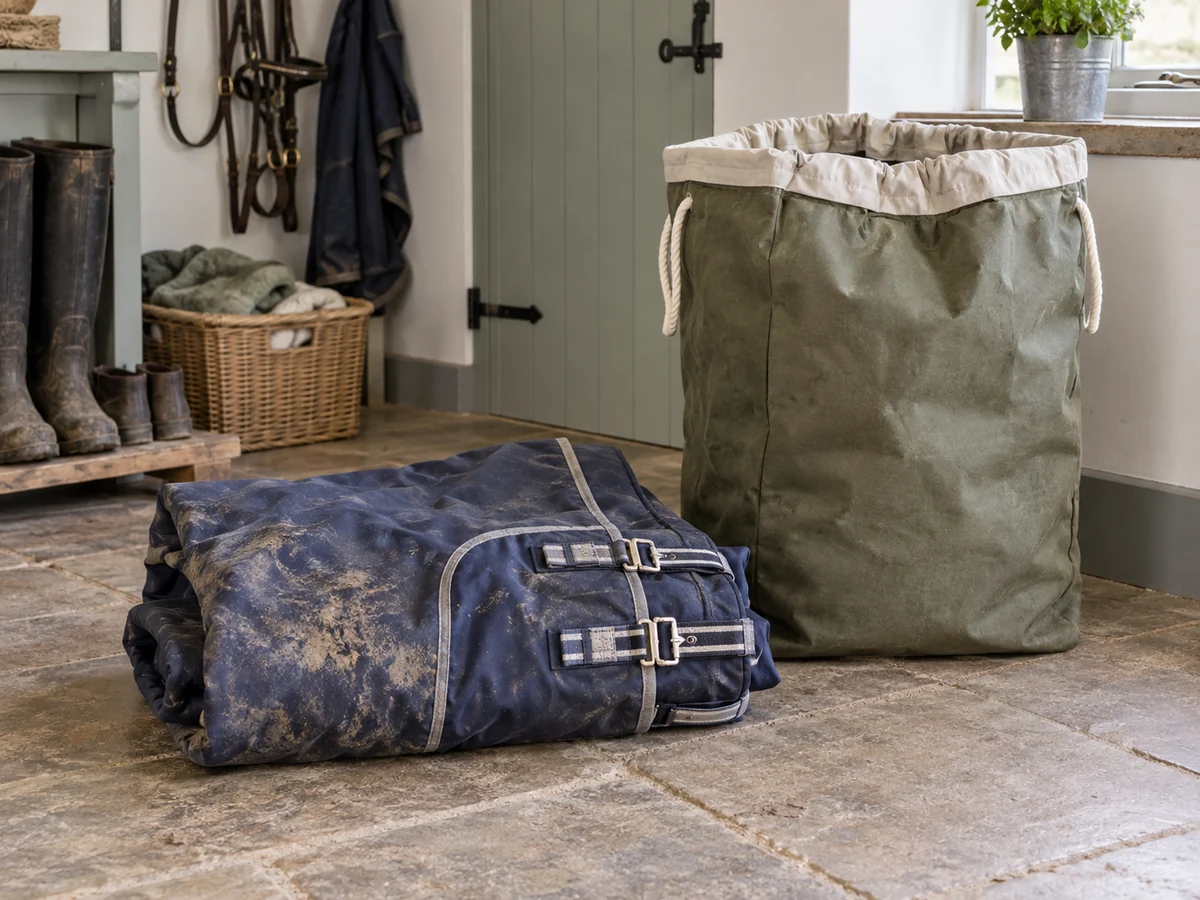
Start with the rug's identity
Find the maker, model, size and care label before arranging a wash. Note whether it is a turnout rug, stable rug, liner or another type, because the construction affects the care it needs. Photograph a fading label for future reference. If you cannot identify the rug, ask for advice rather than choosing the hottest setting that seems likely to remove the dirt.
Spread the rug where you can inspect both sides and remove loose hair, mud and bedding by an appropriate method. Check straps, buckles, lining and seams. Record damage before washing and tell a laundry about it. A tear hidden under mud may become more obvious once clean, so a clear record helps distinguish an existing problem from a new concern.
Choose a realistic washing route
Consider the rug's bulk as well as its weight when deciding whether your machine is suitable. A drum that barely closes is not evidence of adequate capacity. Follow the manufacturer's detergent and cycle guidance, including any restrictions associated with a waterproof finish. Do not add household fabric treatments simply because they make ordinary laundry feel softer.
A specialist rug laundry can be useful for bulky or heavily soiled equipment. Ask what service is included, whether repairs or reproofing are separate, how the rug should be prepared and how it will be identified. Label bags clearly without damaging the rug. Keep a record of what was handed over, especially when several similar rugs leave the yard together.
Allow for the return to use
Plan enough time for proper drying, whether you wash at home or use a service. Follow the maker's instructions and check thick areas, folds and linings before storage. Do not put a damp rug into a closed bag to clear the drying space. A clean outer surface can hide moisture deeper in the construction.
When the rug is ready, check that its straps and fastenings are complete and that any agreed repair has been carried out. Store it with an accurate label so its type and size are easy to identify. Before it goes back on the horse, assess fit and condition again. Washing is a care task; it does not make an unsuitable size or damaged fastening acceptable for another season.
Reading & references