Store clean rugs where you can find them
Store rugs only when they are ready to use again, and make the label useful enough that the bag need not be opened to identify them.
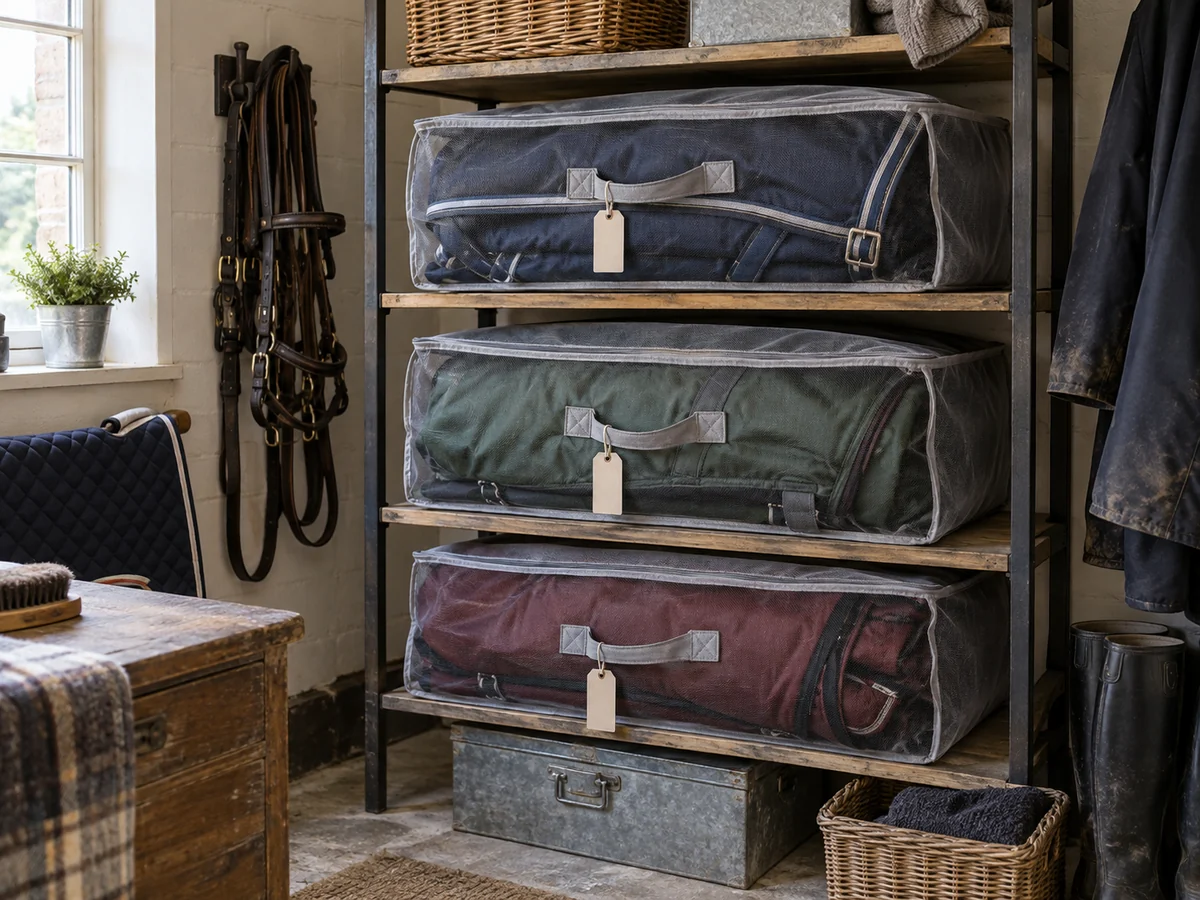
Finish the job before packing
A rug put away dirty or damp becomes an unpleasant surprise when the weather changes. Follow the maker's cleaning instructions, arrange repairs where needed and allow the whole rug to dry before storage. Pay attention to folds, straps and thick sections that may remain damp after the outer surface feels dry. Packing is the final step, not a way to hide an unfinished cleaning job.
Inspect the fastenings and lining while the rug is open. If work is still needed, keep it in a separate place with a clear note rather than mixing it with ready-to-use rugs. Record any repair or reproofing that has been carried out. That short history is useful next season, especially when several similar rugs have been sent to a laundry together.
Label for the next person
Write the horse's name, rug type, size and fill information where relevant on the storage label. Include the model if compatibility with a neck or liner matters. Colour alone is unreliable when several navy rugs sit on the same shelf. A label such as turnout, light fill, with matching neck answers a practical question before anyone unpacks the bag.
Store compatible detachable pieces together or clearly link their labels. Do not force a damp neck cover into a bag because the body rug is already dry. Let it finish drying and use a temporary note to show that the set is incomplete. This is a small inconvenience now that prevents an unnecessary search on a cold morning later.
Choose the storage method recommended for the materials and the room. Horseware describes clean, dry storage away from damaging moisture and heat, with suitable bags for its rugs. Avoid assuming that every plastic container or vacuum bag is appropriate for every product. The manufacturer's guidance and the actual condition of the room should decide the arrangement.
Keep access simple
Put the rugs most likely to be needed soon within easy reach and avoid stacks so high that retrieving one disturbs everything above it. Keep heavy containers manageable and off damp areas of floor. Check stored rugs periodically rather than leaving them untouched until the season changes. If you find condensation, a leak or a damaged bag, deal with the cause and inspect the contents. Clear labels save time, but only when they describe equipment that is genuinely ready for the next use.
Reading & references