Work out whether a turnout rug needs reproofing
Identify the source of dampness and follow the rug maker's advice before adding a waterproofing treatment.
Describe the problem accurately
A horse that feels damp under a rug does not by itself prove that the outer fabric has lost its waterproof performance. Note the weather, where the damp area appears and the rug's condition, and seek knowledgeable advice about the horse and rugging arrangement. Avoid turning one wet day into a diagnosis without looking at fit, damage and the circumstances of use.
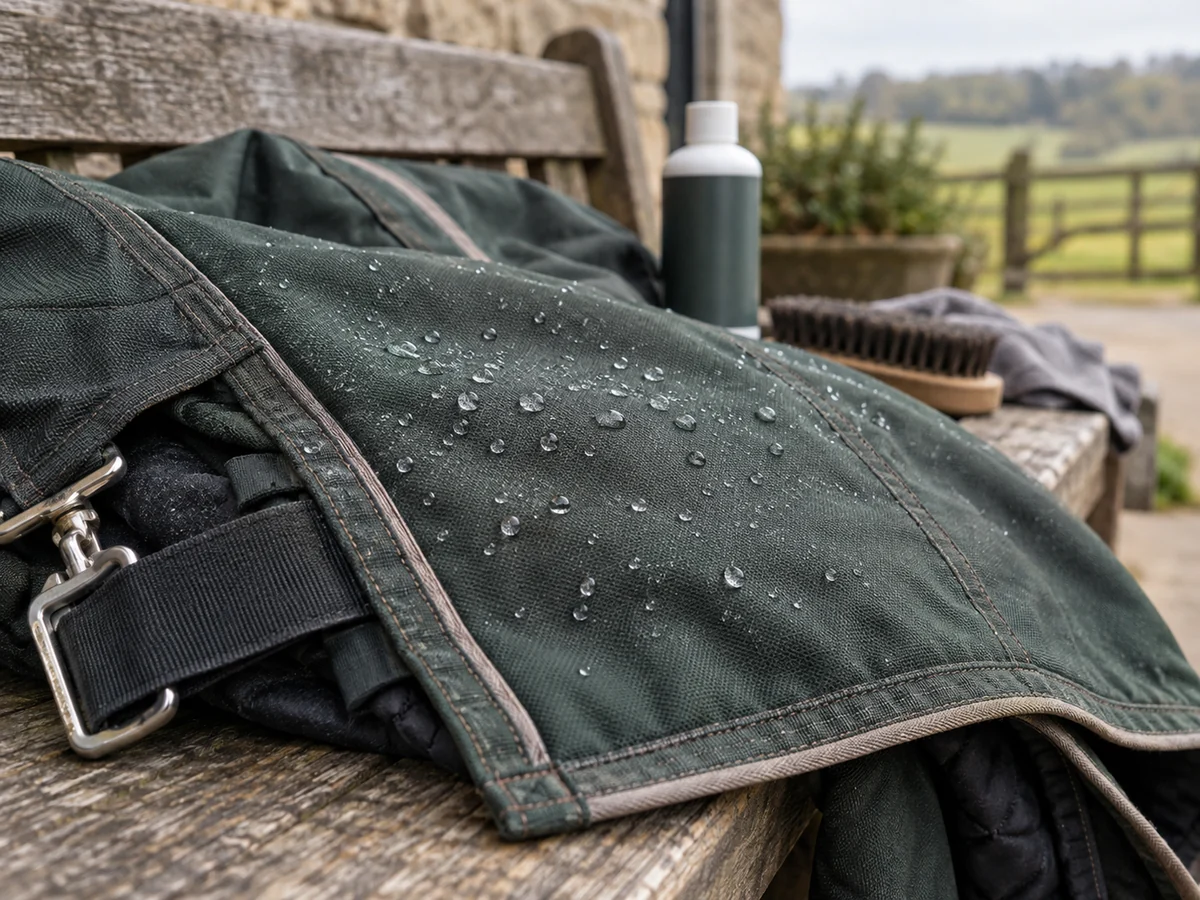
Inspect the rug when it can be laid out clearly. Look for tears, worn seams and damaged areas as well as the broad fabric panels. Check its label and any previous care records. Tell the manufacturer or laundry what has already been used on it; an unknown detergent or treatment can make it harder to recommend the next step confidently. Manufacturers can give different guidance on washing and reproofing their turnout rugs. Find the instructions for this particular model instead of following a universal yearly schedule. Ask whether a treatment is recommended, which type is compatible and whether professional cleaning would be appropriate. Keep the answer with the rug's records so the same uncertainty does not return next season.
Reproofing is not a repair for holes, broken fastenings or every possible seam problem. Arrange assessment of physical damage separately. If a laundry offers a combined service, establish exactly what it includes and which faults need extra work. A general promise of a refreshed rug is less useful than a clear explanation of cleaning, treatment and repair as separate tasks.
Plan the whole care sequence
Where treatment is advised, follow the specified preparation, application and drying instructions. Do not layer several products in the hope of getting a stronger result. Allow the full process to finish before packing the rug away or returning it to use. Keep treatment products away from the horse and other equipment except as their instructions permit.
Check the rug during subsequent use and keep observations specific. Note any recurring damp area and return to the supplier or laundry with that information. Avoid relying on a quick splash of water on an empty rug as proof of performance in all conditions. The useful outcome is a rug that remains appropriate for the horse, with its condition understood, rather than a treatment applied simply because the calendar says it is time.
Reading & references