Measure a horse rug the maker's way
Follow the chosen manufacturer's diagram rather than transferring a familiar number between different measuring systems.
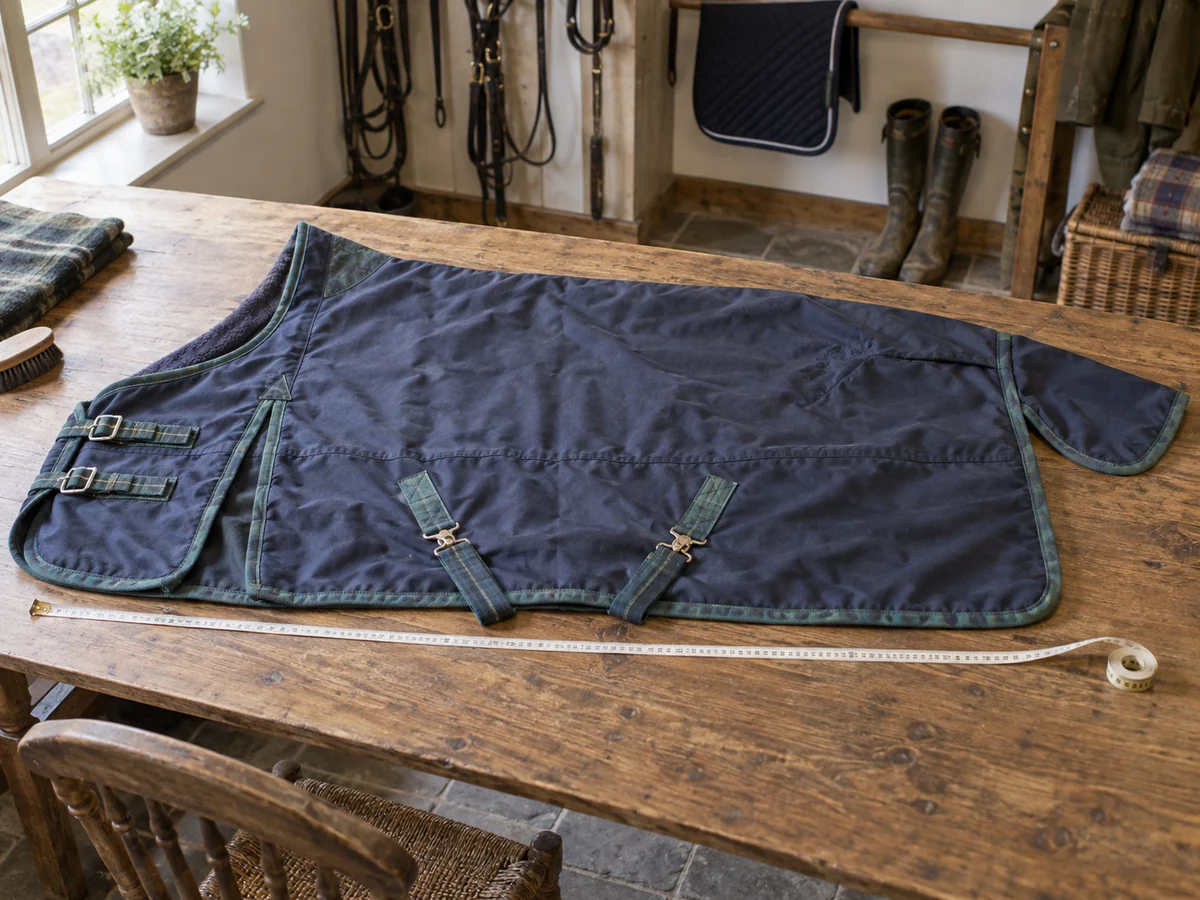
First establish what the number describes
A rug size may be written in feet and inches, centimetres or a back-length measurement. Those figures are not interchangeable without checking the maker's chart. Before measuring the horse, open the instructions for the rug you intend to buy. Confirm where the tape should begin, where it should end and whether the chart asks for an adjustment to the measured figure.
Horseware, for example, publishes a particular chest-to-tail measuring method and an instruction for converting that measurement to its size chart. That is an example of why the manufacturer's own process matters, not a formula to apply to every rug. Copying a number from another brand can miss both the measuring convention and the cut of the garment.
Get a useful measurement safely
Choose a calm moment and ask a competent helper to handle the horse. Use a flexible tape as instructed, keeping it in the intended route rather than taking a diagonal shortcut. Do not continue if the horse is unsettled or the measuring position is unsafe. A knowledgeable retailer or yard professional can help obtain the information without making the exercise a struggle.
Write down the raw measurement, the units and the guide followed. If you only record the final size you think you need, it becomes difficult to compare another maker later. Note the horse's build as useful context too. A number cannot fully describe shoulder shape, chest width or the way a particular rug will hang.
Treat the first fitting as a separate check
Ask the seller what clean fitting arrangement is allowed before the rug is put into use. Check its position and freedom of movement according to the manufacturer, with experienced help where needed. Pay attention to the chest, shoulders, withers and strap arrangement rather than deciding from the length at the tail alone. A rug can be long enough and still be an unsuitable cut.
If you are replacing a successful rug, keep its model name as well as the size. Even then, assess the new item rather than assuming the cut has remained unchanged. Look again after ordinary use for signs of rubbing or movement, and seek advice if something is wrong. Measuring makes the purchase more informed; it is the fitting and subsequent checks that show whether the chosen rug works for that horse.
Reading & references