Understanding the layers in a horse rug
Outer fabric, filling and lining describe different jobs, so read each part of a rug specification separately.
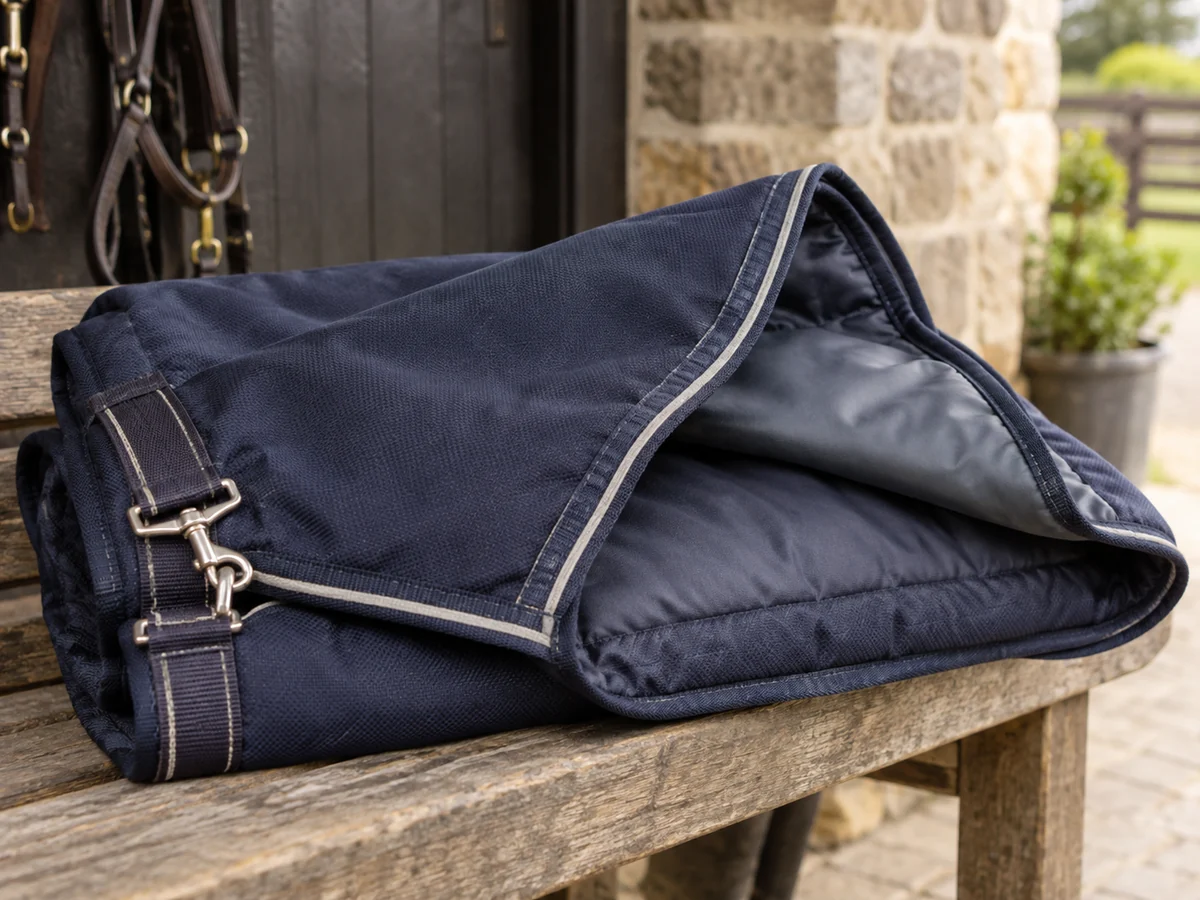
Read the construction from outside in
The outer fabric faces the weather and wear. On a turnout rug it forms part of the weather-protection system, while a stable rug has a different intended setting. Fabric descriptions may include denier, a measure associated with the yarn rather than a direct warmth rating. A higher number should not be read as a promise that the whole rug is warmer, waterproof in every situation or indestructible.
The filling supplies insulation where the rug is designed to have it. A weight given in grams commonly refers to fill weight, but check the manufacturer's specification and how it describes the product. The lining sits against the horse and affects the feel, movement and maintenance of the inner surface. These three layers need considering separately before comparing two rugs.
A liner adds another system
Some rugs accept compatible detachable liners. Their attachment points and cut are designed to work together. Do not assume any smaller stable rug can be secured beneath a turnout simply because both have clips. Follow the maker's compatibility guidance, including front closures and rear connections, and check the complete arrangement on the horse.
Adding a liner changes bulk and warmth. The outer may fit differently around the chest or shoulders once another layer is present. Check for movement, pressure and trapped folds rather than relying on the original size label. A neat outer appearance can conceal a liner that has slipped or bunched, so remove the layers for regular inspection.
Choose for the horse and review it
Rugging decisions involve the individual horse, coat, clipping, health, shelter and weather. Avoid treating a temperature chart as an instruction that overrides the horse in front of you. Ask an experienced professional for guidance if uncertain, and reassess when conditions or management change. More filling is not automatically a kindness if the horse becomes too warm.
Keep the care instructions for both outer and liner. They may need different washing or drying routines, and reproofing applies only where appropriate to the product. Label stored layers by compatible model and size so they do not become an anonymous pile. Before reuse, inspect fastenings, seams and the lining rather than judging readiness from a clean-looking outer surface alone.
Reading & references