What happens during a riding hat fitting
Expect a fitting to consider head shape, fastening and stability, not only the number on a tape measure.
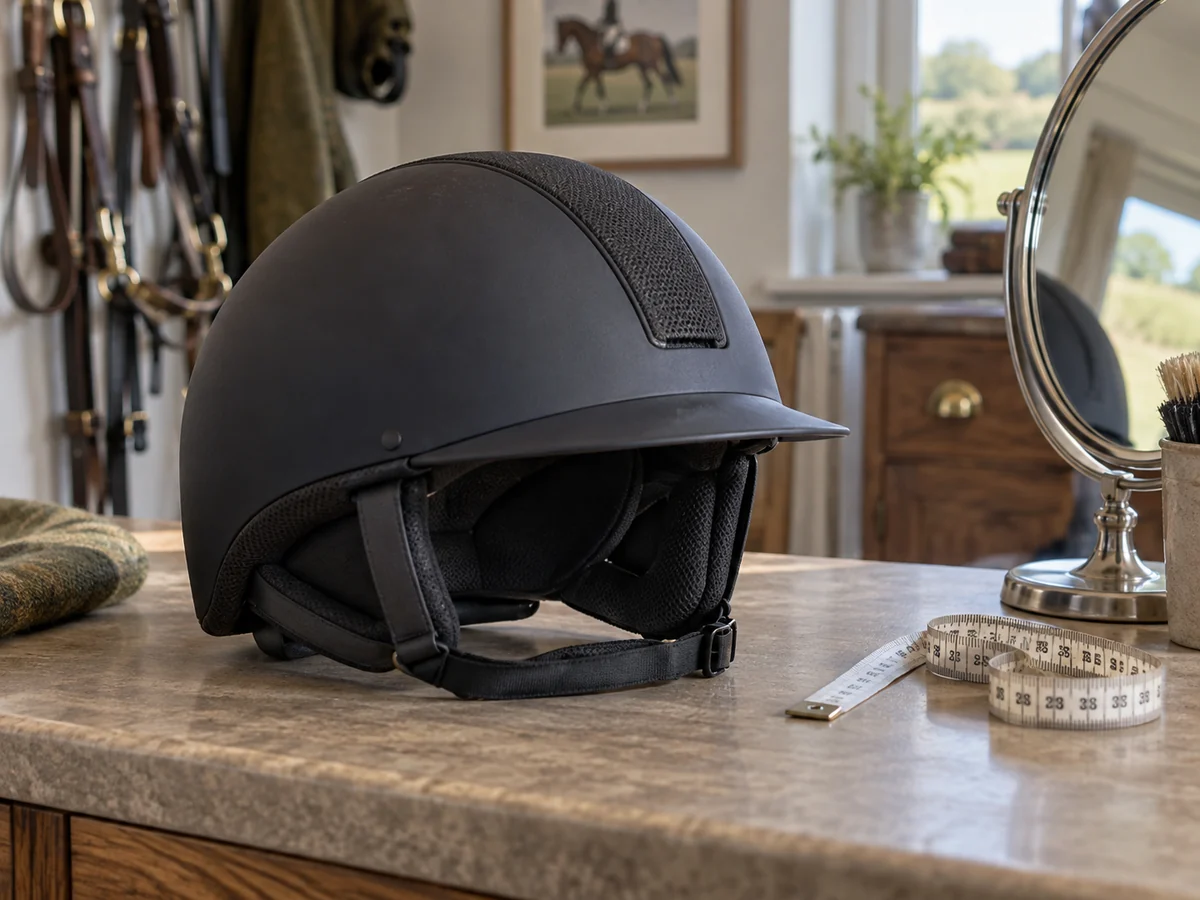
Arrive as you intend to ride
Book with a retailer offering appropriately trained riding-hat fitting and allow time to try more than one model. Wear your hair in the arrangement you normally use for riding. A bulky clip, different bun or added layer beneath the hat can change how it sits. Tell the fitter about glasses, hearing equipment or anything else that needs to work with the helmet.
A head measurement helps identify a starting size, but heads are not all the same shape. One model can create a pressure point while another in the same nominal size sits differently. Avoid choosing the size solely from a previous hat, especially if it is a different brand or has been used for several years.
What the fitter is checking
The fitter will assess the position, contact around the head and stability, as well as the harness and chin fastening. Explain any concentrated pressure, lifting or movement you feel. Do not accept pain on the assumption that every helmet must be broken in. Equally, a loose hat should not be chosen simply because it feels less noticeable in the shop.
Learn how the fastening is adjusted and secured. If the model has a removable liner or an adjustment system, ask which changes are permitted and how they affect fit. Adding homemade padding or substituting an unrelated liner can change the designed arrangement. Keep the instructions for the exact model rather than relying on a generic helmet leaflet.
Bring the intended activity into the conversation
Tell the fitter where you ride and whether you plan to compete. Standards and quality-assurance markings need to meet the current requirements of the relevant organisation, and some activities have rules about hat style as well. A hat accepted for one lesson or event is not automatically accepted everywhere. Ask the organiser when a rule is unclear.
Before leaving, repeat the fastening process yourself and ask how to check the fit before each ride. Keep the purchase details and care instructions. The British Horse Society advises replacing a hat after a fall, especially when it contacts the ground, and cautions against second-hand hats with unknown damage. A good initial fitting is the start of proper use, not a lifetime guarantee that the size and condition will remain right.
Reading & references