Why a riding boot's sole matters
A boot can look suitably tough for a yard yet be unsuitable inside a stirrup.
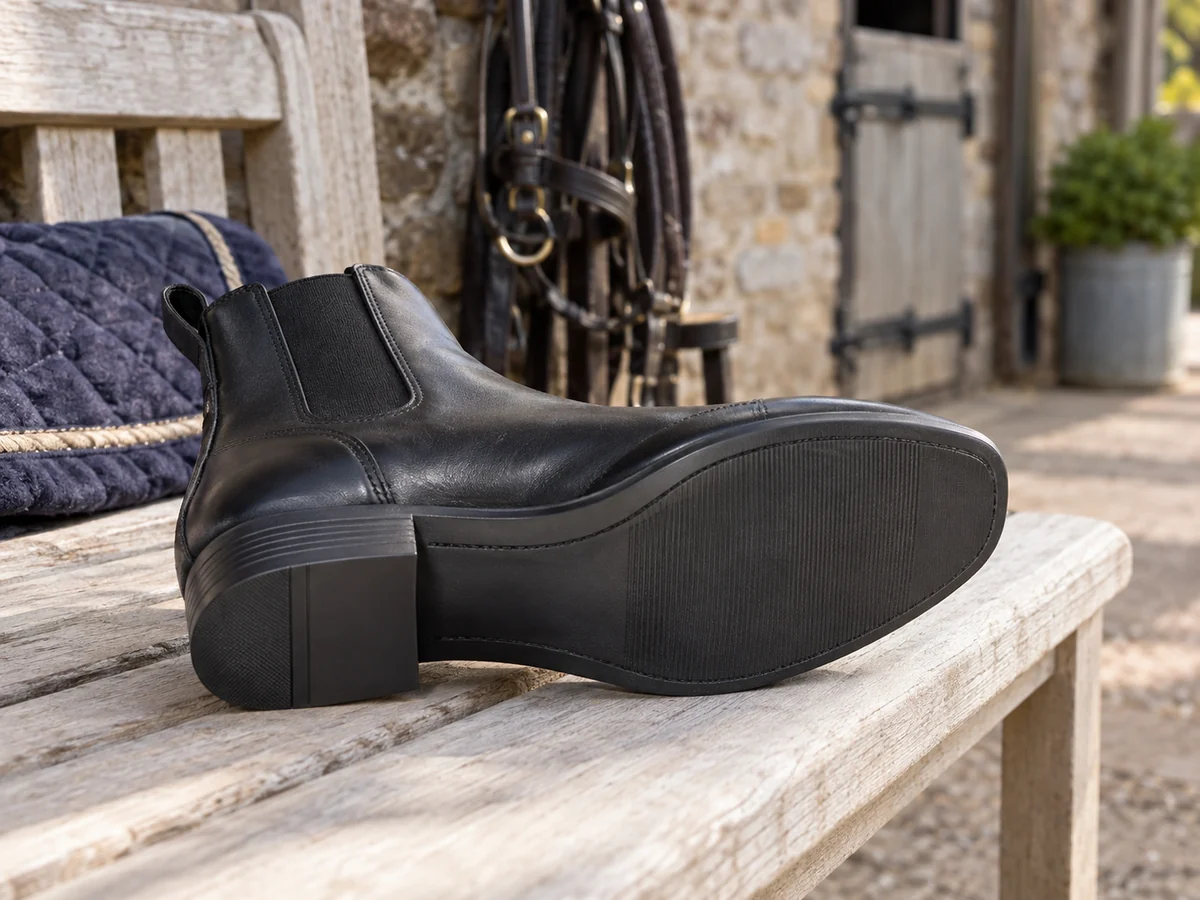
Look underneath before the leather
Riding footwear has to work with the stirrup, not simply cope with mud. The British Horse Society recommends traditional riding boots or jodhpur boots, with a suitable sole and small heel. It warns against trainers, wellies and certain heavy-tread yard boots. A country-style boot sold near equestrian clothing should not be assumed suitable for riding without checking its intended use.
Turn the boot over and look at the tread, heel and edges. Deep, bulky patterns can interact with the stirrup differently from a smoother riding sole. The shape through the arch also matters. Ask the instructor or a knowledgeable retailer to assess an unfamiliar boot, especially when moving from ordinary outdoor footwear to your first riding pair.
The stirrup is half of the decision
Check the actual boot and stirrup together. Foot size alone does not describe the width or external shape of the sole, and insulated or heavily built boots can be bulkier than another pair in the same labelled size. A stirrup that worked with a slim summer boot may therefore need reassessment when winter footwear is introduced.
Follow the stirrup manufacturer's compatibility guidance as well. Some designs have particular requirements or restrictions. Do not assume that an opening side removes the need for a suitable boot and clearance. No mechanism makes every footwear combination acceptable, and the word safety in a product name does not replace checking the whole arrangement.
Wear changes the picture
Inspect the sole for separation, excessive wear and embedded stones or hardened mud. A loose section at the heel or a damaged edge can matter even when the upper remains smart. Have repairs assessed by someone who understands riding footwear, and ask whether the proposed replacement sole preserves the boot's intended use.
Keep yard tasks and riding tasks distinct where different footwear is needed. Changing boots before mounting can be more practical than trying to find one pair that does everything. Dry and clean the riding pair according to its instructions so that deterioration is visible. Before a lesson, tell the instructor if you have changed boots or stirrups; a brief check of the new combination is better than discovering a poor match once mounted.
Reading & references