Choosing reins with a usable length
Compare the maker's measurement with the length you use in the saddle, including the spare rein and the connection at the bit.
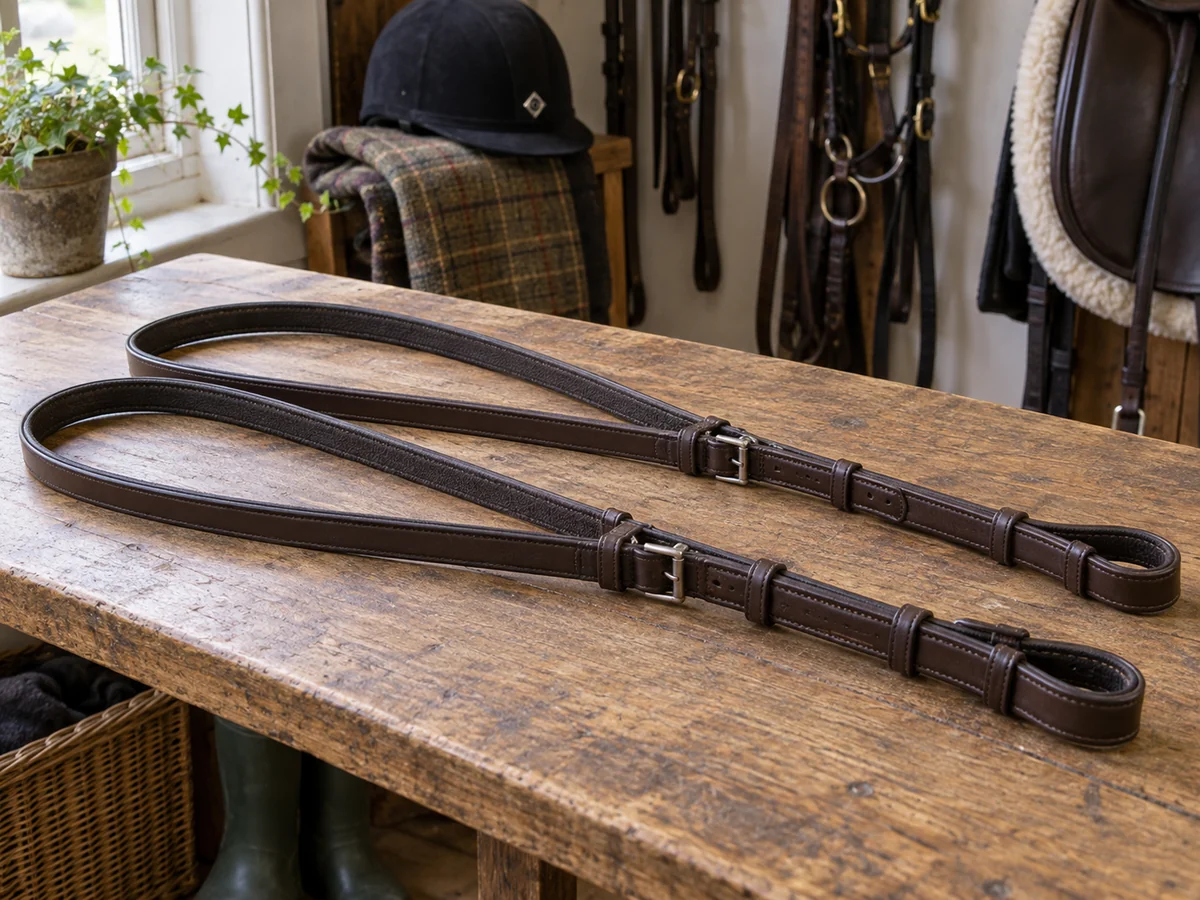
Ask what the quoted length measures
Rein descriptions can be surprisingly brief. Pony or full may be the only visible size, while a number elsewhere could refer to one side rather than the joined pair. Before comparing products, ask exactly what has been measured and whether fittings are included. A clear measurement convention is more useful than assuming that all full-size reins provide the same usable length.
If your present reins work well, measure them off the horse using the same convention as the new maker. Record the grip width too. A replacement can be long enough but much bulkier in the hand, especially with winter gloves. Premier Equine's product details, for example, list both length and grip width, illustrating why the small specification section deserves attention.
The rider, horse and type of work all influence how much rein is needed. Ask your instructor to help assess the current arrangement if you are unsure. Reins should allow the intended use without creating an unmanageable amount of spare material. Do not select a size solely from the horse's height or copy another rider's purchase because their horse looks similar.
Check the connection at the bit and the central fastening as well. The end fitting must be appropriate for the setup and assembled correctly. If a running martingale is used, ask about the necessary stops and compatibility rather than assuming every new pair arrives ready for it. Explain the complete arrangement to the retailer so that a missing small component is spotted before the first ride.
Make an online comparison practical
Request close photographs of the grip, stitching and fastening if the listing is unclear. With used reins, ask whether both sides match in length and construction and whether any repair has been made. Stretching, damaged rubber or a weakened connection is not solved by the fact that the overall length happens to suit you. Have questionable equipment assessed before use.
On arrival, compare the actual pair with the order while it is clean and off the horse. Check the maker's care guidance, particularly for mixed leather, rubber and webbing. Once a suitable pair is in use, save the length, width and model name. These details make a future replacement simpler and reduce the chance of ordering a superficially similar pair that feels quite different in your hands.
Reading & references