Choose rainwear for the jobs around the yard
Walking through mud, carrying equipment and riding each ask different things of a waterproof layer.
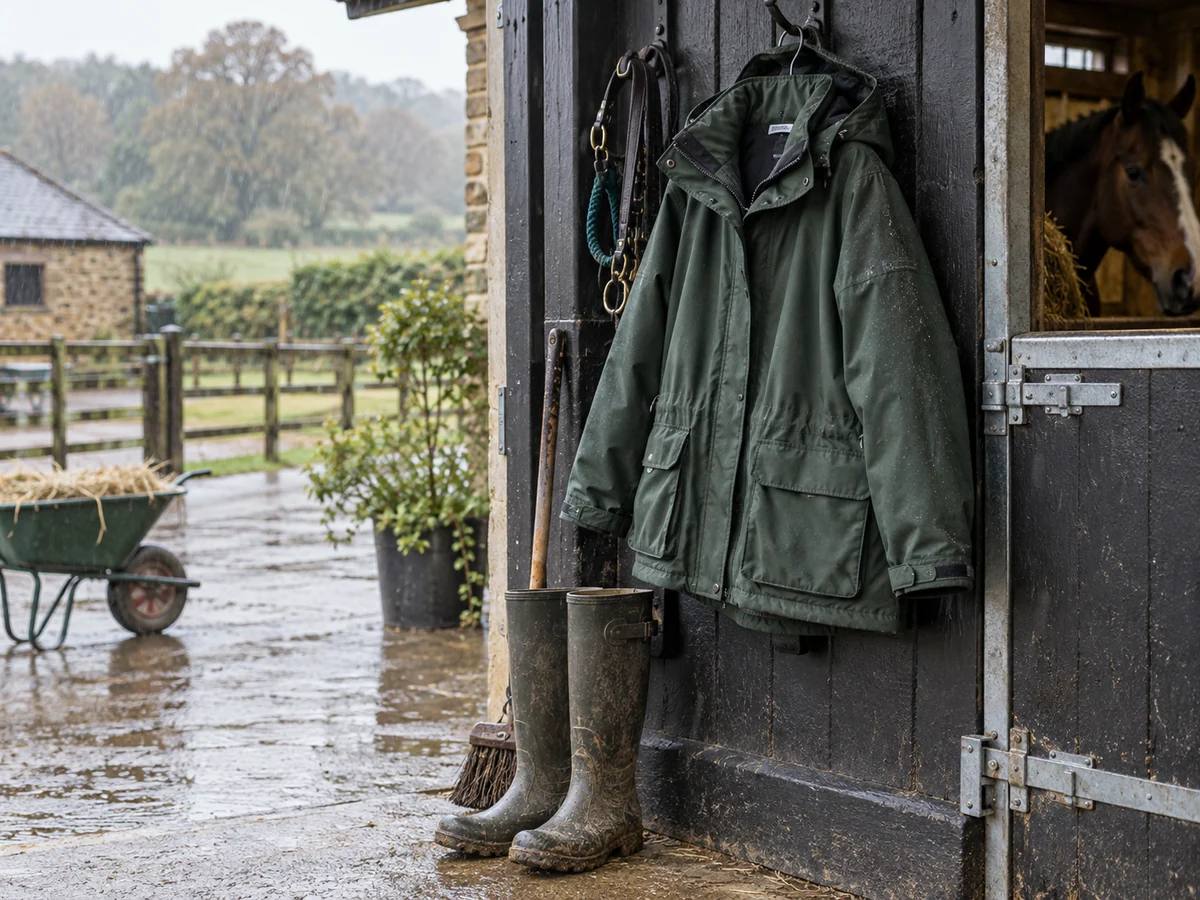
Choose for the job
A long waterproof coat may be useful for walking around a wet yard but unsuitable for riding unless specifically designed and approved for that use. Check whether the garment is intended for mounted work or general outdoor tasks. Extra length, loose straps and wide fabric panels can behave differently around a saddle and horse.
For yard work, try reaching, bending and carrying a light object while wearing the coat. Check the shoulders and the back of the hem. A jacket that pulls upwards every time you lift an arm can leave gaps exactly where rain enters. Conversely, excessive loose fabric may catch against equipment while you work.
Look closely at closures
The front zip, storm flap, cuffs and pocket openings all affect practical weather protection. Try them with gloves if that is how you will use them. A tiny stiff zip pull can become irritating when hands are cold, while an open pocket may collect water around its contents. Keep important items in a suitable protected place rather than trusting any pocket labelled waterproof without reading the details.
Hoods require thought around horses and helmets. Follow the yard's rules, and do not let an ordinary hood interfere with hearing, vision or helmet fit. If rainwear will be used over protective equipment, have the complete combination checked. A waterproof outer does not override an air jacket's need for space or a body protector's fitting requirements.
Maintain the fabric deliberately
Waterproof and water-repellent are not interchangeable descriptions. Read the specification and the care label, including any advice about restoring the surface treatment. Mud left on seams and cuffs makes inspection harder. Use the cleaning products and washing settings intended for the garment rather than treating it exactly like an everyday cotton jacket.
Give wet rainwear enough hanging space and time to dry before closing it into a bag or locker. Inspect worn shoulders, seat areas and seams where equipment rubs. If you change from wellies or yard boots into riding boots, keep the wet pair separate from clean kit. Planning the change of clothing and footwear is often more effective than expecting one outfit to be ideal for every wet-weather task.
Reading & references