A thicker pad is not a fitting solution
Extra cushioning takes up space beneath the saddle; it should be part of the fitting decision, not an improvised repair.
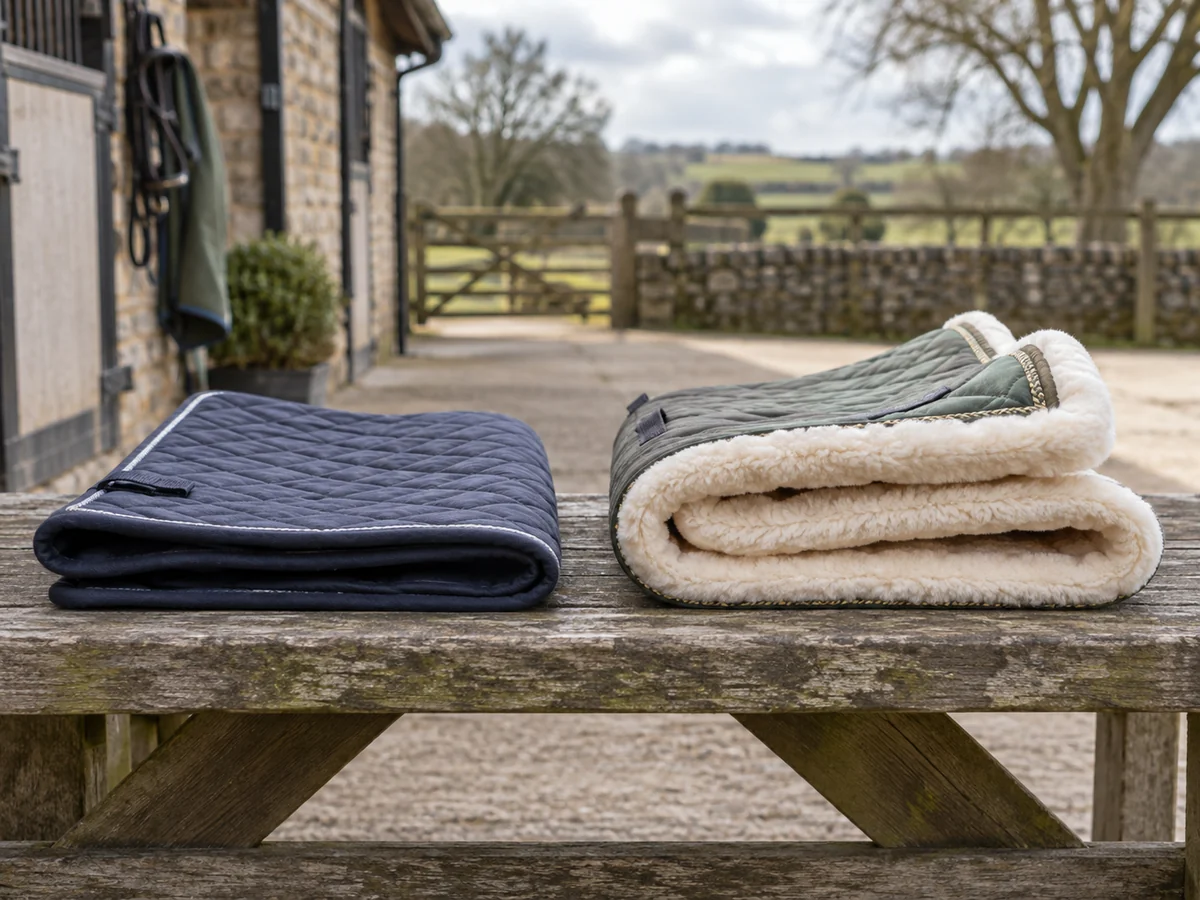
More material changes the arrangement
A plush pad can feel reassuring in the hand. Under a saddle, however, adding material changes the space available between the saddle and horse. That is why thickness belongs in the fitting discussion. The question is not whether a pad feels soft on a shop counter, but whether the complete setup is suitable for the horse and rider using it.
If your saddle was assessed with a thin cloth, mention that before replacing it with a thick half pad and another cloth underneath. Bring the proposed combination to the fitter rather than assuming separate products can be stacked without consequence. Different materials also compress differently, so a simple measurement taken while the pad is lying loose will not describe its behaviour in use.
Pressure marks, movement, a rider feeling unbalanced or a horse reacting to tacking up need investigation. Adding padding can change what you observe without addressing the cause. Describe the problem and arrange the appropriate assessment instead of buying one pad after another. Where pain or illness is suspected, seek veterinary advice rather than treating the shopping process as a substitute.
Some pads and inserts are used as part of a professional fitting plan. In that case, ask which product, position and adjustment have been specified, and when the arrangement should be reviewed. Keep those details written down. A pad selected for a particular horse at one stage of work is not automatically a suitable solution for another horse or a later change in condition.
Make comparisons useful
When browsing, note the materials, overall shape, attachment method and care instructions alongside thickness. Check whether the advertised measurement refers to the whole pad, the filling or an insert. Product descriptions can use similar words for different constructions. A clear answer from the manufacturer is more helpful than trying to compare vague claims about maximum comfort.
Take the practical routine into account as well. A pad that takes a long time to dry may require a spare, while removable inserts need to be handled according to their instructions. These details affect cost and convenience, but they come after compatibility. Once the fitter has assessed a suitable arrangement, use it consistently and ask before making substantial changes simply because a different pad looks more cushioned.
Reading & references