Check the space around a saddle pad
A pad needs enough room around the saddle without folds, seams or bindings ending beneath pressure-bearing areas.
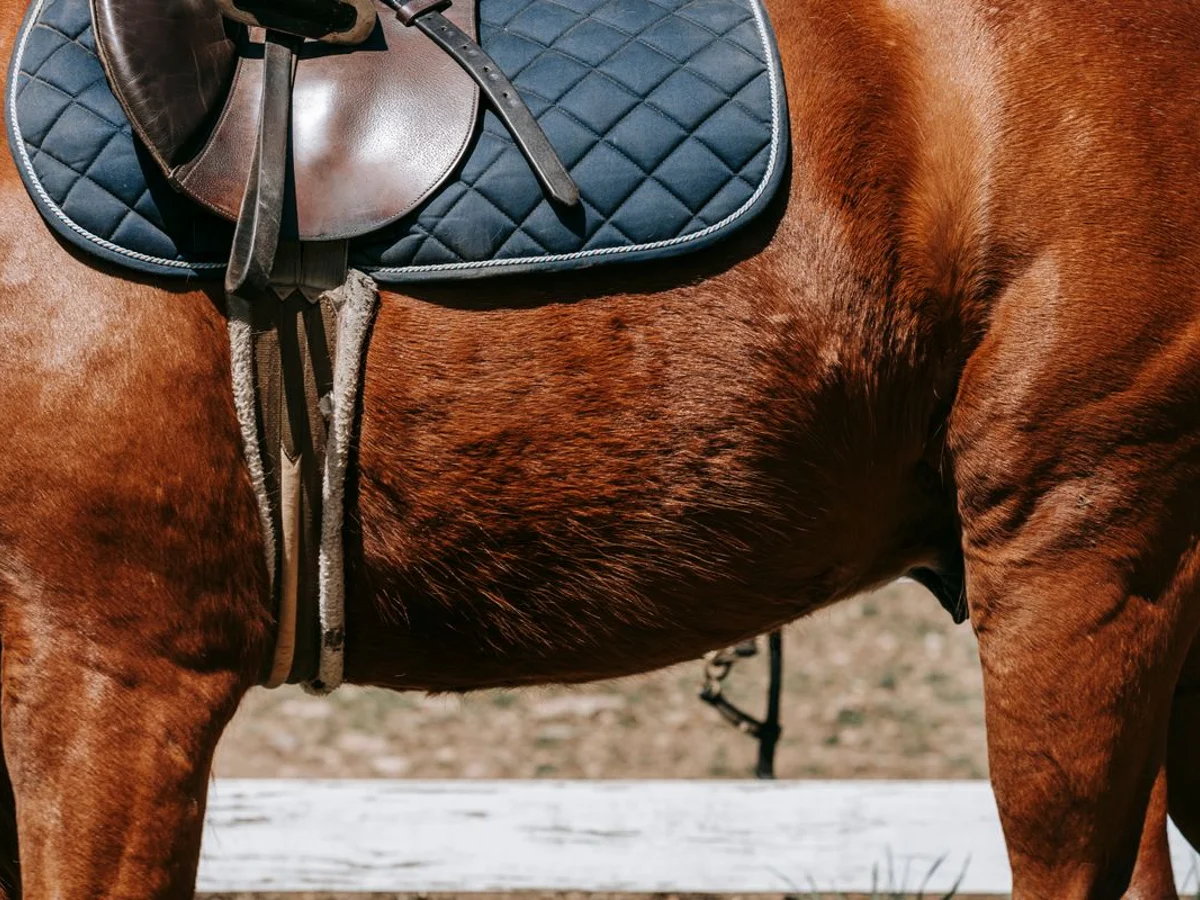
Look at the outline on the saddle
A saddle pad labelled full size can have a very different outline from another full-size pad. Dressage, jumping and general-purpose shapes are designed around different flap profiles. Before choosing a colour, compare the outline with the saddle it will sit beneath. The saddle's seat size alone cannot tell you how far forward or down its flaps extend.
Lay the intended pad and saddle together for an initial comparison, following the fitting advice you have been given. Look at the front, back and lower edges rather than checking only that some fabric shows behind the cantle. If a thick binding or seam disappears beneath a load-bearing area, ask the fitter to assess it. Do not trim the pad to make the outline appear neater.
The space above the back matters too
The pad's spine shape needs to work with the horse and saddle, not simply lie flat because it was folded that way in the packet. Ask your fitter how the front should be positioned and how to maintain the appropriate clearance for your setup. A decorative high front is not proof that the pad will remain clear once the saddle is secured and the horse moves.
Check the attachment straps and girth loops as part of the same arrangement. They should reach the points intended by the maker without pulling the pad out of place. A loop that requires an awkward route may indicate a mismatch between designs. Avoid inventing extra knots or attachments to compensate; ask whether a different pad shape or strap configuration is more suitable.
Recheck after ordinary use
A pad that looked tidy when first put on may shift or wrinkle during work. Note where it moves and tell the fitter, especially if this is new behaviour. Repeated slipping is not a reason to keep adding stronger grips without examining the saddle and pad together. Dirt, a distorted pad and changes in the horse all belong in the discussion.
After washing, check that the pad has returned to its intended shape and is fully dry. Shrinkage or a curled binding can change an otherwise familiar fit. Keep the product measurements with your notes when you find a useful model, but assess replacements in the same way. A matching label or a new season's colour does not guarantee that every construction detail is unchanged.
Reading & references