Recognising an overreach boot
Bell-shaped boots cover a different area from brushing boots, so do not confuse the two jobs.
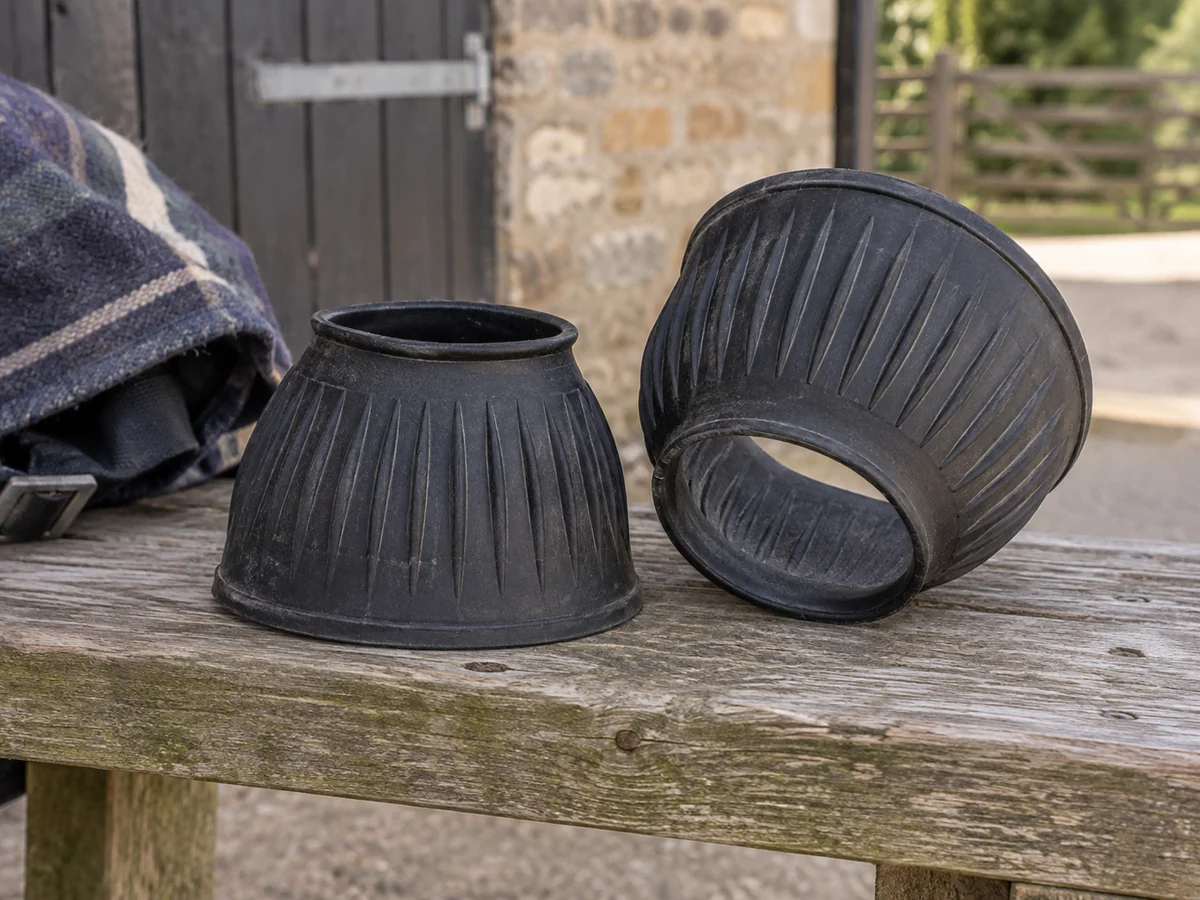
Notice the low position
An overreach boot sits around the pastern and extends down over part of the hoof, with protection towards the heel area. It is intended to help protect against certain strikes from another foot. Brushing boots sit higher on the lower leg and cover a different area. Buying one type does not automatically provide the coverage of the other.
Some overreach boots pull on, while others open with a fastening. Materials and internal shapes differ, including designs intended to limit rotation. Read the model's instructions before application. A shape that looks like a simple bell may still have a particular orientation, and a label showing the size does not replace checking that orientation.
Check the fit with help
Use the manufacturer's size guidance as a starting point and have the boot checked on the individual horse. Coverage, clearance and movement matter, not just whether the top closes. A boot that drags, twists unusually or rubs needs attention. Do not trim the lower edge or alter a fastening to make an unsuitable size appear workable.
If the horse repeatedly catches a heel or pulls shoes, discuss the situation with the farrier and other appropriate professionals. Protection can be part of a plan, but it does not explain why the contact is happening. Changes in movement, soreness or recurrent damage should not be dismissed because a boot is available to cover the area.
Inspect the inside after every use
The inner surface sits close to the skin and collects grit, moisture and hair. Open it fully or turn it as the design permits for inspection and cleaning. Check the upper edge in particular for roughness and trapped dirt. A soft-looking outer material can hide a hard crust on the side that actually touches the horse.
Wash according to the maker's directions and allow full drying before storage. LeMieux's instructions for its neoprene model, for example, are specific to that construction; they should not be copied automatically to every rubber or lined boot. Look for torn edges, damaged closures and loose internal shaping before the next session. Keep a questionable pair out of circulation until replaced or assessed, rather than returning it to a shared box where someone else may assume it is ready.