Handling mould on stored tack
Separate affected equipment, seek material-specific cleaning advice and address the damp storage that allowed it to develop.
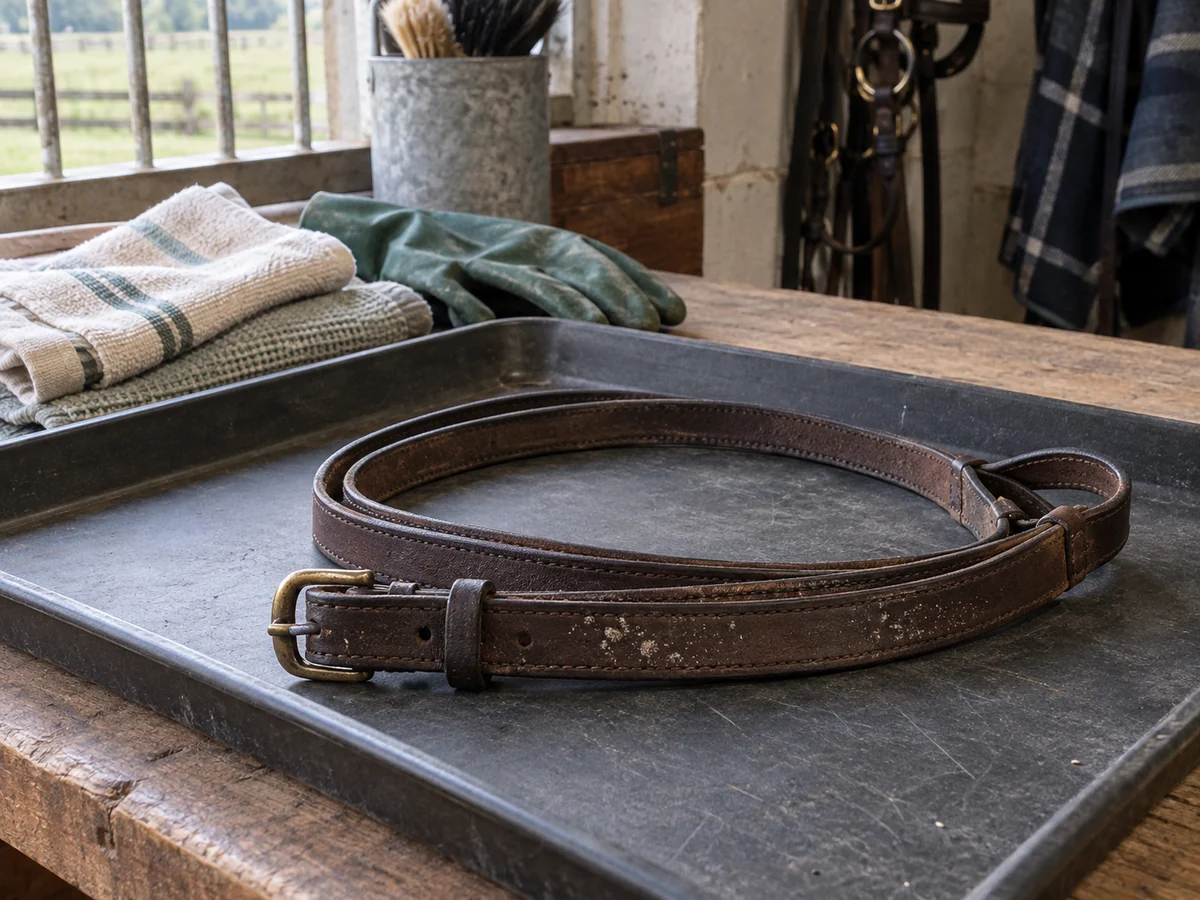
Keep it away from the clean set
Finding mould on a bridle is a reason to pause before using it. Separate the affected item from clean tack and avoid brushing it over other equipment in an enclosed room. Check nearby bags, covers and shelves as well; cleaning one strap will achieve little if it is returned to a damp, contaminated cover straight afterwards.
Note the material and the extent of the problem before choosing a treatment. Leather, textile lining and synthetic surfaces can need different methods. Ask the manufacturer or an experienced saddler for advice suited to the item, particularly if growth is extensive or has returned after previous cleaning. Do not assume that a household disinfectant is safe for tack or for surfaces that touch the horse.
Do not confuse cleaning with a safety decision
Follow the advised precautions and method, including suitable ventilation and any protection specified for the cleaning product. Keep products in their original labelled containers and away from feed or grooming supplies. If the task is unsuitable for your circumstances, use an appropriate professional service rather than improvising a strong chemical mixture in the tack room.
Once cleaning is complete, the equipment still needs assessment for damage. Look at stitching, folds, holes and the condition of the surrounding material. A cleaner surface does not establish that a previously neglected strap is strong enough to use. Keep doubtful pieces out of circulation while obtaining advice, and tell anyone who shares the equipment where they have been put.
Change the place it returns to
Inspect the storage space for leaks, wet kit left in closed bags and covers that never dry. A shelf against a damp wall may explain why one group of items is repeatedly affected. Bring the issue to the yard manager where building repairs or changes to ventilation are needed. Adding fragrance or wiping the visible shelf is not a substitute for dealing with moisture.
Return only fully dry equipment to suitable, clean storage, following the maker's guidance. Check it again during a period of non-use rather than leaving it untouched until the next season. A dated note or photograph can help identify a recurrence early. If mould persists despite these changes, revisit both the cleaning advice and the room conditions; repeating the same treatment without investigating the setting is unlikely to make the routine dependable.
Reading & references