What a martingale is intended to do
Running and standing martingales connect differently, so identify the arrangement before discussing its use.
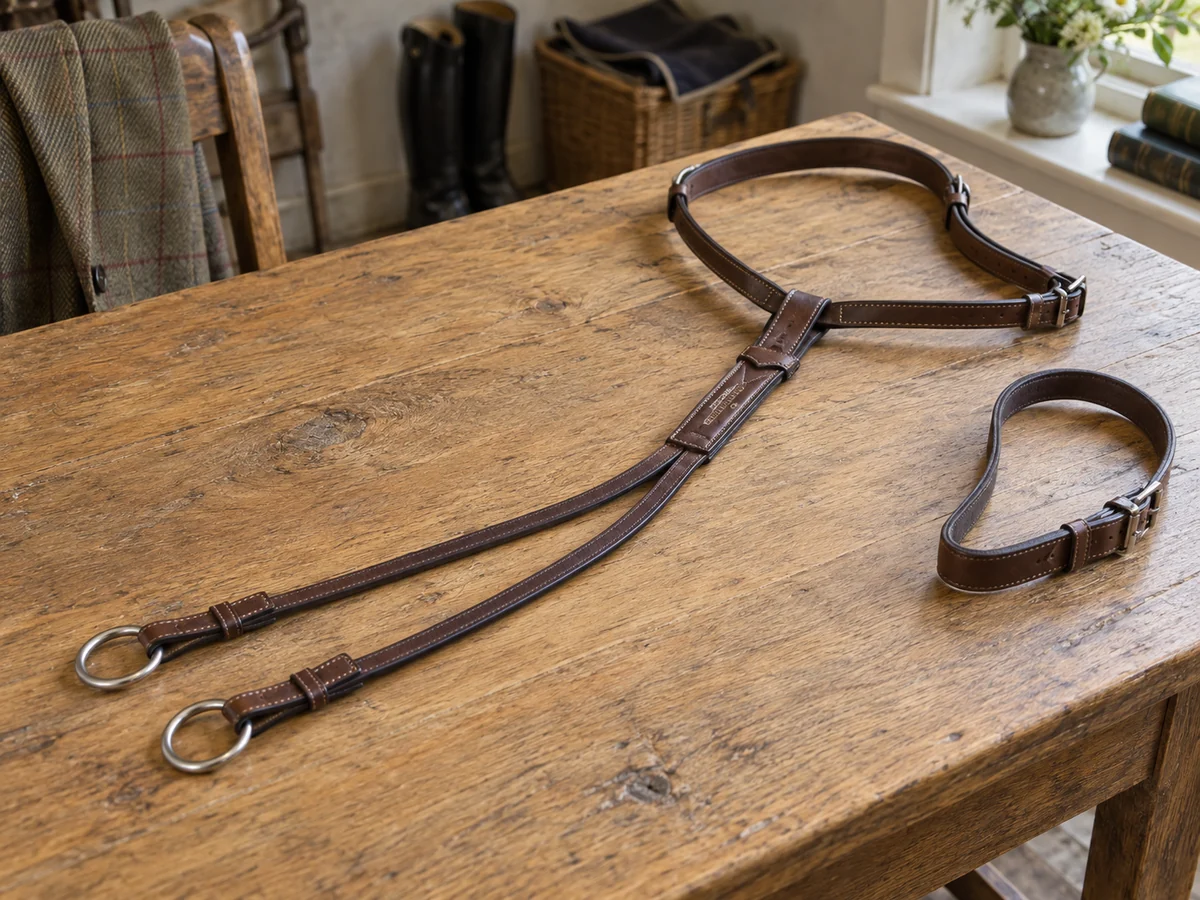
Follow the straps
A running martingale has a fork ending in rings through which the reins pass. A standing martingale connects differently, with a strap running to an appropriate noseband arrangement. Both may include a neck strap and a connection towards the girth, but their actions are not the same. Do not swap one for another on the basis that they look similar when hanging on a hook.
Some breastplates include a detachable running martingale attachment. That makes two functions appear in one assembly. The breastplate and martingale still need assessing individually as well as together. A removable fork is not evidence that it must always be fitted, and the attachment points on one manufacturer's product may not suit a fork from another.
Purpose needs a reason
Martingales are used to influence the effect of a horse raising its head beyond a certain position, depending on the design. They should not be treated as a routine answer to head tossing or resistance. Such behaviour may involve discomfort, tack fit, rider influence or another issue that needs investigation. Ask the instructor why the equipment is being proposed and what problem is being addressed.
Length and positioning are important, and a short written rule cannot replace supervised fitting. An incorrectly adjusted martingale can restrict normal movement or alter the rein arrangement unexpectedly. Have someone competent demonstrate the correct setup on the actual horse, with its usual bridle and saddle, and explain what to check before every ride.
Small components are not optional
For a running martingale, the suitability and position of rein stops need checking so the rings cannot run into the bit attachments. Other stops may hold straps in their intended places. Ask which components the specific arrangement requires; do not assume that leather hand stops on webbing reins perform the same job as martingale rein stops.
During cleaning, keep the parts together and record how they were assembled. Inspect rings, stitching, buckles and strap holes before reusing the equipment. If a strap is damaged or a stop is missing, replace it appropriately rather than improvising with tape or a household fitting. Also check the current rules for the activity: permission to use a running martingale in one setting does not establish permission for a standing version elsewhere.
Reading & references