Photographs that make a tack listing useful
A useful set of pictures answers questions about identity, shape and condition without hiding the less attractive parts.
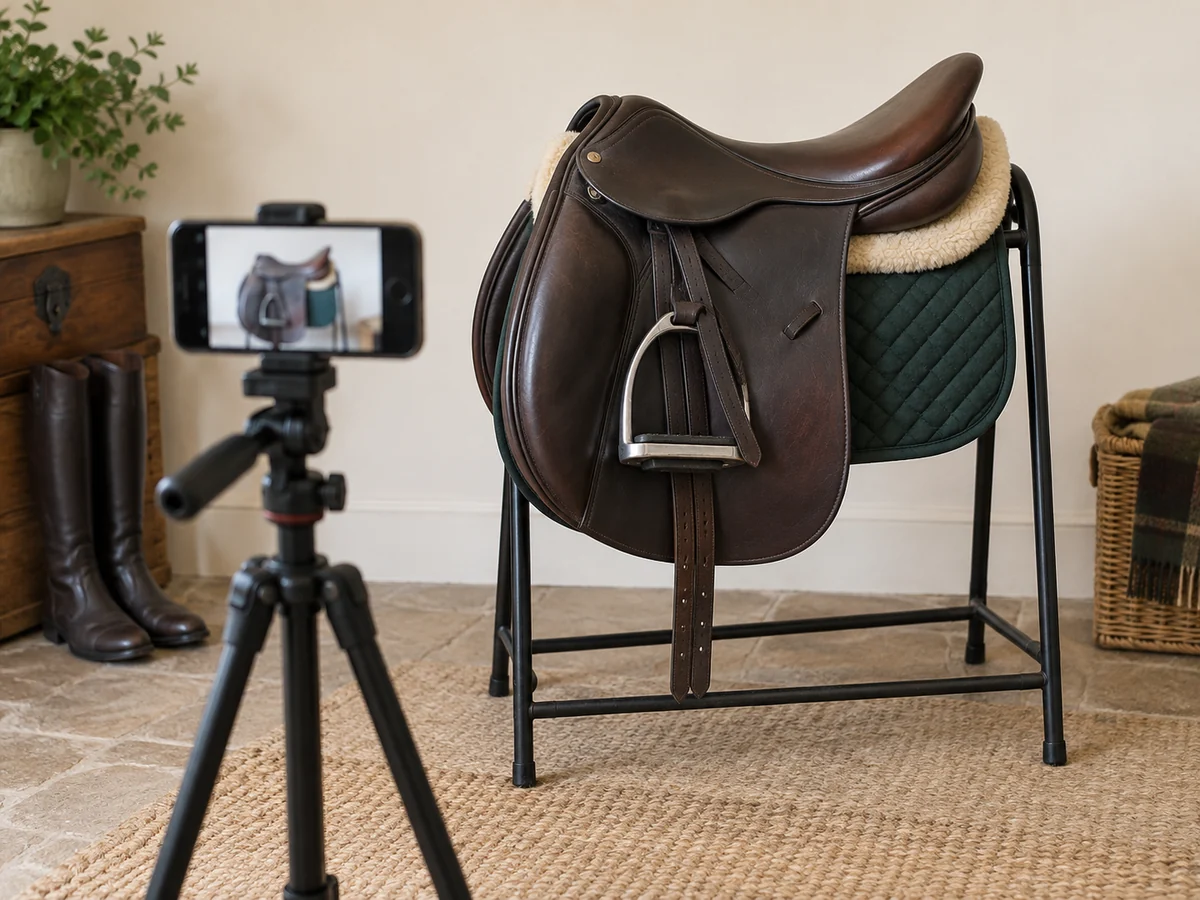
Begin with a clear overall view
Photograph the complete item in even daylight against an uncluttered background. Move loose rugs, ropes and grooming tools out of the frame so the outline can be seen. The aim is not a studio advertisement; it is a picture in which a buyer can understand what is included. If accessories are only props, remove them or explain that clearly in the description.
Use several distinct angles rather than many near-identical photographs. For a saddle, include both sides and the underside; for a rug, open it out and show the lining as well as the outer shell. A bridle benefits from separate views of its components. Choose the angles that reveal construction, not simply the ones that make the item look newest.
Give the details their own frame
Take close photographs of the maker's label, size stamp or serial number where relevant. Keep the camera steady and check that the writing is readable before uploading. A picture taken too close can blur the very information it was intended to show. Avoid placing personal paperwork or unrelated addresses in the background while documenting the item.
Show wear, repairs and missing parts directly. Include one wider image to establish where a mark is, then a closer view of the mark itself. A tight crop of a scratch can be hard to interpret without context. Conversely, a distant photograph with an arrow drawn across it may not show enough detail to understand the condition.
Keep measurements honest
If a tape is included, show its starting point and the route of the measurement. State the units and whether buckles or other fittings are included. Do not stretch elastic or pull a curved item straight to produce a more appealing number. Measurements should help a buyer compare specifications, while leaving fitting decisions to an appropriate assessment.
Avoid filters that alter colour or smooth away texture. If the colour is difficult to capture, say so and provide another image in neutral light. Keep the original files so additional detail can be sent if requested. Finally, remember what photographs cannot establish: hidden strength, an undamaged internal saddle tree or a suitable fit on another horse. A good listing makes those limits clear by presenting observable facts, rather than using smart pictures to imply an inspection that has not taken place.
Reading & references