Pack a lesson bag around what you use
Pack around the lesson and the journey, with clean safety equipment separated from wet yard items.
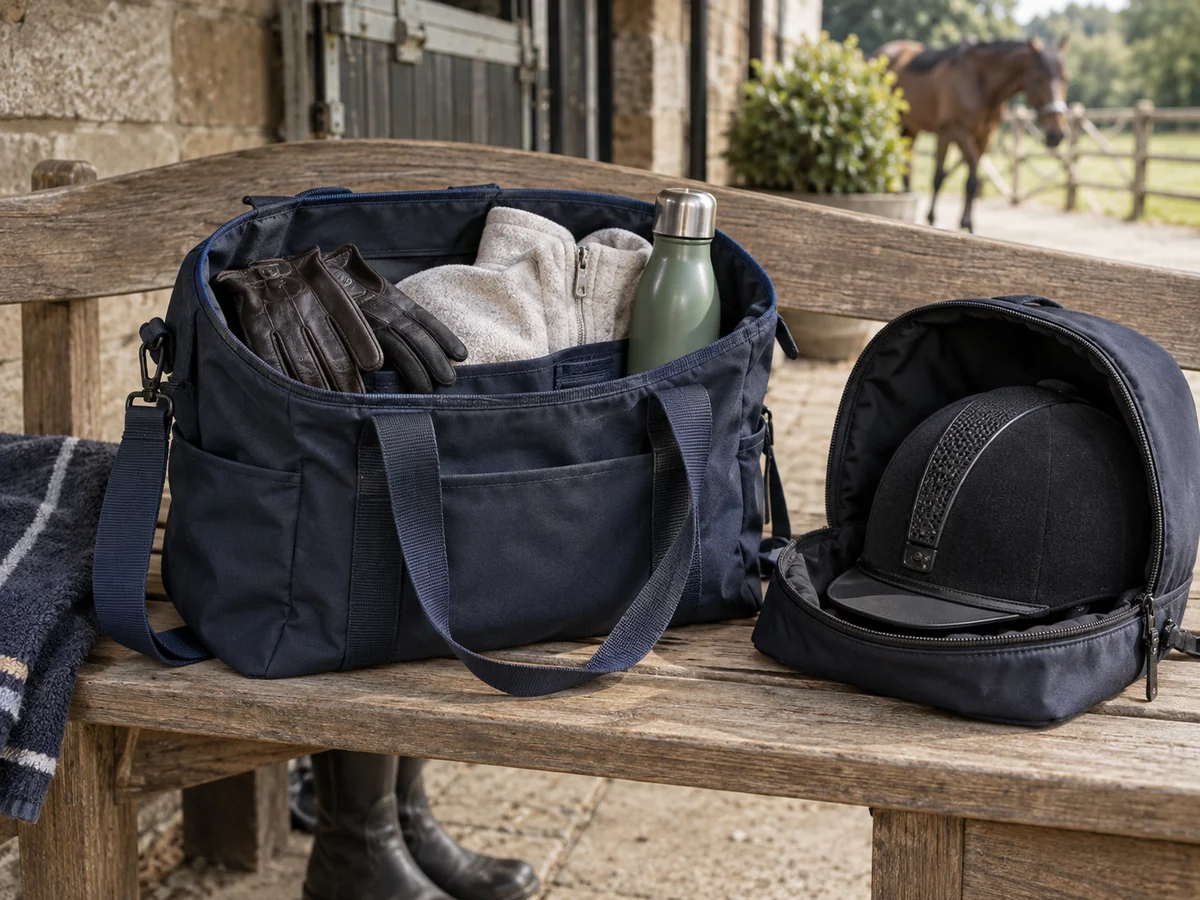
Decide what travels every time
Begin with the items the riding centre expects you to bring. That may include suitable boots, gloves and your own correctly fitted hat, but confirm what the centre provides and checks. Keep the regular kit together so that leaving for a lesson does not involve searching through several rooms. A simple routine is more useful than filling a large bag with rarely used accessories.
Place clean gloves and small clothing items where they can be found without tipping everything onto a stable floor. A labelled pouch helps keep a spare pair of socks separate from used ones. Avoid carrying sharp tools or heavy metal objects loose beside a helmet. The bag should protect equipment during the journey, not merely contain it.
Give wet things their own place
Muddy boots and damp clothing can spread moisture and grit through the rest of the kit. Use an appropriate separate compartment or removable bag for transport, then take wet items out promptly at home. A sealed pocket is a temporary separation method, not a drying space. Let equipment dry according to its care instructions before repacking.
Check the inside of helmet bags and boot compartments for stones, dirt and damaged seams. A clean-looking outer can hide debris that rubs equipment every time it is packed. Do not store the bag under heavy tack or where a car boot load can crush it. A padded compartment still has limits.
Leave room for ordinary needs
Water, a small towel and weather-appropriate spare clothing can be worthwhile. Put keys and personal belongings somewhere secure before approaching the horse, following the centre's advice. Avoid dangling bag straps in walkways or hanging the bag where horses can reach it. Ask where equipment should be left during the lesson.
After each visit, unpack before the next one becomes urgent. Replace used clothing, check gloves and footwear, and note any hat impact or other equipment concern. A bag that is always zipped shut can hide a damaged item for weeks. Before leaving again, confirm that the kit matches the planned session and weather, especially if the lesson changes from an indoor arena to an outdoor activity with different clothing or visibility needs.