When a mark in leather needs attention
Distinguish a cosmetic concern from a question about strength before reaching for conditioner.
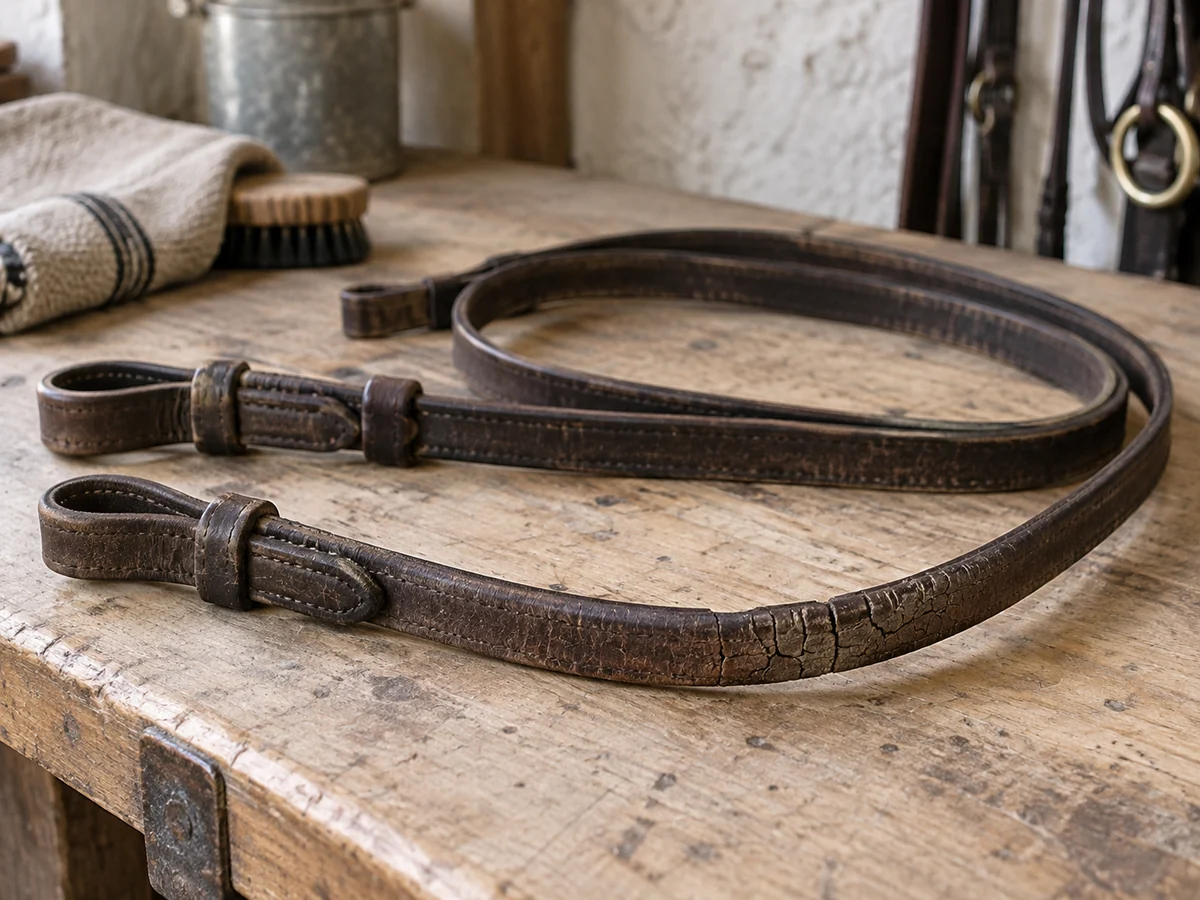
Locate the mark first
A pale line on leather can attract attention immediately after cleaning. Before treating it, note exactly where it sits and what happens around that area during use. A mark on a decorative surface raises different questions from one beside a buckle hole or a strap attachment. The location is useful information for a saddler; the colour of the mark alone is much less useful.
Check the maker's care instructions and identify the type of leather or finish if you can. Coated surfaces, soft coverings and structural straps should not all be treated as the same material. Wipe away ordinary dirt using the approved method, then look again in good light. Avoid soaking, scraping or repeatedly bending the area to make a suspected crack more visible.
Conditioner is not a structural repair
A suitable conditioner may form part of routine care, but it cannot be relied upon to restore the strength of damaged leather. Darkening a pale line or making the surface feel more supple does not show that the item is sound. Do not judge the result only by whether the mark becomes less noticeable after a product is applied.
Keep the equipment out of use when the mark suggests a split, tearing around a hole or damage in a loaded part. Ask the maker or a saddler to assess it. Give them the item's age if known, its use, any unusual incident and the products recently applied. An honest account is more helpful than describing every line as either harmless ageing or a definite failure.
Look for a recurring cause
While the item is awaiting advice, consider where it has been stored and how it has been cleaned. Sharp folds, unsuitable heat and incompatible products are worth mentioning, without assuming any one of them explains the damage. Check neighbouring pieces for similar changes. A single problem may reveal a care habit that needs adjusting across the rest of the kit.
After assessment, keep a record of the decision and any repair. If replacement is needed, do not pass the old component on as usable simply because it still looks presentable. If continued use is advised, follow the specific care and inspection guidance given. The useful outcome is a clear decision about the equipment, rather than a shelf of products bought in the hope that one will make the mark disappear.
Reading & references